Hosta garden ideas under trees have become my cozy obsession lately – there is something so satisfying about turning a shady patch into a lush, lived-in nook. I remember the first time I planted a row of variegated hostas beneath our old maple and how suddenly the backyard felt intentional instead of just… messy.
I put this list together because I know how tricky shade can be, and because I’ve totally learned things the slow way – through trial, many late-night plant rescues, and one neighbor who practically handed me a gardening PhD in a pot. If you’re staring at a patch of dirt under your trees wondering where to start, this is for you.
Below are 10 real, achievable hosta garden ideas under trees with photos, friendly tips, tiny confessions, and the kind of encouragement I wish I got when I planted my first hostas.
These 10 Hosta Garden Ideas Under Trees You’ll Love
Variegated Pot Duo
Placing two large potted hostas side-by-side on a shaded porch or tree edge instantly makes the area feel curated and a bit fancy – I love how pots give you flexibility when roots or tree roots are a problem. Once, I needed to save hostas from a new root invasion and moving them into pots saved their lives; they looked happier within a week. If you’re a renter or like swapping plants with the seasons, pots are also a lifesaver because you can rearrange without heartbreak.
Secret Shaded Path
Create a meandering path with hostas lining both sides beneath tall trees for that woodland-walk feeling – it’s cozy and slightly magical. I once made a tiny path to lead to a bench and my dog promptly adopted it as his nap-route, so consider that a plus or a tiny imperfection depending on how much dog hair you love. You can mix leaf textures to guide the eye – big leaves near the path, finer ones further back – it’s like painting with plants.
Layered Shade Garden
Layering different heights of hostas and companion plants under trees makes the space feel intentional and lush instead of flat and sad. I used shorter hostas in front with taller varieties and ferns behind, and honestly people assumed it had taken me years to look this effortless – ha, if only they knew about the nap I took in the hammock while things filled in. If you want depth, plant in clusters rather than a single line – trust me, it reads better from the porch.
Rocky Border Accent
Adding hostas among rocks under a tree creates a natural, slightly wild vibe that’s easy to maintain because rocks help with drainage and keep mulch in place. When I first tried this, I worried the rocks would look too harsh, but watching tiny white hosta flowers pop between stones was such a sweet surprise. A small side note – rocks heat during the day and cool at night, which some hostas seem to like a lot more than they let on.
Crisp Lawn Edge
Planting a tidy row of hostas to edge the lawn beneath trees is my go-to for a low-maintenance, polished look that still feels soft and gardeny. I did this in a hurry once before a weekend party and people thought I’d planned it for months – sometimes quick fixes can look professional. Keep the edge narrow if your tree roots are shallow – you’ll thank me when you don’t have to fight the mower.
Architectural Brick Contrast
Hostas in front of brick or masonry near trees give such a lovely contrast between soft foliage and solid structure – it’s a classic move for cottage-curb appeal. My aunt did this along her old townhouse and people always stopped to take photos, which made her day, and then mine when I visited. If your brick gets hot in summer, pick hosta varieties with thicker leaves – they tend to handle the bounce in temperature better.
Woodland Rock Garden
Combining hostas with moss, rocks, and shade-loving perennials creates a true woodland garden under mature trees that feels like a tiny nature preserve. I remember planting a little rock garden and then discovering a secret colony of snails living under the stones – gross? Maybe – but also proof the ecosystem is healthy. You’ll want to check moisture levels, though; rocks can trap wetness and some hostas love that while others don’t.
Tidy Mulch Circles
When space is limited, simple mulch circles around trees with clusters of hostas give a polished, editorial look without overcomplicating things. I did a circle bed around an urban maple and it instantly made the yard feel intentional – true story, neighbors waved and complimented it like we’d hired someone. Mulch keeps weeds down and roots cozy, but don’t pile it against trunks – that’s a rookie move I briefly made and corrected fast.
Naturalistic Tree Base
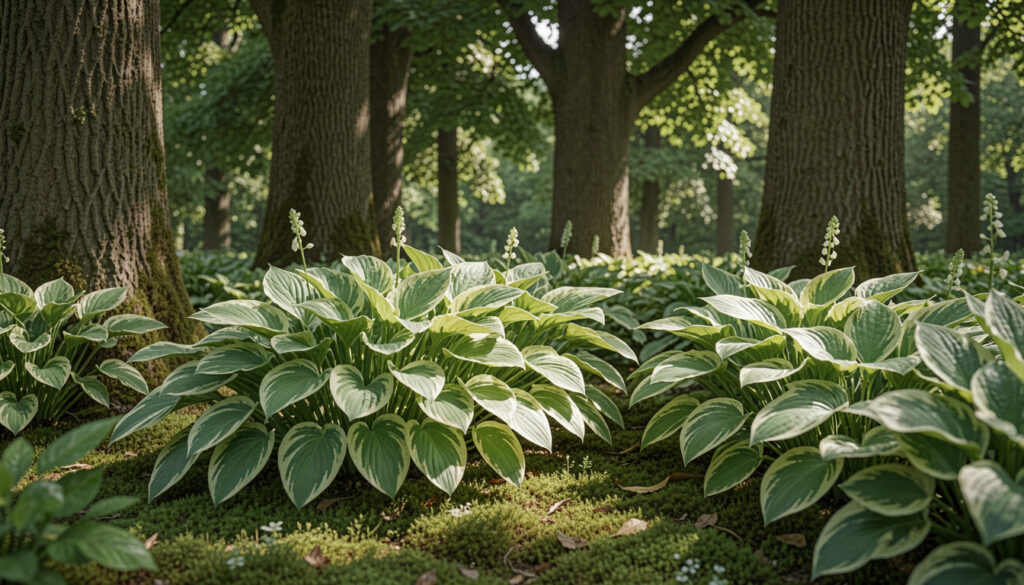
Letting hostas spill around the tree base in a slightly messy, natural way reads like an effortless woodland scene – this is my lazy-gardener favorite because it looks great even when I forget watering day. There was a summer I planted it and then went on a long weekend trip; I came back to my hostas looking wonderful, probably because the shade kept them hydrated better than I did. If you want to embrace a little irregularity, this approach is forgiving and low stress.
Mossy Shade Corner Mix
Mixing hostas with patches of moss and small groundcovers creates a lush, soft carpet under trees that’s perfect for a quiet corner or reading nook. I once curled up on a blanket near a mossy patch and felt like I was on a mini vacation – it’s the simple things, right? Pro tip – moss loves steady moisture and not-too-bright spots, so this combo is great if your tree keeps things cool and damp.
How to Actually Make This Work For You
Start by watching the space for a few days – notice how much of the day it’s shaded and whether any dappled sun slips through, because that decides which hosta varieties will thrive. Then think about soil – most hostas like rich, slightly acidic loam, so amending with compost and a bit of leaf mold makes a huge difference and is a lot cheaper than fancy fertilizers. Finally, don’t be afraid to experiment – I tried a bold variegated cultivar where everyone else planted plain green and it became my favorite talking point, so sometimes a surprising choice pays off.
Can hostas really grow under trees?
Yes – many hosta varieties are naturally shade-tolerant and actually prefer the cool, sheltered conditions trees provide. The key is matching specific hosta types to how much light filters through and improving the soil since tree roots can be competitive.
How do I keep hostas away from tree roots?
Planting in raised mounds, using larger containers, or creating a shallow barrier of composted soil can help give hostas their own space away from aggressive tree roots. It’s not foolproof, but these steps reduce competition and help the hostas establish more quickly.
What companions work well with hostas under trees?
Ferns, astilbes, heucheras, and shade-tolerant groundcovers like vinca or small sedums pair beautifully with hostas and add texture and seasonal interest. I love mixing leaf shapes and heights for depth – it keeps the bed interesting even when hostas aren’t blooming.
How often should I water hostas beneath trees?
Water deeply but infrequently – aim for soaking the root zone once or twice a week depending on rainfall and temperature, since tree canopy can mask the need for water. Mulch helps keep moisture steady, and a stick test (stick your finger an inch into the soil) tells you more than guessing.