Okay, so you and I both know how heartbreaking it is to spend a weekend building a stone raised bed only to have soggy soil and sad plants – which is why stone raised garden bed drainage tips are my new obsession. I remember the first spring I planted in a heavy clay spot and watched my tomato seedlings slowly drown; I promised myself I’d figure it out next time.
This little guide exists because I actually tried a bunch of fixes and learned from the messes – and from the wins too. I’ve layered gravel, added pipes, angled beds, and rescued more than one shrub that was flirting with root rot, so I’m sharing what truly worked for me.
Stick with me and you’ll get 10 practical tips, real-life notes, and tiny hacks you can apply this weekend to stop waterlogging and make your stone beds sing. You’ll leave knowing what to try first – and what to skip.
These 10 Stone Raised Garden Bed Drainage Tips You’ll Actually Use
Layer with Coarse Rock
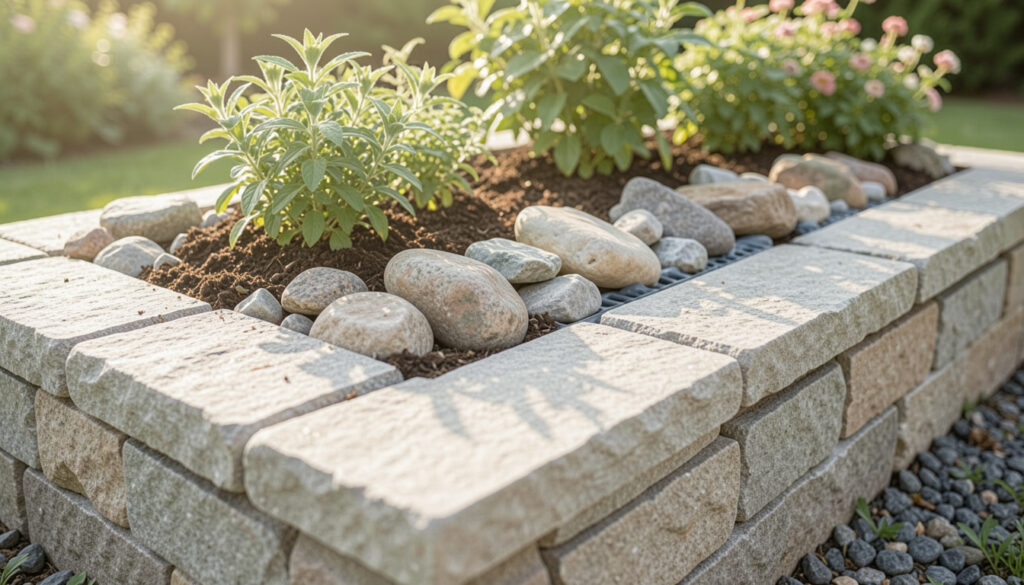
Start with a base layer of coarse rocks or crushed stone under your soil – it creates a free-draining zone so water doesn’t sit at root level. I did this under my herb patch and honestly the difference was instant; basil stopped sulking after every rain. If you have heavy rain where you live, make the rock layer thicker and use larger stones at the very bottom to encourage downward flow.
Build a Stone Perimeter Wall
A low stone wall around the bed helps direct surface runoff away and keeps the bed edges stable. I used leftover flagstones from a sidewalk redo, and it ended up looking like it belonged there all along – win. You can tuck landscape fabric behind the wall if weeds are a concern, and it still allows water to pass while protecting the sides.
Create a Rock Pathway
Adding a stone path next to your raised bed gives runoff somewhere to go and keeps the bed edge from compacting underfoot. I’m guilty of stepping into beds more than I should – and a path fixed that in one season. Try a shallow channel of pebbles alongside the bed to act as a mini French drain for surface water.
Use a Drainage Plate
Stone drainage plates or a simple slab with gaps beneath can raise soil off the bottom and let excess water escape, especially useful if you’re building on compacted ground. I put a square paver under an old planter box one year and was surprised how fast it dried after storms. You don’t need anything fancy – even reclaimed pavers with mortar-free joins help.
Pull Back Soil from the Stones
If your soil is piled tight against the stones, it can channel water into low spots and cause pooling – give a small gap or slope away from the stones. I learned this the hard way when my oldest raised bed sank a bit and collected puddles along one edge. Regrading with a shovel and smoothing a small slope away changed everything for drainage that spring.
Use Native Gravel Under Soil
Mixing a layer of native gravel or crushed stone just under the planting mix speeds drainage without compacting like dirt can. My neighbor swears by doing this with their flower beds – their sedums are so happy when other people’s are limp. Keep in mind that bigger gravel moves water fastest, but you still want a fine enough layer so roots can establish comfortably.
Lay a Perforated Drain Pipe
A perforated drain pipe wrapped in landscape fabric and buried in gravel can carry water away from the base of your stone bed – basically a mini French drain. I once installed a pipe that led to a dry well and watched nighttime puddles disappear the next morning – literal magic. Be sure the pipe slopes gently downhill – gravity does the work, no pump needed.
Anchor Stones with Sand and Compact
Setting bench stones or edging stones on a bed of compacted sand helps stabilize them and prevents settling that can create low points where water pools. I compacted by hand and later borrowed a small plate compactor; the compactor was worth the noise for a perfectly level edge. Even a quick tamp and check with a level makes a surprising difference to long-term drainage.
Plant Water-Loving Edges
Sow moisture-tolerant plants like cardinal flower or ferns at one side of the bed to soak up extra seasonal runoff – they act like living sponges. I reserved one side of my bed for these plants after a particularly wet spring and it felt like the garden breathed a sigh of relief. This trick is pretty, functional, and forgiving if you overwater the rest of the bed sometimes.
Top with Small River Rock
A final top layer of small river rock keeps surface soil from compacting and reduces splashback while still letting water pass through. I sprinkled a thin layer on a few of my pots and was surprised how much less crusty the soil stayed after heavy rains. Just don’t overdo it – a thin layer is the point, and it looks tidy too.
How to Actually Make This Work For You
Start by assessing where water collects and how your property slopes, then pick one drainage upgrade to test – you don’t have to reinvent the whole bed in one day. I usually try a base layer of crushed stone plus a gentle slope away from the bed before adding fancy bits, and that combo solves most puddling issues; if it doesn’t, add a perforated pipe or redirect runoff to a planted swale. Keep in mind that plant choices matter – pairing good drainage structure with drought- or moisture-tolerant varieties makes maintenance easier, and small tweaks over a season will teach you the most about what your yard needs.
How deep should my rock layer be?
A 2-4 inch layer of coarse gravel is usually enough for most raised beds to improve drainage without taking up too much planting depth. If you have really compacted subsoil or heavy clay, go deeper – 6 inches gives extra assurance. Remember to leave enough soil depth on top for root growth.
Do I need landscape fabric under the rocks?
Landscape fabric helps keep soil from migrating into the gravel and slowing drainage, but it can also trap moisture if laid improperly. I use fabric with holes or coarse weave and always cover it with another thin gravel layer so roots don’t sit on a sealed surface. If you prefer natural breakdown, skip the fabric and plan for occasional maintenance.
Will a pipe freeze in winter?
Perforated drain pipes buried below the frost line or under a gravel layer are much less likely to freeze, and slow-moving water in a properly sloped pipe rarely creates issues. If you live somewhere with deep freezes, make sure the pipe outlet drains to a place where standing water won’t refreeze against foundations or walkways. Insulating the pipe is rarely needed if it’s buried deep enough.
Can I retrofit existing stone beds?
Yes – retrofit by pulling back a portion of the stone edge, adding a gravel layer, and re-setting stones on compacted sand or mortar-free base. I retrofitted two of my oldest beds on a weekend and it felt like giving them a spa day – plants perked up within weeks. Take it slow and do a test section to learn the best approach for your bed.