I still get giddy thinking about tree swings – and that’s exactly why I’ve been obsessing over the tree swing rope length and knot guide lately. Growing up I had a rickety tire swing and a few messy knots that taught me the hard way what works and what definitely doesn’t – so this topic feels a little personal.
I’m writing this because whether you want a cozy bench, a tire, or a hammock-seat, getting the rope length and knots right makes all the difference. I’ve measured, re-tied, and even replaced ropes in pouring rain, so I’m passing on the bits that actually helped me keep our swings safe and comfy.
Below you’ll find 25 inspiring swing photos plus practical notes on rope lengths, knot types, and real-life tips so you can set one up without guesswork.
These 25 Tree Swing Rope Length And Knot Ideas You’ll Actually Use
Sunlit Bench Under Tree
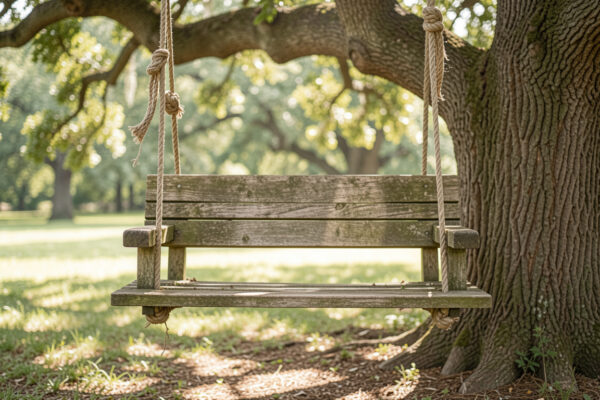
This peaceful wooden bench is the kind of swing I daydream about when I want a quiet reading spot. If your branch is about 10 feet up, plan on roughly 9 to 10 feet of rope per side before knots – I added an extra foot once and had to re-tie, which was annoying but easily fixed. You can use a bowline for a secure loop at the branch, plus a clove hitch for quick adjustments.
Classic Field Swing
Seeing this swing always reminds me of lazy summer afternoons. For a single-rope swing like this, measure from branch to desired seat height – then add 18-24 inches so you have enough for knots and adjustments. I once used thin cord and it frayed fast, so I now recommend polyester rope at least 1/2 inch thick for durability.
Old-World Tree Swing
This older-looking swing evokes nostalgic charm. If the branch is high and you want more clearance, cut longer rope and coil the extra neatly – I tied mine in a decorative figure-eight knot and honestly loved how it looked. Remember, every knot eats up a bit of rope length, so add about 12-18 inches per major knot.
Park Swing Chair
Swing chairs are comfy and need steady support; I used two equal-length ropes to keep the seat balanced. Measure twice and cut once – trust me, I’ve trimmed and re-tied more than once because I rushed. Use a bowline on a bight or a figure-eight on a bight to create secure loops without bulky hardware.
Kid-Friendly Wooden Swing
When kids are involved, I always over-spec the rope – go thicker and stronger. For a typical backyard setup, 5/8 inch polyester rope is my go-to; our neighbor’s son bounced so much his old thin rope frayed, and that was a scary lesson. Use double fisherman knots when splicing and always inspect monthly.
Flower-Adorned Swing
This one is dreamy and makes me think of decorating for little gatherings – but hardware still matters. If you add decorative ribbons or florals, avoid anything that hides worn rope; I once missed a fray under a blanket of flowers and nearly had a surprise repair. Use a secure knot like the bowline, and cover knots with shrink tubing or neat wraps for weather protection.
Sunset Swing Chair
Sunset shots always make me want to linger longer on a swing. If your branch is 12 feet up and you want the seat around 18 inches from the ground, plan for about 11 feet of rope accounting for knots. I once used a trucker’s hitch to fine-tune height and it made adjustments so much easier during different seasons.
Lazy Lying Swing
This laid-back pose reminds me of those long afternoons when you fall asleep on the swing – be safe and keep the seat low and sturdy. For loungers like this, I prefer doubled ropes with a spreader or crossbar to keep it stable. Once, I tried a single rope for a hammock-chair look and it spun too much, so consider two anchor points.
Field Treehouse Vibes
A treehouse and swing combo is childhood perfection. When anchoring to treehouse beams, use eye bolts rated for outdoor load and loop rope with a bowline, then back it up with a clove hitch. My cousin built one and we learned to space ropes evenly – otherwise the swing sat crooked and annoyed everyone.
Quiet Yard Swing
This simple wooden swing is so calming, I imagine sipping tea there. Measuring the distance between anchor points matters – for bench swings, keep ropes 18-24 inches apart and equal length. I once installed slightly uneven ropes and it tilted noticeably; took ten minutes to fix but felt like forever in the moment.
Two Swings, Double Fun
Two swings side-by-side are pure sibling rivalry energy. Ensure each rope pair is exactly the same length so kids don’t get competitive over a higher seat. We measured foot by foot with a tape measure and used a marker to cut both ropes identically – science wins, usually.
Forest Moment Swing
Sitting in the woods gives a quiet, private swing feel that I adore. In shaded, damp places pick ropes rated for rot resistance like polyester, not natural fibers. My first attempt used jute and it started to mildew by autumn – rookie mistake that stung my wallet a bit.
Elegant White Seat
White swing chairs photograph beautifully but show dirt easily – and they need secure anchors. Use stainless steel hardware to avoid rust stains, and add at least 12 inches per knot when calculating length. I wrapped the knots in decorative rope covers to hide the bulk and loved the look – plus it helped protect the rope.
Open Field Magic
A swing in the middle of a field feels cinematic – but wind matters. Keep ropes long enough to allow natural sway without hitting the ground; I aimed for about 18 inches clearance under full swing. Also, give thought to how low you want the seat when kids are jumping on and off.
Daisy-Filled Swing
I once tied a floral garland to a swing and it turned into a mini photoshoot – but check rope wear first. For light decorative use, add rope covers after confirming knots and hardware are properly installed. If you want a little dreamy aesthetic, hide a few extra inches of rope inside the wrapping to account for knots.
Bloom-Covered Bench
Flower-covered trees are postcard-perfect backgrounds for a bench swing. When the ropes are exposed to sap and pollen, they can get sticky – polyester still wins for cleanliness. I wipe mine down after a heavy pollen season and it keeps the rope from becoming gross to the touch.
Woods Rustic Swing
Rustic settings call for sturdy knots, like the timber hitch or bowline, to anchor to irregular bark. If you loop around a natural limb, consider using a tree-saver strap to prevent damage. My uncle taught me this trick the summer we built one together – saved the branch and my guilt.
Golden Field at Sunset
Sunset swings are perfect for quiet reflection or taking photos. When you set up for seasonal photos, plan rope length slightly higher for standing shots and lower for sitting – this saves you re-tying. I’ve re-tied during golden hour more times than I’ll admit, but the light is always worth it.
Garden Swing Chair
In a garden, keep the swing low enough for gentle entry and exit to avoid trampling plants. I measured clearance carefully so my cat could stroll under it without upsetting anything. Use soft protective wraps where rope meets the seat to avoid friction wear over time.
Hammock Shade Spot
Hammocks need longer rope and more gentle angles – aim for a 30-degree angle from horizontal for comfort. I learned that after an awkward afternoon trying to nap on a very steeply hung hammock; lesson: geometry matters. Use a trucker’s hitch to tension and adjust before tying permanent knots.
Large Tree Portrait
A big, healthy tree is ideal for heavy loads – always check limb diameter and health first. I had an arborist friend once say “if it looks sketchy, it is” and I trust that more than any DIY bravado. Choose a rope diameter that matches your weight needs and remember to rotate anchor points over years to avoid bark damage.
Tire Swing in Sunbeams
Tire swings are classics and forgiving, but watch for twisting ropes – multiple wraps and a swivel can help. I remember getting dizzy on one as a kid and the rope had a single strand that twisted like crazy; adding a swivel fixed it fast. Use strong knots like double fisherman if splicing is needed.
Artistic Tree-Shaped Set
Creative swing frames need careful rope planning to keep symmetry – measure anchor spacing precisely. My artsy friend built a tree-shaped set and we spent an afternoon lining up ropes to make sure it looked balanced in photos. If in doubt, make a template at ground level to mark equal lengths before cutting rope.
Apples & Afternoon
An apple basket near a swing screams picnic, but ropes near fruit trees can get sticky – clean often. I once had sticky sap on my hands and then re-tied knots that looked fine but were gummy; cleaning saved the rope from long-term damage. Keep spare rope and spare knots in your shed just in case.
Wide Lone Tree Swing
A solitary large tree gives so much freedom for placement; pick a branch that’s horizontal and healthy. When anchoring, plan for the rope length that lets the swing clear roots and uneven ground below. I measured ground profile once and realized my chosen spot dipped low – moved it a few feet and it was perfect.
How to Actually Make This Work For You
Start by measuring the distance from the branch to your desired seat height and add at least 12-24 inches for knots and adjustments – different knots consume different amounts of rope, so account for that extra slack. Choose a synthetic rope like polyester or marine-grade polypropylene in 1/2 to 5/8 inch for adults and heavier loads, and use stainless or galvanized hardware rated for outdoor use; practicing your knots on the ground first will save time up in the tree. Finally, think about maintenance – check knots monthly, look for fraying, and replace rope every few years or sooner if you see wear; a good rule of thumb is “if it looks tired, replace it” because safety beats thrift every time.
How long should my ropes be for a branch 10 feet high?
For a 10-foot branch aiming for a seat roughly 18 inches off the ground, plan for about 9 to 10 feet of rope per side before knots. Add 12-24 inches extra for knot allowances and any adjustments you might want to make later.
What rope thickness is safest for adults?
Generally, 1/2 to 5/8 inch polyester rope is a strong, durable choice for adult swings – it resists UV and rot better than natural fibers. If you expect heavy use or multiple adults, prefer the thicker 5/8 inch and rated hardware for added safety.
Which knots should I learn first for swings?
Start with the bowline and the clove hitch for basic secure loops and quick adjustments, then learn the figure-eight follow-through and double fisherman if you splice ropes. Practice these on the ground until you can tie them confidently under pressure.
Can I tie a swing directly to a tree branch without hardware?
You can tie directly but use a wide tree-saver strap to protect the bark and prevent damage, and choose redundant knots or loops for backup. For better longevity and easier inspection, many people prefer using a rated eye bolt or beam hanger when the tree or structure allows it.