I have to confess – I fell in love with low maintenance patio container plants after killing my fair share of “fancy” houseplants. Low maintenance patio container plants changed my balcony from a sad corner into a cozy plant nook without the hourly fretting.
This article exists because you deserve outdoor greenery that actually fits your life – not another plant you pretend to water. I learned the hard way through trial and error, and now I lean on tried-and-true containers and hardy varieties that forgive my forgetfulness.
Below you’ll find 10 easy container plant ideas, real-life tips, and little confessions from my patio experiments so you can pick something that feels effortless and lovely. Let’s make your patio a calm, green place – not a second job.
10 Low Maintenance Patio Container Plants You’ll Actually Care For
Gravel Top-Dressed Pots
These pots with sand or gravel on top are perfect if you like a tidy finish – it hides dry soil and helps reduce evaporation. I used this trick on a sunny corner of my balcony last summer and it cut back on how often I had to water by at least a third. Honestly, sometimes I spill a little soil when I refill, but the gravel hides that perfectly.
Wallside Planter Pair
Putting two matching planters against a wall creates instant symmetry and takes up almost no floor space, which is great if you have a tiny patio. I did this near my apartment door and it felt like a soft welcome every time I came home – even on hectic days. If you’re short on room, hang pots or pick narrow containers instead, and you’ll be surprised how decorative and low fuss it can be.
Deck Planter Row
A row of mixed planters along a deck railing gives you variety without much work – choose drought-tolerant combos and you’re mostly done. I once lined up different herbs this way and loved grabbing fresh basil straight from the pot for dinner; also, the bees were unbelievably grateful. Mix in a trailing plant so things soften visually – it masks the fact that I sometimes forget to trim.
Twin Porch Pots
Two identical pots on either side of a door are classic and low drama – pick evergreen options so the look lasts beyond summer. My neighbor swears by small boxwoods in matching pots; they barely need fuss and they look grown-up. It feels fancy but is actually forgiving, so perfect if you want a polished entry without seasonal replants.
Bold Blooming Pots
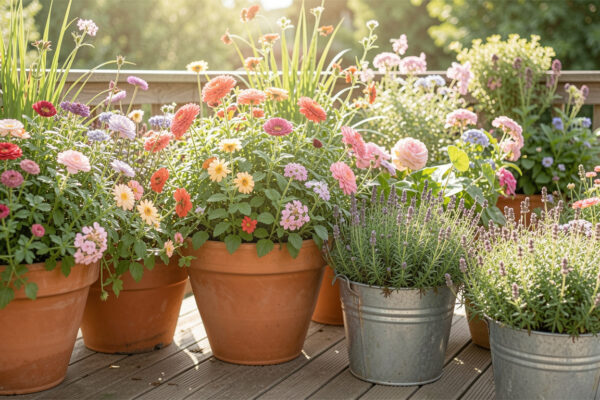
Big pots with bold flowers give instant payoff – go for varieties labeled “low-maintenance” at the nursery and you’ll be set. I made the mistake of overplanting once and had a tomato jungle, so now I leave breathing room and the plants reward me with healthier blooms. Also, larger containers mean less frequent watering, which is a huge win when life gets busy.
Mini Tree Planters
Small trees or large shrubs in planters add height and structure – olive trees, dwarf citrus, or bay laurel are great if your climate cooperates. I splurged on a dwarf olive and it instantly made my balcony feel like a little Mediterranean escape – plus it tolerated my sporadic watering schedule. One tip – pick a pot with drainage and don’t overpot; roots like a bit of restriction to keep growth manageable.
Wooden Box Blooms
Wooden planters feel warm and casual, and they suit cottage-y, mixed-plant looks beautifully – try a mix of foliage and a couple of low-maintenance flowers. I built a simple wooden box last spring and it became my favorite weekend project – full disclosure, my measurements were “approximate” but nothing a little paint couldn’t fix. If wood is your vibe, line it well and use quality potting mix so moisture stays balanced.
Concrete Planter Trio
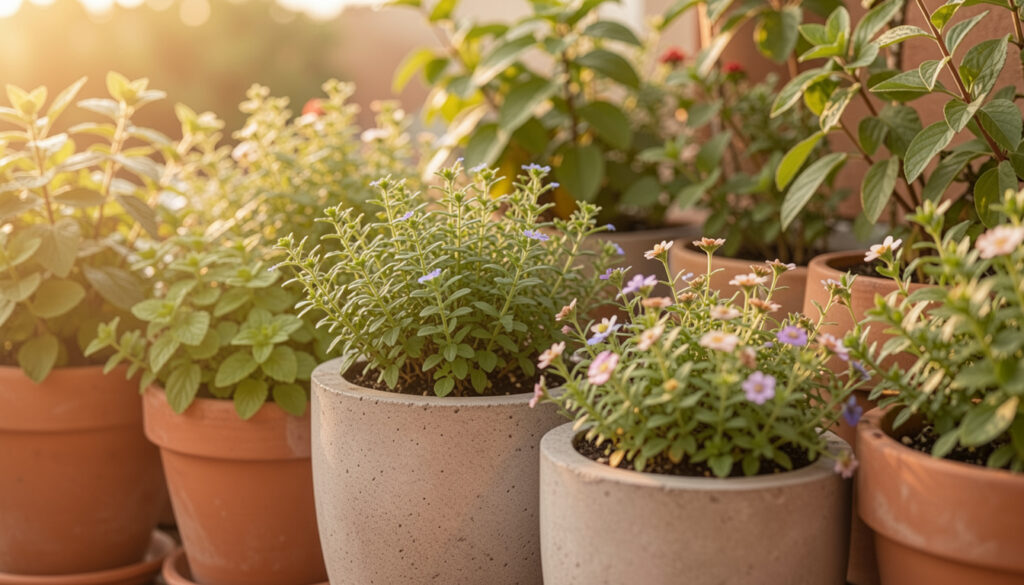
Cement or concrete planters have great thermal mass so they stabilize soil temperature and keep roots happier when it’s hot. I once inherited three concrete pots and was worried they’d look heavy, but after adding airy grasses and succulents they felt modern and forgiving. They’re heavy enough that you won’t worry about the wind taking them on a tour of the neighborhood.
Classic Balcony Pots
Pairing two classic balcony pots with low-care perennials is a go-to move – simple, pretty, and predictable in a good way. I set up two identical pots for my rental and the landlord loved how tidy it looked; honestly, that made me feel oddly proud. If you rent, choose plants that can be easily moved and kept alive during away weekends.
Step-Side Flowerpots
Placing planters on steps adds charm and color where people actually notice it – red and white combos are classic and forgiving. I used to put a different arrangement on the stairs every season until I found a combo that needed almost no babysitting – very liberating. Just watch drainage so water doesn’t run onto stairs, and you’ll have a sweet, low-effort display.
How to Actually Make This Work For You
Pick plants known for resilience – think succulents, ornamental grasses, lavender, and some herbs – and pair them with pots that have good drainage and enough soil volume so you can go a few days without watering. Use a commercial potting mix that’s light and drains well; I top-dress with small gravel sometimes to stop splashes and cut evaporation, and that little habit saved me during a heat wave last year. Finally, group pots with similar water needs together so you can water strategically, and don’t overthink things – a little mess or asymmetry actually makes a patio feel lived in rather than staged.
How often should I water container plants?
Most low maintenance patio container plants need watering when the top inch of soil is dry – usually every 5-10 days depending on sun and heat. During hot spells you’ll check more frequently, and in cooler months it will be much less.
What soil should I use in pots?
Always choose a high-quality potting mix made for containers – it drains better than garden soil and contains the right nutrients. You can add perlite or pumice for extra drainage if you tend to overwater.
Can these plants survive winter outdoors?
That depends on your hardiness zone and the plant – some evergreen shrubs or grasses can stay out, but tender varieties like citrus may need to come inside or be protected. I’ve wrapped pots in bubble wrap during my first cold season here and it bought enough time to move the more fragile ones later.
How do I prevent pests without chemicals?
Keep foliage clean, remove dead leaves, and use sticky traps or soapy water sprays for common pests like aphids. Encouraging beneficial insects and rinsing soil occasionally also helps – simple routines usually stop small problems from becoming big ones.