I have a soft spot for plants for rock and stone gardens – something about how hardy little plants squeeze into crannies between rocks makes me feel instantly calm. My first rock garden was tiny, full of cracked terracotta and thrift, and I’d spend mornings with a mug of coffee inspecting tiny blooms like I’d discovered treasure.
I’m writing this because rock gardens feel approachable and endlessly charming, whether you’ve got a slope, a courtyard, or just a sunny patch by the driveway. Over the years I’ve learned which plants actually thrive on the edges of stones versus which ones sulk, and I’ve made every mistake possible so you don’t have to – promise.
Below you’ll find 12 real ideas and pin inspirations that show how to pair plants, pick textures, and get that relaxed, lived-in stone garden look without overthinking it.
These 12 Plant Ideas for Rock and Stone Gardens You’ll Actually Try
Sunny Rock Flowering Bed
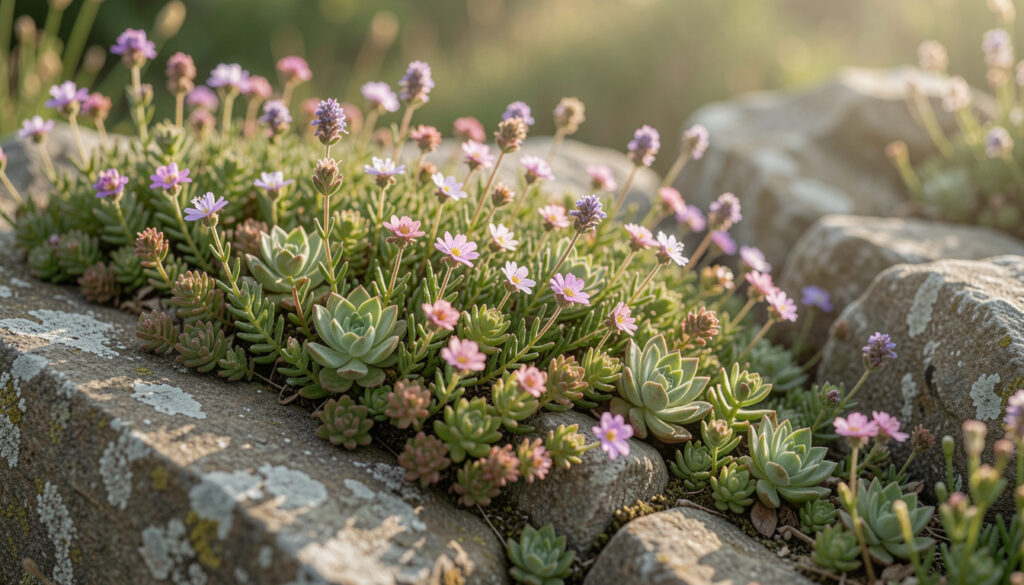
This picture makes me crave a sunny patch filled with low flowering perennials tucked around smooth rocks – super classic for rock gardens. I once planted a little bed like this and the bees found it on day two, which felt like instant validation. You can mix tiny poppies or saxifrage with cushiony thyme for scent – plus, if one plant sulks, the stones hide the gaps nicely.
Lush Mixed Rock Border
I love how this shows a bold mix of textures around stone edges – it reads casual, yet curated. When I first tried a mixed border, I overplanted thinking more was better, and honestly it looked like a green jumble for a season; patience fixed it. If you plant a combo of sedums, dwarf irises, and a few trailing herbs, the contrast between leaves and stone is instant drama without fuss.
Gravel Path Charm
Gravel paths with small planted pockets are my favorite – they make wandering through the garden feel like a tiny adventure. I once traced a gravel path in my backyard and tripped on a rogue stone, so PSA – level the base, please. Plant low cushions like blue fescue or dwarf thyme at the edges and let the stones lead the eye toward a bench or door.
Cottage Rock Cluster
This clustered arrangement feels cozy and a little wild – which is exactly why I tried clustering different-sized rocks in my tiny patch. Spoiler: my first cluster looked like a rock pile, then later it was my favorite nook when the bellflowers came in. You can easily mimic this by grouping three to five rocks and planting trailing campions or primulas that peek out from cracks.
Cozy Garden Seating
Two chairs tucked into a stone-and-plant setting screams private summer afternoons to me, and I’ve had my best garden talks sitting in a similar nook. I once invited a friend over and we spilled lemonade on the stone – it looked fine after a scrub, so don’t stress the little messes. Add soft ground covers like moss and thyme around the seats to soften stone edges, and toss a blanket on cool evenings.
Mossy Stone Steps
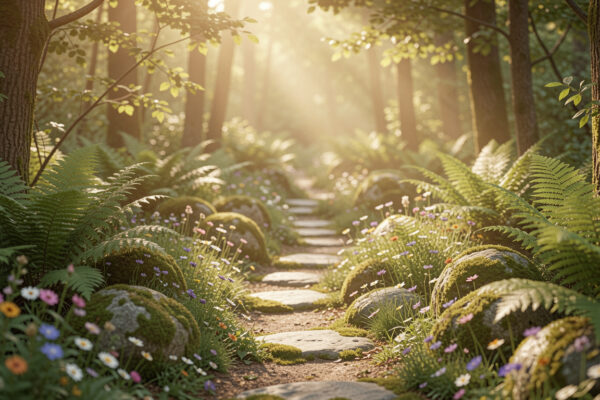
Stone steps with moss and tiny plants in the crevices are honestly a little romantic – they feel like an old cottage postcard. Years ago I let moss establish itself slowly and the steps gained personality, though slippery was a concern, so I keep a rougher stone and sweep it often. Plant small ferns and ajuga nearby for that lived-in, woodland edge look.
Purple Border Path
That purple throw of blooms next to stone paths is one of my favorite color combos – I always gravitate to purple in gardens. Once I planted lavender by a stone walkway and the scent at dusk made me stop and breathe every time – tiny luxury. Mix purple salvias or geraniums with silver-leafed plants to keep the palette soft and dimensional against the stones.
Front Yard Rock Garden
Rock gardens in front of a house instantly lift curb appeal – and they’re low maintenance if you choose right. I planted a few native sedums and they survived my late summer neglect when I was away – such a relief. Balance structure with random groupings of stones so it reads curated but not staged.
Green Stone Walkway
This stone path framed by lush green plants feels like it was meant to be explored barefoot, at least in my daydreams. I once walked a similar path in the rain and the scent was intoxicating – mud and green and that clean stone smell. Use a mix of textured foliage like hostas, low ferns, and creeping thyme to buffer the walkway and keep it inviting.
Built-In Stone Bench
A built-in bench carved into a slope is basically a garden hug – and yes, I have a favorite bench moment where I fell asleep reading in the sun. If you’re adding one, soften the base with small cushion plants and trailing vinca for an easy, cozy effect. Function and form marry beautifully here – bring a thermos and plan to linger.
Stacked Rock Feature
Stacked rocks can be sculptural and practical at once – I made a tiny cairn once to mark a spot and it became a focal point I didn’t expect. Choose stable stones and tuck hardy alpine plants like sempervivums at the base to echo the verticality. It’s an easy way to add height without heavy construction and it feels kind of meditative to build.
Lush Step Approach
Stone steps flanked by green plants look welcoming and a little magical at dusk when lights pick them out. I remember the first fall my steps filled in with creeping phlox – tiny blooms everywhere, like confetti. You can layer seasonal interest by adding bulbs in spring and low evergreens for winter texture, so it never looks bare.
How to Actually Make This Work For You
Start small and pick plants that match your light and soil – it’s the single best move to avoid disappointment, and honestly you’ll thank me later. If you have south-facing stones, choose drought-tolerant succulents, sedums, and thyme; shadier spots do well with ferns, ajuga, and saxifrages that love the moisture that stones help retain. Think about long-term spacing – plants will fill in, and if you clump too tightly at first you’ll be thinning later, which is annoying but fixable; instead, visualize mature size and leave breathing room so the stone remains visible and the design reads intentional. Use stones not just as decoration but as microclimates – place larger rocks where they’ll cast afternoon shade for a plant that prefers cooler roots, and tuck heat lovers against warm, sun-soaked surfaces. Mulch sparingly around stone beds with grit or fine gravel so water drains well and slugs have a harder time; plus, a gravel top looks tidy and keeps weeds down without hiding your pretty rock edges. Finally, accept a little imperfection – a missing plant, a patch of moss, a crooked stone – these quirks give a garden soul and make it feel like yours, not a showroom.
What are the best plants for hot, dry rock gardens?
Look for drought-tolerant choices like sedums, sempervivums, thyme, and low-growing lavenders – they love sun and well-drained soil. These plants store water or have small leaves so they don’t lose much moisture, which makes them perfect for sunny stone crevices.
Can I use native plants in a rock garden?
Absolutely – natives are often the smartest choice because they’re adapted to your local climate and soil, which means less fuss and better survival. Check native sedges, wild thyme, and regional alpine species for natural-looking, resilient plantings.
How do I prevent soil from washing out between rocks?
Use a crushed stone or gravel base with compacted edges, and add a bit of landscape fabric beneath planting pockets if erosion is bad – but don’t cover the soil completely, plants need to anchor. Also, plant roots quickly: ground covers and mat-forming succulents help hold soil in place over time.
Do rock gardens need less maintenance?
Generally yes, but they’re not zero-effort – you’ll still weed, prune, and replace plants now and then, especially early on as things establish. After the first year or two maintenance drops significantly, and that’s when they feel truly effortless – which is the goal, right?