Okay, so you want a dramatic curb appeal without making your house look like a haunted movie set – welcome to gothic home exterior for beginners. I totally get the itch for pointed arches, dark trim, and that brooding yet cozy vibe.
I wrote this because when I started, I felt overwhelmed by gothic styling terms and expensive restorations, and I learned a lot by trying small, bold steps first. I’ve painted trim at midnight and rescued a scrappy ivy patch, and I promise those tiny moves made my place feel instantly more intentional.
Below you’ll find ten easy, concrete ideas you can try this weekend or plan for over a season – each paired with a visual so you can picture the change. Let’s make your exterior moody, welcoming, and actually livable.
These 10 Gothic Home Exterior for Beginners Ideas You’ll Love
Dark Trim, Big Impact
Painting your trim and shutters a deep charcoal or black is the fastest way to add gothic drama without remodeling. It frames windows and doors like jewelry and suddenly everything else reads more intentional. I once painted just the front door and got compliments for weeks – small choices can feel luxurious.
Arched Entry Accents
Introduce an arch over the doorway or porch using a prefabricated trim or simple reclaimed wood cut to shape for a faux archway. This softens the boxy parts of older homes while adding a timeless gothic silhouette. If you’re on a budget, I recommend testing with a removable frame first so you can live with the look before committing.
Moody Color Palette
Choose one deep base color like navy, forest green, or near-black, then layer with muted accent tones for trim and hardware. This approach keeps the exterior cohesive while letting architectural details pop. You could try swatches on a board and view them at different times of day to avoid surprises.
Ivy and Climbing Greens
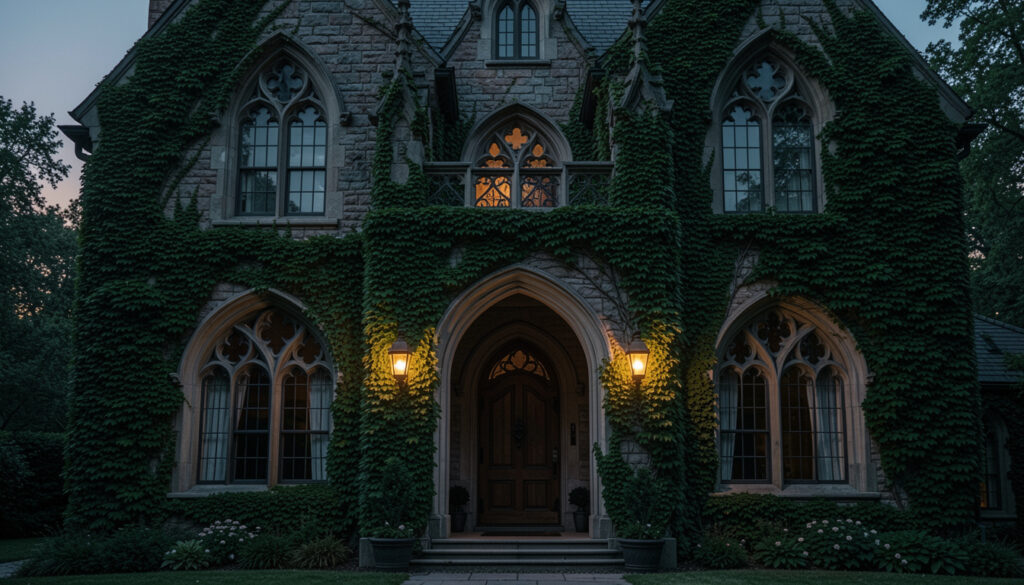
Letting ivy or climbing vines soften brick or stone creates that aged, storybook effect everyone imagines with gothic homes. It’s important to plant responsibly near mortar or wood so roots don’t cause damage, and selective pruning keeps the look intentional. When I added a clipped ivy column beside my steps, neighbors asked for my gardening tips immediately.
Gothic Windows and Mullions
Install faux mullions or peel-and-stick grids to mimic leaded glass without replacing panes, or add narrow trim to create tall, pointed window illusions. This gives the facade a vertical emphasis that feels classic and dramatic. I swapped a plain living room window for a mullioned overlay and the room suddenly felt like a little chapel of calm.
Stone and Texture Layers
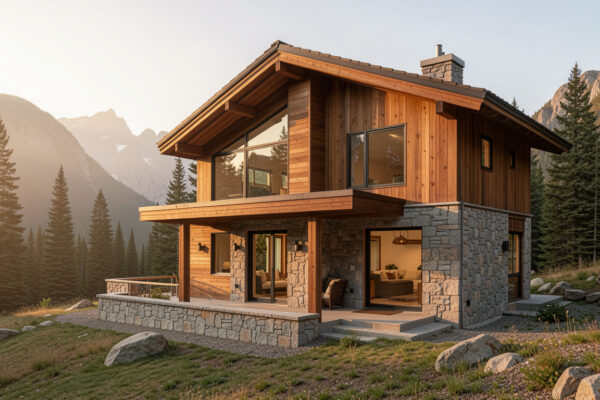
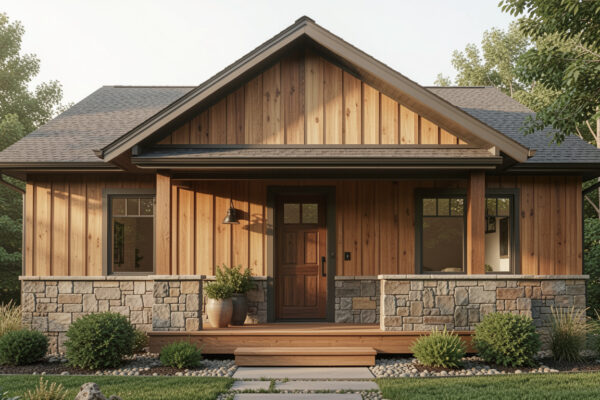
Add textured cladding like cultured stone panels or reclaimed bricks to one accent wall for an instant period look that doesn’t require structural work. Contrasting textures catch light differently and give your exterior depth. If you have a small budget, try a ledger stone veneer only on the porch or chimney to keep costs manageable.
Lantern Lighting Choices
Swap out modern fixtures for lantern-style lights in aged bronze or black to get that warm, inviting glow at night. Lighting placement matters – flank the door or highlight stonework to create layers of interest. I learned the hard way that too-bright bulbs ruin mood, so choose warm, lower-lumen bulbs for that cozy effect.
Mystic Landscaping Paths
Create a winding stone or gravel path edged with low, textural plants to lead the eye and set a storybook tone before someone even reaches the door. This feels more natural than a straight driveway and pairs beautifully with climbing vines and darker façade colors. One rainy morning as I walked my path, I realized the approach alone made guests slow down and smile – that moment felt priceless.
Gothic Porch Styling
Layer your porch with layered textiles in dark florals, a sturdy wrought bench, and potted evergreens to create a welcoming yet moody entry. Accessories like an antique mirror or vintage metal mailbox add personality without being kitschy. You might start with one dramatic piece and build from there so the space evolves naturally over time.
Whimsical, Subtle Details
Small touches like gothic house numbers, black hardware, or a sculpted weather vane give personality without screaming for attention. These details are where your personal taste really shines, and you can swap them seasonally if you like variety. If you’re unsure, I suggest picking items you can reuse inside the home later so nothing feels wasted.
How to Actually Make This Work For You
Start by prioritizing one visible change like paint, lighting, or a front path and give it at least a month to settle into your daily life before planning the next step – this keeps changes manageable and budget-friendly. Mix inexpensive swaps like fixtures or hardware with one investment piece such as stone veneer or a custom door to balance cost and impact. Finally, photograph your home in morning and evening light so you can see how colors and shadows shift and refine decisions with real-world feedback.
Can I get a gothic look on a modern house?
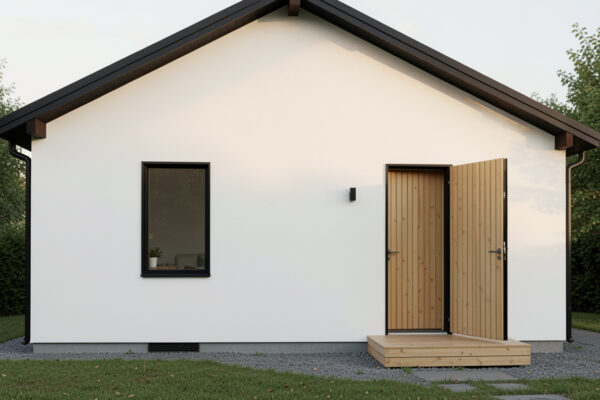
Yes – you can adapt gothic elements like dark trim, arched accents, and textured materials to modern lines for a hybrid look. The key is restraint – pick one or two gothic features and integrate them with clean, simple elements so nothing fights for attention.
Will ivy damage my exterior over time?
Ivy can be charming but it needs careful placement and maintenance to avoid harming wood or mortar. Keep it off vulnerable joints and prune regularly, or choose trained climbers with gentler root habits for closer structures.
How do I choose the right dark paint color?
Test large swatches on different sides of your house and observe them at multiple times of day before buying gallons. Cooler darks read differently than warm darks under sunlight, so match undertones to your roof and stone for harmony.
What budget-friendly first step should I take?
Paint accents like doors and trim or swap outdoor lighting for gothic-style lanterns to get the most impact for the least expense. These moves are reversible and give a real sense of the style without heavy investment.