I still get a tiny thrill every time I open my little shed and it doesn’t feel like a mini disaster zone – small garden shed storage organization ideas changed that for me. I used to shove everything in there and then spend ten minutes hunting for the trowel while the neighbor’s cat judged me. Now I actually enjoy organizing it, which feels wild but also very me.
I wrote this because you deserve a shed that works for you, not against you – whether yours is a narrow nook, a tiny backyard box, or a charming wooden cottage. I’ve tried cheap hooks, thrifted baskets, and even a wildly optimistic pegboard plan that I ripped out a month later. Through trial and a few spills of potting soil, I figured out practical setups that actually stick.
Below you’ll find 20 real-life small garden shed storage organization ideas with embedded inspiration and honest notes about what worked – so you can pick what fits your space and personality. Keep a mug of tea nearby – this is the good kind of planning.
These 20 Small Garden Shed Storage Organization Ideas Will Save Your Space
Stacked Firewood Nook
I love a tidy log pile – it feels rustic and so useful in a tiny shed. I once stacked logs like this and then tripped over a rogue piece, so lesson learned: give the pile its own corner and a little lip to keep things in place. If you keep firewood dry on a raised shelf, you get function and charm – win-win.
Shed with Double Doors
Having doors that open wide makes organizing a breeze because you can actually see everything without contorting yourself. When my friend moved in, we used one open door as a temporary workbench – not pretty, but it worked. You can hang tools on the insides of doors too – more space reclaimed.
Utensils Hung Neatly
Hooks and vertical storage are life-savers for long-handled tools like rakes and shovels. I use different colored tape on handles to avoid grabbing the wrong tool during gardening mania – tiny habit, big payoff. If you’re short on floor space, hanging stuff up is the obvious – and satisfying – choice.
Compact Shed Foundation
This little structure reminds me that a good foundation matters – raised floors keep things dry and make cleaning simple. Once, I stored potting soil directly on cold concrete and it got damp – learned the hard way. Consider simple pallets or rubber matting underfoot to protect supplies.
Sidewalk-Ready Storage
If your shed sits on a walkable path, think about how it looks from the yard – tidy shelves and a neat door give a major glow-up. I used to hide my shed behind shrubs until I realized making it pretty made me use it more. A little curb appeal goes a long way for motivation.
Tool Corner With Pegboard
Pegboard is classic for a reason – it keeps tools visible and easy to grab, which means you actually return them to their spot. I have a pegboard that’s covered in hooks, baskets, and one too-many plant hangers, but it’s mostly organized chaos. Try grouping tools by task – sowing, trimming, watering – and it’ll feel less overwhelming.
Cozy Dog House Add-On
If you have pets, think about adding a small nook for their stuff so it doesn’t clutter your workspace. My pup’s leash used to live on the floor, which was a hazard until I hung a cute hook by the door – instant improvement. Sometimes organization is just about making the right habit easier to keep.
Mower-Friendly Entrance
A clear path and low threshold mean your lawn mower and wheelbarrow can slide in without drama. I once tried lifting a mower over a step – don’t do that, promise me. Keep that entry free and your future self will high-five you every weekend.
Bike & Gear Corner
Storing a bike inside your shed is genius if you’re short on garage space – hang it or rest it on a slim rack. My bike lives indoors during winter and it feels indulgent, but also practical – no rust. Pair it with a couple of hooks for helmets and pumps and you’re sorted.
Potted Plant Display
Keeping plants at your shed entrance makes the whole space friendlier and helps you remember to water them – win. I have a tiny shelf that holds seedlings and it’s the cutest part of my yard. If you’re short on light, choose hardy varieties that tolerate shade.
Multipurpose Potting Bench
A small bench with storage below is both a workspace and a stash area for soil, pots, and gloves. I stained mine a cheerful color because why not – it made the chore feel less like work. Keep frequently used items within arm’s reach to save time and backache.
Roof Garden & Wood Storage
Green roofs are dreamy if you want a little extra planting space and they make the shed feel like part of the garden. The first time I added plants up top, my neighbor smiled at me like I’d joined a secret club. Just check weight limits and waterproofing – plant soil is surprisingly heavy.
Stacked Timber Shelves
Stacking wood on dedicated shelves keeps it dry and accessible, plus it looks very…satisfying. I used old pallets to create extra shelving and it felt like the thriftiest triumph ever. If you’re short on money, repurposed wood is your best friend.
Bike & Glass Door Charm
A shed with glass doors feels airy and lets you show off your organization – when it’s tidy, of course. One summer I painted the door frame and suddenly the whole shed looked intentional. If privacy is a concern, frosted film gives you the look without revealing the chaos.
Shovel & Rake Row
Grouping long-handled tools in a neat row makes everything easier to find and keeps handles from tangling. I started labeling each hook with a tiny sticker – yes, it’s extra, but it stops the accidental grab of the shovel when you need the rake. It’s the little systems that save time.
Shelf-Loaded Storage View
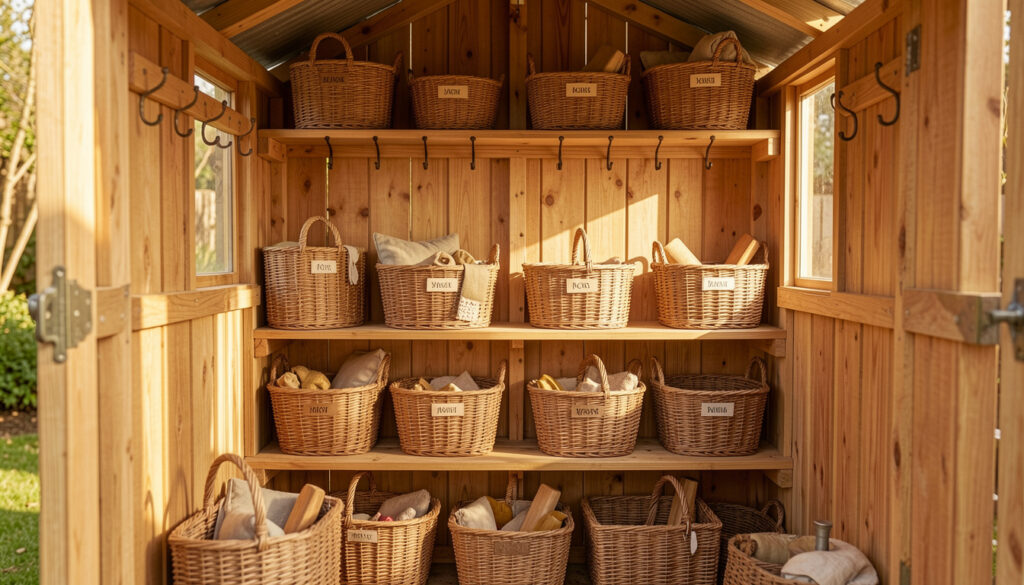
Deep shelving gives you tons of room for boxes and bins, but be careful – you can over-shelve and forget what’s in the back. I once found a whole bag of bulbs from two years ago – oops – so clear labeling is non-negotiable. Use clear bins if you like visual cues.
Trash & Recycling Spot
Designate a tidy corner for bins so they don’t become the shed’s focal point – out of sight, but accessible. My bins used to rattle everywhere until I anchored them to a shelf – solved. Small changes like that reduce daily friction and clutter.
Front-Open Potting Spot
Leaves and potting soil are less dramatic when you have a defined potting area that’s easy to sweep out. I keep a small broom and dustpan on a hook by this spot – hygiene meets efficiency. If you can, try to keep this area near an outside tap for quick rinses.
Brick-Backed Shed Nook
Brick walls give character and a sturdy surface to mount shelves or hooks – and they look great too. When I added a small mirror to bounce light, the shed felt bigger and cheerier – small magic. You don’t need perfect walls to create personality, just a plan.
Supplies & Tool Entrance
Keep frequently used supplies close to the door so you can grab and go – seed packets, gloves, and twine live near mine. I once made the mistake of storing seeds in a hot corner and half of them germinated in the packet – lesson, store cool and dry. Little habits like this keep your gardening season smooth.
How to Actually Make This Work For You
Start by measuring your shed and making a quick sketch – I promise this five-minute step saves hours of guesswork. Think about how you use the space: do you need a workbench, a bike rack, or just a place to stash seasonal items? Prioritize what you reach for most often and build around that – keep heavy things low, hang long tools, and use labeled bins for smaller items so nothing gets lost behind the paint cans. If you live somewhere damp, invest in raised shelving and moisture-resistant containers, and don’t be afraid to experiment – my current setup took three tries before it felt right. Keep a small cleaning kit inside and do a 10-minute tidy every few weeks; those tiny check-ins keep the system alive.
How do I start if my shed is tiny?
Begin with a purge – take everything out, sort into keep/donate/trash, and only bring back what you truly use. Then add vertical storage and multi-use furniture like a potting bench with shelves – it maximizes a small footprint and keeps things accessible.
What storage materials last outdoors?
Choose plastic bins with tight lids, galvanized metal hooks, and treated wood for shelving if your shed gets damp or unheated. A waterproof mat or pallet under stored items helps prevent rot and moisture damage – simple protections go a long way.
How can I keep tools from rusting?
Clean tools after use and store them off the ground in a dry spot – hang them or place them on slatted shelves so air circulates. A little oil on metal parts before winter also helps; trust me, it’s worth the tiny extra step.
Any tips for keeping the shed looking nice?
Paint the door or add plants around the entrance to make the shed feel intentional and cared for – this actually makes you want to keep it tidy. Use matching bins or baskets for a cohesive look and label them so your future self thanks you later.