Okay friend, if you have been thinking about a yellow home exterior for beginners, you are in the right place – I’ve been there and I want to make it simple for you. Painting the outside of your house yellow feels bold and cheerful, but you don’t need to be overwhelmed by choices or technical jargon.
I made so many small mistakes the first time I tried a bright color and learned what actually matters – that’s why I wrote this guide. I’ll walk you through approachable ideas, color pairings, and easy design moves you can try even if you’ve never painted an exterior before.
By the end you’ll have practical inspiration and step-by-step confidence to try a sunny look without regret.
These 12 Easy Yellow Home Exterior For Beginners
Classic Yellow With Shutters
This look pairs a warm yellow with contrasting green shutters, which instantly grounds the brightness and adds a cottage vibe. You can tape off the shutters and trim and paint them separately, which is a forgiving, beginner-friendly approach. I painted my first shutters a deep green and loved how the color made the whole house feel planted in the landscape.
Yellow Cozy Bench Accent
A simple bench against a yellow facade gives your exterior a lived-in, welcoming mood that feels effortless to create. Add potted plants around the bench and you’ve achieved a layered look without redoing the whole yard. You’ll find that small additions like this are the easiest way to test whether the yellow tone suits your daily vibe.
White Trim Freshness
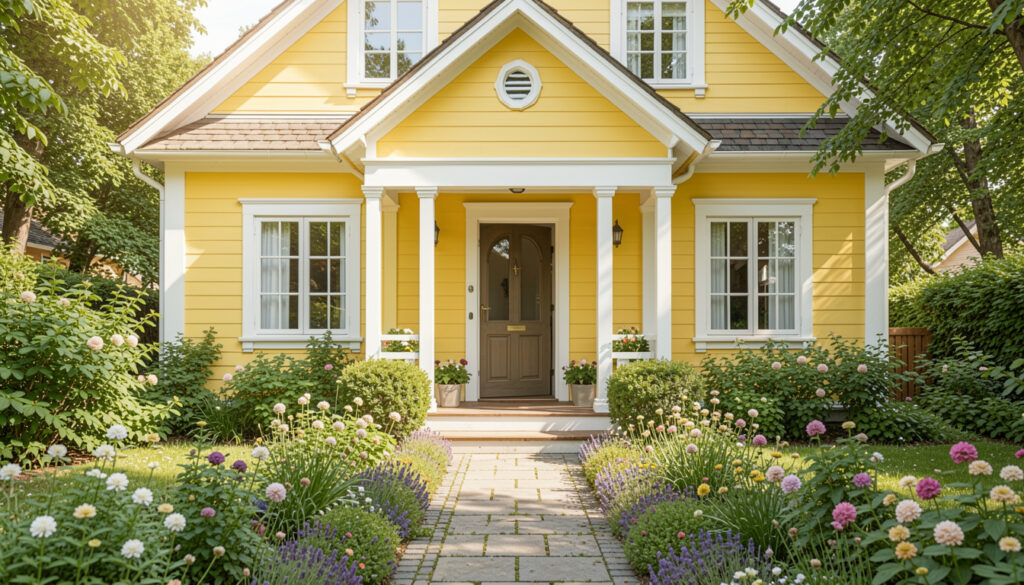
White trim is a classic way to temper a bright yellow exterior while keeping things crisp and modern. Start by painting a small area or primed sample board with your chosen yellow and white trim to see the contrast in different light. If you want a safe bet, choose a warm, creamy white since it plays nicely with most yellow shades and won’t feel too stark.
Pocket-Sized Yellow Cottage
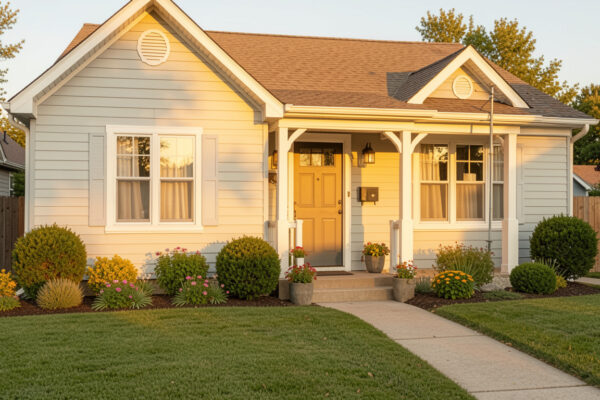
Small homes wear yellow beautifully because the color amplifies charm and makes compact facades feel cozy and intentional. Focus on clean, even strokes and keep trim details simple for a polished finish without fancy tools. One weekend I tackled a neighbor’s tiny cottage and the transformation felt dramatic even with minimal effort.
Soft Yellow With Classic Lines
Choosing a soft, muted yellow gives you sunshine without shouting, keeping architectural details visible and elegant. If your home has detailed molding, a mellow yellow will highlight those features rather than overpower them. You can sample shades on poster boards and watch them across the day to catch undertones you might miss in artificial light.
Sunny Yard, Sunny House
When your lawn and trees are lush, yellow on the exterior pops in the most natural, cheerful way that feels organic rather than staged. Think of the house and yard as one composition – your plant palette will either soften or sharpen the yellow’s effect. If you’re new to this, plant a few white or purple flowers first to see how they balance the facade.
Flower-Forward Curb Appeal
Lots of blooms in front of a yellow house create storybook curb appeal and distract from any tiny paint imperfections. Try container gardens and hanging baskets if you rent or aren’t ready for permanent landscaping. I always say flowers are like jewelry for a house – they’re easy to change with the season and surprisingly transformative.
Potted Plants and Texture
Placing potted plants near your entry softens bright yellow walls and introduces texture so the color reads warm instead of flat. Use terracotta, woven baskets, or painted pots to add depth and tie in other accent shades. If you want low maintenance, select a few hearty evergreens and seasonal annuals to rotate through the year.
Blue Shutters Pop
Blue shutters or doors paired with yellow siding are a cheerful, coastal-inspired combo that feels relaxed and intentional. The cool blue balances warm yellow so the overall look reads polished rather than overly sweet. You might be surprised how an accent door color changes the whole mood – mine felt like a little personality update with zero structural work.
Two-Story Corner Glow
A two-story yellow home on a corner lot can become a neighborhood landmark if you choose the right tone and trim contrast. Keep the base and foundation neutral so the color doesn’t feel heavy and anchor the house with darker rooflines or window frames. When painting tall walls, use scaffolding or hire a pro for safety – I painted the top half from a ladder and learned my lesson fast.
Porch Garden Charm
Cover porches and entryways with hanging baskets, climbing vines, and a painted yellow backdrop to achieve a welcoming scene that frames your door. Focus on layers so each plant draws attention without competing with your wall color. For a beginner-friendly project, start with two matching planters flanking the door to create symmetry and instant polish.
Pathway Leading Home
A path leading to a yellow house reads warm and storybook, especially when edged with simple greenery or low-growing blooms. Consider natural stone or warm-toned pavers to keep the palette cohesive and inviting. Once I installed a simple gravel path and the house felt completely different – that small change made the yellow feel like it belonged.
How to Actually Make This Work For You
First, always test large swatches in several outdoor locations and view them at different times of day because direct sun will change how that yellow reads – bring sample boards home and live with them for a few days. Second, decide what kind of mood you want – playful, coastal, cottage, or modern – and let that guide your trim, shutter, and door colors so everything reads intentional rather than random. Third, start small with accents like a painted door, shutters, or a bench and build up to a full exterior paint job once you are confident in the shade and finish.
How do I choose the right yellow shade?
Look at samples outside and consider how sunlight, roof color, and landscaping will affect the tone – warm yellows suit traditional homes while muted or creamy yellows often work better for modern styles. Test a few swatches on panels and observe them at morning, noon, and evening to catch undertones.
Will yellow make my house look smaller?
Not necessarily – lighter yellows can open up a facade while deep or very saturated yellows might make a small house feel more compact. Use lighter trim and reflective surfaces to help visually expand small exteriors.
What trim colors pair best with yellow?
Classic pairings include crisp white, deep green, navy blue, and charcoal-gray – pick one based on whether you want contrast or a softer blend. Try the trim color on a few accents first and see how it plays with your chosen yellow in different lighting.
Is exterior paint hard for beginners?
Painting an exterior takes planning but is approachable if you start with small areas, use quality primer and paint, and rent or buy the right safety gear – think ladders, drop cloths, and painter’s tape. Hiring pros for high or complex areas is a smart choice and still keeps costs reasonable if you do some prep and smaller projects yourself.