Okay friend, if you have a tiny lot or a narrow yard and you love grey, this is your moment – grey home exterior for small spaces can look cozy and sophisticated without feeling heavy. I get excited about curb appeal, especially when a compact house suddenly feels like it has personality.
I put this list together because I spent an entire weekend painting swatches on my own bungalow and learned so much about scale, trim, and accents that actually make a small space pop. You might laugh, but watching that little house transform convinced me to start collecting ideas for others dealing with tiny frontages.
Scroll through these 20 curated looks and practical notes so you can picture what works for your place and pick a direction with confidence.
These 20 Grey Home Exterior For Small Spaces Ideas
Charming Cottage Gray
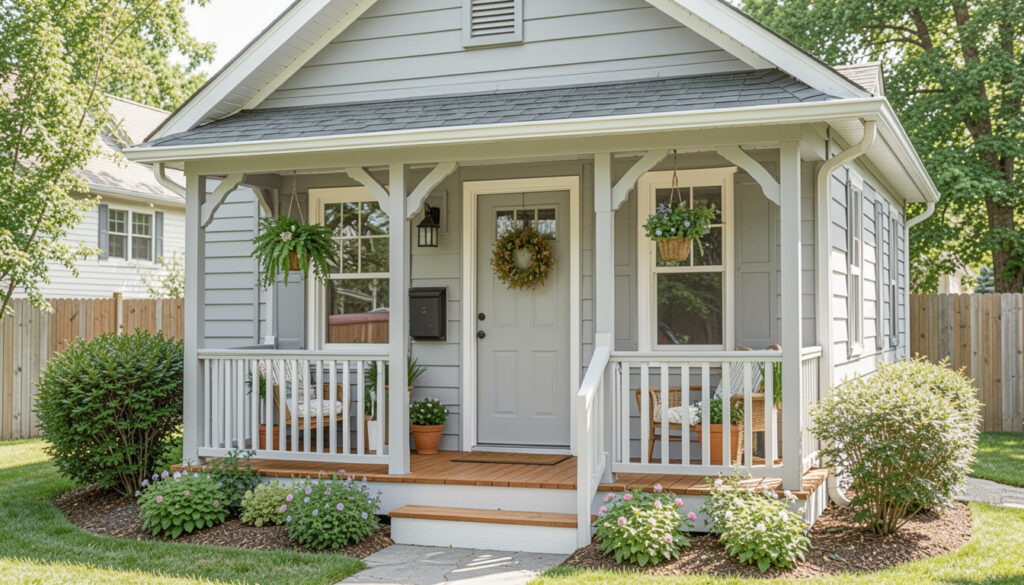
This classic light grey with crisp white trim reads charming and airy on a small cottage facade, and it makes windows feel bigger. Pairing the grey with white accents keeps the look fresh, which is great when space is limited. I loved this style when I first moved into my narrow-front home because the white trim reflected so much light into the street.
Bright Porch Retreat
A soft grey exterior combined with white outdoor furniture turns a tiny porch into a little retreat that reads welcoming instead of cramped. Adding potted plants and layered textiles helps the porch feel intentional and larger. If you want to relax outdoors but have a small space, this approach makes it simple to achieve a cozy vibe.
Garage-Front Glam
When your garage faces the street, choosing a mid-tone grey for both siding and doors can unify the front and reduce visual clutter. Choosing white trim around the garage softens the mass, and it reads more polished than leaving raw metal or mismatched doors. I once repainted a garage to match the trim and it made the whole block look calmer.
Subtle Two-Tone Drama
A small house benefits from a two-tone grey palette where a darker lower band anchors the building and a lighter upper portion lifts it visually. This trick creates the illusion of depth without adding bulk, and it works particularly well when you have minimal landscaping. Try carrying the darker hue to window sills or a small fence to tie it all together.
Fresh Modern Neutrals
A clean, soft grey with white detailing feels modern without being cold, which is perfect for small suburban homes that need personality. You can highlight architectural features like a charming gable or porch beams with a slightly contrasting trim. I mixed a warm grey on my own façade years ago and was surprised how cozy it looked at dusk.
Green-Backed Contrast
If your small yard has lush grass or shrubs, a medium grey exterior will let the greenery sing without competing for attention. White or cream accents keep the composition light, making the whole property feel balanced. Remember that landscape can do a lot of the heavy lifting in small spaces, so let it shine next to your grey walls.
DIY Accent Details
Adding small DIY painted details, like a window frame or a planter box in a complementary tone, gives a tiny house personality without big expense. You can update these accents seasonally if you want a quick refresh. When I painted one window frame a soft navy it felt like giving my home a tiny, confident outfit.
Greenery-Framed Front
A grey exterior surrounded by climbing vines or neat hedges creates a lived-in, storybook feel that distracts from small scale. The plants soften hard edges and add depth so the facade reads as layered. If you love a slightly wild look, let a vine climb one side and keep the other neat to maintain balance.
Monochrome Side Facade
Painting the side of a narrow home in a single grey hue can unify the profile and reduce visual busyness when lots are tight. A continuous color helps the eye move along instead of stopping at awkward corners. For my townhouse, a monochrome side wash made the whole unit feel longer and sleeker.
Bold Trim Accents
Using a deeper grey or even black for trim on a small home creates crisp edges and a modern look without overwhelming the facade. Keep the body in a softer grey so the contrast reads intentional, not heavy. You could test a small section first to make sure the contrast feels right from the curb.
Porch Planter Styling
Two simple white planters on a grey porch make a tiny entrance feel curated and elegant, and they draw the eye up to your doorway. Choosing symmetrical plantings adds formality without taking up much space. I once swapped a jumble of pots for matching planters and it instantly elevated our tiny entry.
Staged Steps and Entry
On a small home, the stairs and front landing are focal points, so a charcoal grey paired with white planters or a bright door color guides attention gracefully. Keep accessories minimal to avoid visual clutter. You might add a single bench or a slim umbrella stand to keep the space functional yet attractive.
Classic Trim and Steps
White trim and simple, classic stairs against a mid-grey facade read timeless and neat, which is great if you want the house to age well. Scale your stair treads and risers to the size of your porch so nothing feels oversized. When I measured for new steps, making them slightly narrower than the doorway helped maintain proportion on my narrow lot.
Shutters and Contrast Pop
Adding black shutters to a pale grey house creates a graphic, charming contrast that reads classic even on small facades. Keep the shutter size appropriate to window height to preserve balance. You can swap them later for a different color if your tastes shift, so think of them like a mood accessory.
Cozy Roadside Curb
A small home sitting close to the road benefits from a neutral grey that reduces the abruptness of proximity and invites a softer transition between street and home. Low plantings and a simple path help the house feel approachable. If you want to create privacy, consider layered hedges that still allow the grey to show through.
Balanced Light and Dark
A combination of warm grey siding with crisp white trim creates a lively balance that keeps a small home from feeling flat or shadowed. Reflective trim and light-colored soffits will bounce light into tighter corners. I often recommend this combo to friends because it photographs well at all hours.
Pop Door Color
Pairing a cool grey exterior with a cheerful blue door brings personality to a compact facade without overwhelming it visually. The door becomes a focal point and can make the whole house feel friendlier. You can start with sample pots of color next to the door to see how it reads in natural light.
Mixed Materials Charm
Combining grey siding with wood trim or accents introduces warmth and texture, which is helpful when square footage is limited. Metal roofing details or exposed beams can add an interesting layer without taking up space. I paired reclaimed wood accents on a tiny facade and felt like the house got a cozy sweater overnight.
Modern Lines and Walkways
Clean geometric landscaping, like a brick or paver walkway paired with a grey modern home, makes a narrow yard feel intentional and wider. Using large pavers with minimal joints creates the sense of more square footage and less visual noise. If you want a contemporary result on a budget, try a simple gravel strip with stepping stones to mimic the look.
Timeless Grey Statement
A well-chosen grey paint can give even the smallest house a timeless, cohesive presence that complements the neighborhood and still feels personal. Keep landscaping low and choose one bold element, like a door or light fixture, to avoid overcrowding the facade. You may find that selecting a palette first helps you make other decisions quickly and confidently.
How to Actually Make This Work For You
Start with a few small tests before committing to a full paint job, like painting a trim sample and standing back at different times of day to see how light affects the shade; think of color as something that changes with the weather and your mood. Prioritize one or two focal elements – a door color, a pair of planters, or a contrasting trim – so that your small exterior reads purposeful rather than busy, and measure proportions carefully so every piece feels like it belongs. Finally, use plants and lighting strategically to add depth and warmth, because small spaces rely on layered details to feel complete.
How do I pick the right grey for a small house?
Pick greys with a warm or cool undertone that complements your neighborhood light and surrounding landscaping – test samples on different walls and view them in morning and evening light. Think about pairing the main grey with a lighter trim and a small pop accent so the house always reads intentional.
Will dark grey make my house look smaller?
Dark grey can visually shrink a structure if used as the dominant color, but it can also create a dramatic, cozy effect when balanced with lighter trim and reflective accents. Use darker shades for trim or lower bands and lighter greys for the main body if you want to avoid a heavy look.
Can I mix materials with a grey paint palette?
Yes, mixing materials like wood, metal, and stone with complementary grey tones adds texture and warmth that helps small homes feel layered rather than flat. Keep the material palette limited to two or three elements so the composition remains cohesive.
How do I make a small front porch feel welcoming?
Choose a light grey backdrop, add two matching planters or a slim bench, and introduce a bright door or soft textiles to give the porch personality without cluttering it. Scale matters, so use smaller, proportionate furniture and keep arrangements symmetrical when possible.