Okay friend, I know the idea of a ranch home exterior makeover for beginners can feel huge, but it’s actually one of the most rewarding quick projects you can do. I fell in love with updating my own ranch-style house because small changes made it feel brand new without breaking the bank.
I wrote this because I remember staring at my tired front yard and wishing someone would hand me a simple plan – so I tried a few things and kept what worked. Between paint, plants, and a weekend of elbow grease I learned what gives the biggest return on time and energy.
You’ll get ten beginner-friendly ideas that I actually used or tested, step-by-step mindset tips, and clear next steps so you can pick one project and start this weekend.
10 Simple Ranch Home Exterior Makeover For Beginners
Fresh Paint, Big Impact
Painting is the fastest way to change the whole vibe of a ranch home, and you don’t need pro skills to do it well. I remember choosing a soft, warm white and feeling instantly proud the moment the first wall looked crisp, which gave the whole place a fresh personality. If you pick two complimentary colors for trim and accents you can create a curated look in a single weekend with basic rollers and painter’s tape.
Swap Your Front Door
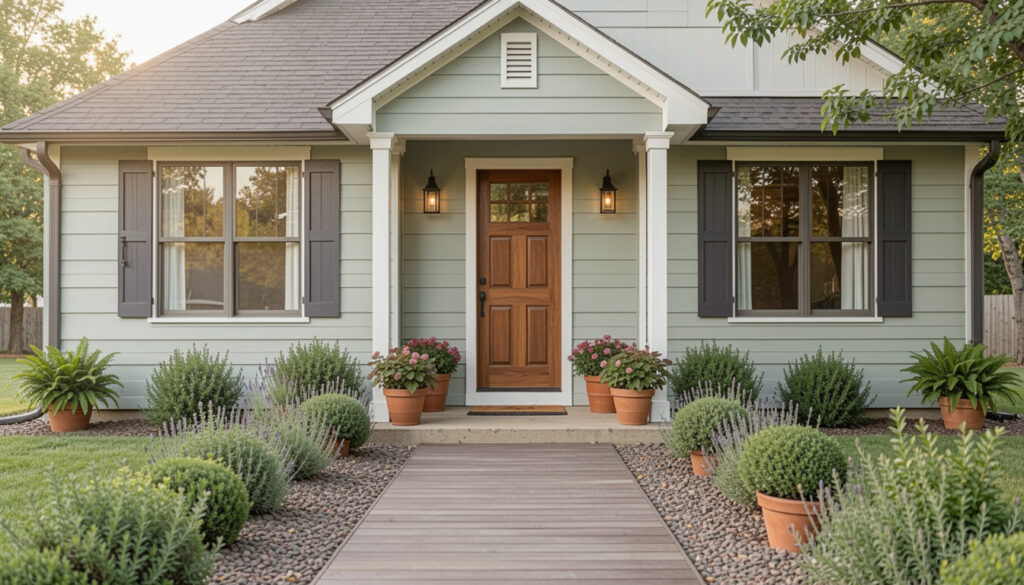
New or repainted front doors change curb appeal in a way that feels dramatic but is actually beginner-friendly. I painted my door a bold red one rainy afternoon and neighbors literally stopped to compliment it the next day, so don’t underestimate color. For a low-cost upgrade you can also swap hardware and add weather-stripping to make that entrance both pretty and practical.
Add Simple Walkway Charm
A defined walkway gives a ranch house immediate structure and guides the eye in a pleasing way, and it can be done affordably with pavers or reclaimed brick. When I laid a simple path using a neighbor’s leftover pavers, the front looked intentional instead of patchy, and guests commented on how “put together” it felt. You can edge the path with low plants or solar lights for an extra welcoming touch.
Potted Plants, Instant Life
Container greenery gives you control over color, height, and placement without changing permanent landscaping, which is perfect for beginners. I started with three matching pots flanking the door and it transformed that flat facade into a focal point, plus they are easy to swap seasonally if you get bored. Choose plants that thrive in your light conditions and use a good potting mix so they look lush right away.
Trim and Clean Up
Sometimes the best makeover is a deep tidy-up: prune overgrown bushes, power-wash siding, and pull weeds from beds and cracks. I spent a morning with my kids pulling ivy and the house instantly looked years younger; little things like fresh edges and clean gutters speak volumes. After cleaning, reassess what areas need paint, mulch, or a new plant so your next project is focused.
Layered Flower Beds
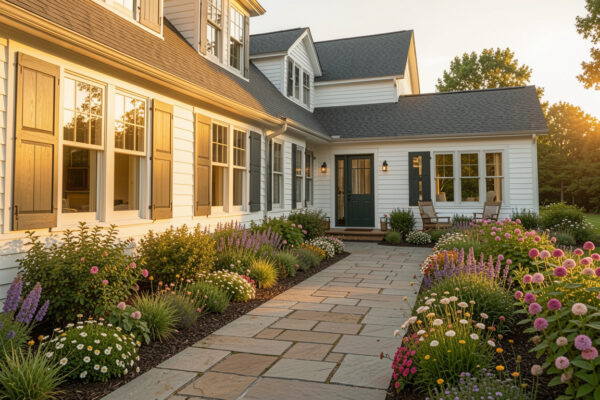
Creating layered flower beds with a mix of perennials and annuals adds texture and seasonal interest to a ranch home’s low silhouette. I dug a simple bed along the front of my house and planted taller shrubs in back with low bloomers in front, which made the whole foundation feel more intentional and less flat. If you start small and add compost, you’ll see the plants fill in quickly and require less replacement over time.
Modern House Numbers
Swapping out old numbers for a clean, modern set is a tiny detail that reads as a big style move. I replaced mine with black metal numbers and suddenly the facade felt contemporary and cared for, which helped sell the overall update. Pick a finish that ties into your door hardware or lighting for a cohesive, designed look.
Window Boxes for Curb
Window boxes are a charming, low-commitment way to add color and soft texture across a ranch’s horizontal lines. My grandmother taught me to pick trailing plants for the edges and a few upright blooms in the middle, and that combo always looks fuller than expected. They are lightweight to install and make the windows pop without expensive landscaping.
Replace Shutters Easily
New shutters or even painted faux shutters can add rhythm and contrast to a wide ranch exterior, helping the structure feel balanced. I painted simple board-and-batten shutters a dark charcoal and it framed the windows so well that passersby assumed everything inside was updated too. Choose durable materials and secure them properly so they last through seasons and storms.
Lighting That Welcomes
Good lighting changes how your home reads both day and night, and adding a couple of fixtures or path lights is a fast way to elevate curb appeal. I installed warm LED sconces and a pair of solar path lights the same weekend and loved how safe and inviting the place felt after dusk. Focus on warm color temperature and aim for layered lighting- door, path, and accent – to get a designer look without complicated wiring.
How to Actually Make This Work For You
Start by walking your property with a notebook and taking photos from the street so you can spot the biggest visual problems and prioritize them – often one focal change like paint or a door makes the rest feel solved. Set a realistic budget and pick a single weekend project if you tend to get overwhelmed, because momentum builds confidence and small wins encourage bigger improvements down the road.
How much should a beginner expect to spend?
It depends on the project – simple paint refreshes or potted plants can be under $200, while front door replacements or professional landscaping start higher. Start with the low-cost high-impact items and save for larger projects once you see results – that way you avoid costly mistakes.
Do these updates increase home value?
Most basic exterior improvements add curb appeal and can increase perceived value, especially when they improve first impressions and maintenance. Buyers often notice thoughtful updates like fresh paint, clean beds, and good lighting and they tend to be cost-effective for resale.
Can I do these projects alone?
Yes, many of these ideas are beginner-friendly and doable solo or with one friend, especially painting, planting, and swapping hardware. For projects involving electrical work, large trees, or heavy masonry consider hiring a pro to keep things safe and code-compliant.
What order should I tackle projects in?
Prioritize fixes that affect function and first impressions: clean and repair, then paint and door, and finally decorative elements like plants and lighting. That order helps you make the most visible improvement quickly and saves decorative touches until the structure is sound and clean.