Okay, friend, I know the struggle – you want a cute small home exterior on a budget and zero stress, and I totally get it. I’ve spent weekends scouring thrift stores and testing paint chips until my cheeks hurt, so I’m writing this like I’m telling you what actually worked for me.
This article exists because tiny houses deserve big curb appeal without a giant bank transfer – I learned that a few strategic swaps can transform a whole look. I want to save you the trial and error I went through and hand over ideas that are simple, affordable, and actually charming.
Below are 20 picture-ready ideas and real-life tips you can use this weekend – I promise you’ll walk outside smiling.
These 20 Small Home Exterior On A Budget Ideas Will Inspire You
Potted Porch Personality
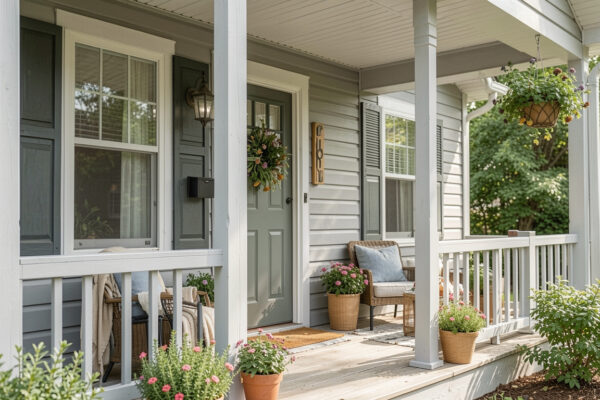
Layering a couple of mismatched clay pots with inexpensive plants can make a tiny porch feel curated and warm, and you don’t need a landscaping degree to do it. I once bought two clearance ferns and grouped them with a painted stool – suddenly the porch looked intentional and loved. If you swap seasonal blooms, the front always feels fresh without major expense.
Clean White, Big Impact
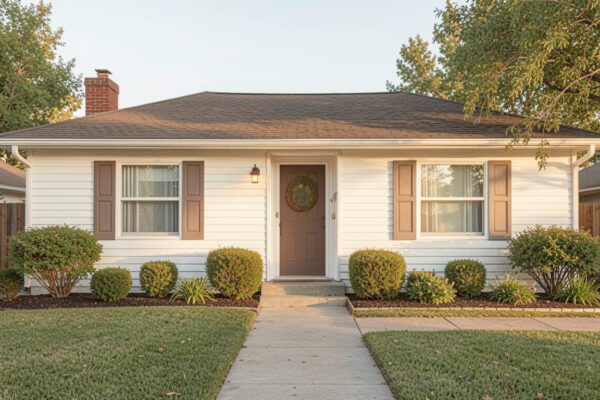
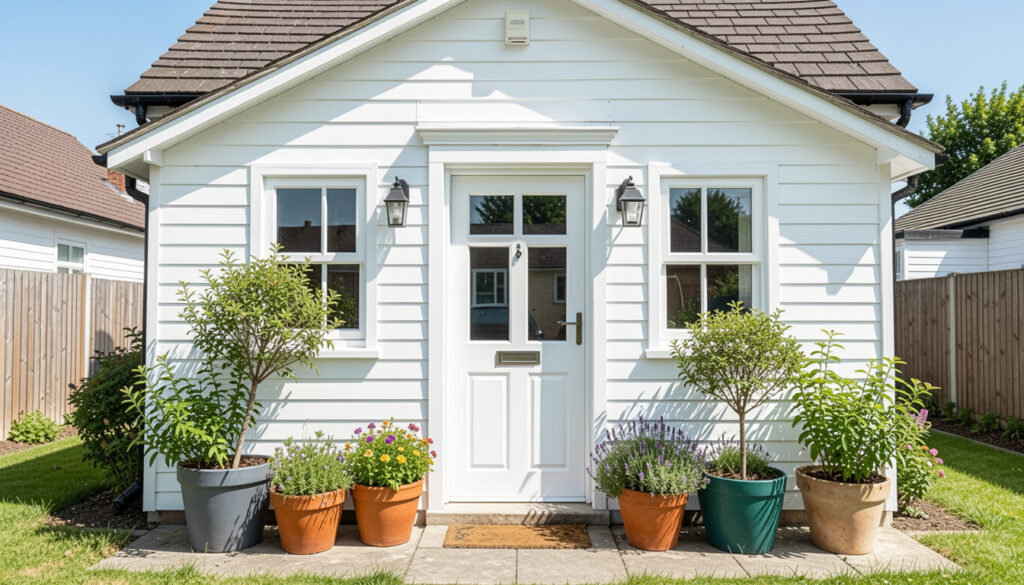
Fresh white paint on brick or siding brightens a compact façade and reflects light into your yard, which makes everything seem more open. You can DIY most of the prep and painting, and a weekend of work yields weeks of compliments – it’s the kind of effort that feels worth every minute. Pair with simple green shrubs to keep the budget sensible and the look sophisticated.
Bold Door, Simple Upgrade
Painting the front door a saturated color changes a whole house’s personality for under fifty dollars in paint, and the rest of the home can stay neutral. I chose a moody brown for my rental once and the neighbors asked for the brand – tiny change, massive effect. It’s a flip-everyone-notice trick that makes the entry feel custom without custom costs.
Green Shutters, Cozy Vibe
Adding painted shutters or even faux shutters gives the illusion of architectural detail, and you can cut costs by using reclaimed wood or store-bought panels. When I painted old boards left at a neighbor’s curb, they instantly read like classic charm rather than DIY. It’s a small investment that gives your home a framed, finished look.
Floral Front, Natural Warmth
Planting layered flowers around a small stoop softens edges and invites people in, and perennials will keep returning so your budget stretches season after season. I planted a mix of cheap bulbs and bargain perennials and by year two my curb looked like a florist curated it. You don’t need symmetry – relaxed groupings feel more lived-in and welcoming.
Dark Roof, Sleek Contrast
A dark roof or painted gable can anchor a small home visually, making the proportions feel intentional and polished. You can achieve similar contrast with shingles cleaner or a temporary stain if reroofing is out of budget. Use darker tones to highlight lighter siding and the whole exterior pops without heavy renovation.
Cozy Blue Cottage Charm
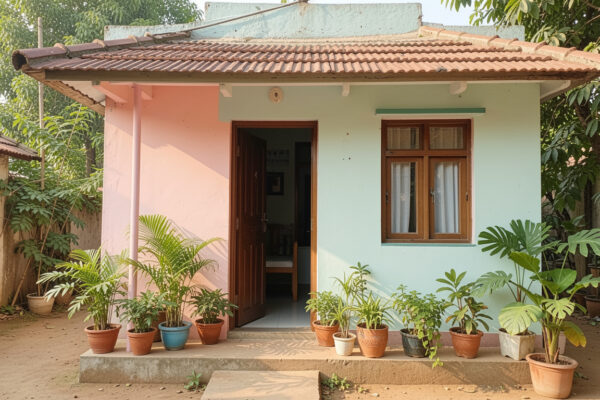
Soft blue siding with crisp white trim evokes that classic cottage energy that never feels fussy, and paint is the friend of a small budget. I swapped out a dingy beige for a gentle blue and friends thought we’d rebuilt the house, but it was just paint and patience. It’s a great move if you want personality that reads timeless and calm.
Stone Steps, Rustic Welcome
Adding a simple stone or brick walkway creates a guided entrance and costs way less than a full patio redo, especially if you use pavers or recycled stones. I patched an uneven path with salvaged cobbles and the whole approach felt elevated overnight. When you physically lead visitors to the door, it magnifies curb appeal even in a compact front yard.
Red Roof Pop
A red roof or metal accent can create instant personality on a small silhouette, and you can mimic the effect with painted trim or a bright awning. I almost never recommend expensive swaps, but a small patch of color draws the eye upward and makes the house feel custom. It’s playful and works especially well in green, rural settings.
Black Window Trim Chic
Painting window frames black on a white exterior adds modern structure and creates crisp, magazine-ready lines without pricey replacements. One summer I tackled every window frame and it transformed the façade from sleepy to styled without replacing a single pane. Black trim is an easy way to add drama while keeping costs down.
Twin-Tone Entry Balance
Using two complementary tones – like a muted green with white trim – separates the entry visually and adds dimensional interest for very little money. I tested this by painting only the lower half a different shade on a friend’s tiny duplex and suddenly both units felt bespoke. Stick to two colors to avoid visual clutter and keep the look cohesive.
Hilltop Cottage Simplicity
When your home sits on a slope, embrace the landscape with natural plantings and minimal hardscape to enhance views rather than fight them. I planted native grasses and a few small trees to frame the house, and the curb appeal felt effortless and in tune with the setting. The trick is to choose low-maintenance plants that look purposeful.
Gray Neutral, Modern Calm
Soft gray siding with white trim reads clean and modern on a small home and hides everyday wear better than pure white. I refinished a rental with warm gray and the upkeep dropped while the style stayed current for years. It’s a practical choice when you want subtle sophistication on a budget.
Orange Door Statement
An unexpected orange door creates a joyful focal point and pairs beautifully with neutral siding, and you can DIY it in an afternoon with just primer and topcoat. My sister painted hers and suddenly porch gatherings felt celebratory, like a tiny party every time someone knocked. Bright doors are confidence boosters for a budget-friendly façade refresh.
Open Field Cottage Feel
If your small home sits on a generous lawn, keep plantings simple and let the architecture breathe, adding clustered shrubs close to the house for texture. I once cleared out overgrown beds and learned that negative space can be as striking as full gardens. A minimalist approach reduces maintenance and highlights small details like windows and doors.
Stone Accent, Little Cost
Installing a small stone accent wall or using stone veneer on a stoop adds heft and permanence without reworking the entire exterior. I used leftover stones from a neighbor’s project to create a little column and it looked like a planned upgrade rather than a patch. Using natural materials strategically gives a small house a grounded, enduring look.
Chimney Charm, Classic Touch
Highlighting a chimney with paint or simple trim makes it feel like an intentional architectural feature rather than an afterthought, and it’s a small detail with big personality. I dry-brushed mine to bring out texture and the whole profile felt cozier. Subtle attention to features like this reads expensive even when it isn’t.
Woodland Steps, Garden Entry
Stone steps framed by flowers and small trees create a welcoming procession that makes a tiny house feel storybook, and you can source inexpensive materials if you shop sales and salvage. I once built a tiny staircase from reclaimed flagstones and the approach became my favorite corner of the yard. The key is blending hardscape with plantings for a lived-in look.
Blue Shutters, Sweet Accent
Blue shutters or painted accents bring a seaside or cottage energy that’s both cheerful and affordable, and you can hand-paint details for that bespoke charm. One weekend I repainted a neighbor’s shutters in exchange for coffee and it transformed both our streetscapes. Little color pops make your home feel intentional without a huge price tag.
Brick House, Timeless Beauty
If you have brick, celebrate it by cleaning and sealing rather than covering, and use complementary paint on trim to modernize the look affordably. I pressure-washed a stained brick façade and added new hardware to the door, and suddenly the house looked cared for and classic. Bricks naturally read as quality, so small investments in upkeep go a long way.
How to Actually Make This Work For You
Start small and prioritize one visible change you can complete in a weekend, like painting a door or arranging pots, then live with it for a month to see how it feels and what else needs attention, because pacing your projects keeps both your wallet and your sanity intact. Focus on high-contrast accents and low-maintenance plants so you get maximum style for minimal upkeep and cost, and don’t be afraid to ask neighbors for leftover materials or swap labor with a friend to stretch your budget further.
How much will these updates typically cost?
It depends on the project – simple paint and planters can cost under $100, while stone or structural changes may run higher, but most curated looks come from time and selection rather than huge expense. Start with affordable focal points to see big impact for little money – you can always scale up later.
Can I do these projects myself if I’m not handy?
Yes – many of these updates are weekend DIYs that require basic tools and patience, and there are tons of tutorials to guide you step by step. If a task feels risky, hire a pro for that single part and tackle the rest yourself to keep costs down.
What plants are best for low maintenance?
Choose native perennials, ornamental grasses, and drought-tolerant shrubs that fit your climate and soil, because they will establish quickly and need less care over time. Group plants with similar water needs together to simplify maintenance – this small planning move saves both money and effort.
How do I choose a color palette that won’t feel dated?
Stick with one neutral base and add one or two accent colors for doors, trim, or shutters to keep the look timeless and flexible. Test swatches in natural light and live with them for a few days before committing – color looks different at dawn, noon, and dusk.