I still remember the afternoon I realized the best place to put a bench in the garden was wherever my feet wanted to pause – that tiny thought changed how I use our backyard. The phrase “best place to put a bench in the garden” feels oddly specific, but trust me, it’s the little decisions like placement that make a garden feel lived-in and cozy.
I wrote this because I kept moving benches around until things finally felt right – and my friends kept asking where to sit when they came over. I’ve tried benches by the pond, under trees, and even on a mistake of a concrete slab, so I’m sharing what worked and what didn’t.
By the end you’ll have 15 real-life spots to consider, plus little tips from my trial-and-error so you can pick the perfect bench spot for your garden vibe. Let’s make your outdoor space feel like an extension of your living room – only greener.
These 15 Bench Spots in the Garden You’ll Love
DIY Cinderblock Bench
This one screams utility-meets-charm – I once stacked cinderblocks and topped them with reclaimed wood for a weekend project that outlived the weekend. If you like a bit of industrial edge, placing a bench against a building or wall gives you shelter and structure, plus a clean backdrop for potted plants. You can get creative with cushions, and honestly, it’s the bench I turn to when I want stability and a place to set a lemonade.
Walkway Paired Benches
Two benches facing a brick pathway make even the simplest stroll feel intentional and picture-perfect. I often imagine chatting with a neighbor here, swapping small talk while our dogs sniff the same bush – very suburban movie vibes. If you want to encourage pauses during walks through your garden, line a path with seating and watch how people use it differently.
Center Garden Bench
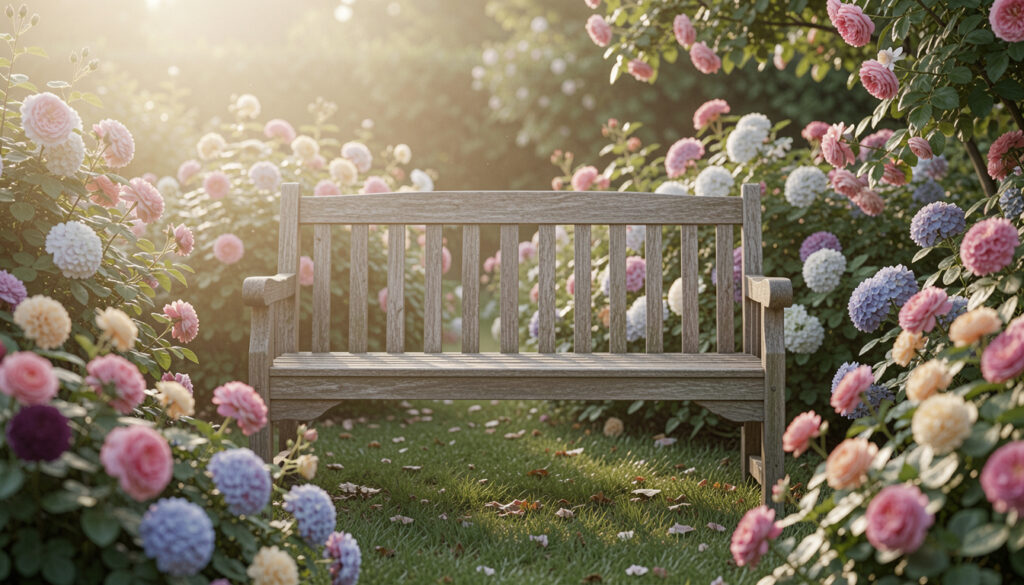
Placing a bench right in the middle of flower beds turns it into a living room for pollinators and humans alike, and I can’t resist sitting there with my knees tucked up while sipping tea. When I did this with peonies, I discovered a quiet morning ritual where you notice birds you’d otherwise miss. You’ll want to protect the plants with stepping stones so the bench stays approachable and the flowers aren’t trampled.
Bold Blue Accent Seat
A painted bench in a standout color like blue becomes a focal point and mood lifter, and I learned this when I painted an old bench to cheer up a dreary corner – instant uplift. Put it where the eye naturally lands from the kitchen window, and you’ll get happy little glimpses all day. It’s such a simple change, but you’ll catch yourself smiling at it when you walk by.
Workbench Turned Seat
Bench-plus-tools next to a flowerbed makes the space feel lived-in and functional, and I’ll admit I’ve sat on my potting bench while fixing a hose because it felt efficient and oddly satisfying. If you’re the kind of gardener who likes to tinker, put seating near your workspace so breaks happen without losing momentum. It’s practical, and you get to keep your gloves close by.
Grassy Twin Benches
A pair of benches on the lawn invites conversation and lazy afternoons, and at one summer picnic I watched two friends move from the blanket to the benches and the afternoon somehow stretched longer. You can angle them slightly toward each other to make intimate chats easier, and be prepared for kids to use them as forts. I find the symmetry calming, even if it’s imperfect.
Handy Repair Bench
Placing a bench where you occasionally do maintenance – trimming, staining, or sanding – keeps tools reachable and breaks comfortable, which I learned while refinishing a bench for my friend’s birthday. Put it in a shaded spot so you can work longer without frying in the sun. You’ll love having a place to sit while you step back and admire your progress.
Patio Adjacent Bench
Next to a patio or paved area a bench extends your entertaining space and I use that spot when we need extra seating during barbecue season. It’s also a great place to put a couple of throw pillows for an extra-cozy feel. If you have a brick wall or trellis behind it, add climbing plants and it becomes a perfect photo backdrop for parties.
Garden Centerpiece on a Plinth
A bench surrounded by curated planting beds creates a theatrical garden moment, and the first time I tried this, neighbors stopped to ask about the plant names. If you want your garden to feel intentional and a little formal, center seating within a circular bed or gravel ring. It’s dramatic in a calm way, and you’ll find yourself choosing outfits for this little stage – true story.
Mobile Bench on Wheels
A wheeled bench saves so much decision drama because you can move it with the light – I call this my “seat first, plan later” move and it’s honestly freeing. Roll it into sun or shade depending on your mood and it instantly changes the view. Just be mindful of uneven lawns so it doesn’t tip when someone plops down.
Pondside Serenity Seat
Putting a bench beside water gives you that spa-like calm without the price tag, and I once spent an hour just watching the koi with a mug of very cold coffee because I couldn’t tear myself away. The sound of water plus a comfortable seat is unbeatable for clearing your head. You’ll want to add a waterproof cushion or mat so the bench doesn’t get ruined by splash or rain.
Stone Pathway Bench
A bench along a stone walkway feels timeless and I remember sneaking out here as a teenager to read because it felt like a secret courtyard. Situate it where paths converge so it naturally becomes a resting point during a garden tour. If privacy matters, tuck in tall perennials or ornamental grasses behind the seat.
Cement Corner Bench
Putting a bench on a cement pad close to bushes can feel unexpectedly cozy rather than industrial, and I transformed a spare concrete corner into a little refuge with lanterns and a soft throw. If your yard has busy insect life, consider elevated planters nearby to keep critters at bay. It’s a proven spot for late-night conversations and meandering playlists.
Bright White Field Bench
A white bench in the middle of a green expanse reads so fresh that I’ve been known to stage impromptu photo sessions there with my friends – yes, we’re basic like that. Use it where the lawn offers sweeping views of the garden so you always have a clean visual anchor. It’s cheerful, low-effort, and looks immaculate against summer grass.
Forest Clearing Pair
Tucking benches into a wooded patch creates a secretive, storybook vibe, and I once discovered a hidden corner like this on a hike and vowed to recreate it at home. Place seating where natural light filters through the trees for speckled shade that’s perfect for reading. You’ll get that “I found a treasure” feeling every time you step into that clearing.
How to Actually Make This Work For You
Think of bench placement like choosing a favorite seat in your house – pick spots where you naturally linger, then make small adjustments to improve comfort and function. Start by observing your garden for a few days: where do you walk most, where do you find yourself looking when you step outside, and which spots feel private versus public? Then test with a lightweight or wheeled bench before committing, and don’t be afraid to move cushions, add a small side table, or shift plantings to nudge the area into something you actually use and love.
How far should a bench be from the house?
It depends on how you plan to use it – for quick coffee breaks, closer to the house is convenient, while for longer stays or privacy you might place it farther into the garden. I usually keep one bench near the back door and another tucked deeper among plants for variety. Consider sightlines and shelter from wind when choosing distance.
Do benches need a solid base?
Not always, but a stable surface like pavers, gravel, or a compacted soil pad helps prevent sinking and tilting over time – especially for heavy seating. I once left a lovely vintage bench on soft ground and learned the hard way when it leaned after a rainy week. If you want a softer look, lay stepping stones or a small gravel area under the bench to marry stability with style.
Should benches face each other or the view?
Both options work and your choice should reflect how you use the space – face each other for conversation, face the view for quiet contemplation. You can mix it up: put one bench to frame a view and a second angled for interaction during gatherings. I often switch orientations depending on whether I’m hosting or hiding from people.
How do I make a bench look integrated into the garden?
Use surrounding plantings, potted plants, or low borders to ground a bench visually; cushions and weathered finishes help it feel like it belongs. I like to add small, local plants at the bench base so it reads as part of the landscape rather than an afterthought. Lighting and a little path also go a long way toward making the spot feel intentional and inviting.