Planting companion plants for fruit trees changed my tiny backyard from a sad patch of grass into a buzzing, productive space – I still get a little thrill when the bees find the flowers. I started with one apple sapling and a handful of herbs, and quickly discovered how much happier the trees seemed when they had friends down below.
I wrote this because I’ve tried a bunch of pairings that worked and some that… didn’t, and I want to save you the trial and error. Through seasons of pruning, tasting, and a few enthusiastic mistakes, I’ve learned which companions actually help with pollination, pest control, and soil health.
Below you’ll find ten practical companion plant ideas for fruit trees, short meditations on why they matter, and easy ways to try them in your own yard – whether you have a single patio citrus or a row of orchard trees.
These 10 Companion Plants for Fruit Trees You’ll Actually Love
Apple Tree Ally
When I planted my first apple tree, I tucked in a ring of chamomile and borage around the base, and the change was almost immediate – more pollinators and fewer stressed leaves. Chamomile is gentle, creates a nice mulch when it dies back, and borage draws bees like a tiny blue magnet, so it’s a natural buddy for apples. If you have limited space, plant them in a loose circle and let them reseed a bit – it’s low fuss and high reward.
Rows With Red Fruit
For long lines of apple trees or a small orchard, interplanting clover between the rows did wonders in my neighbor’s yard – we both borrowed her idea and never looked back. Clover fixes nitrogen in the soil and provides a soft carpet for pollinators, so your apples get a steady nutrient boost without fancy fertilizers. Walk the rows barefoot if you can – it’s oddly calming, and you might notice more birds lingering when the groundcover is lush.
Yard-Centered Apple
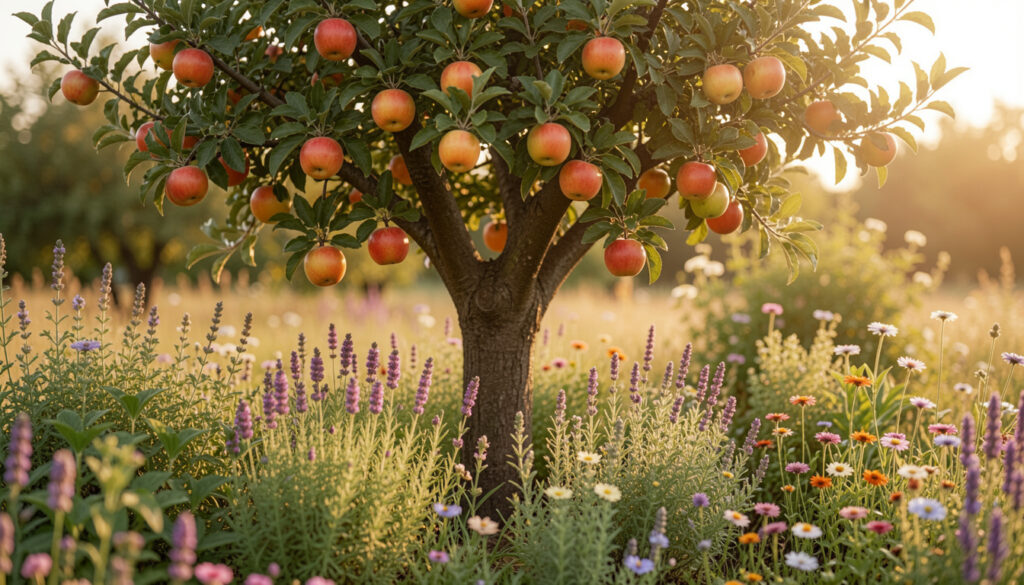
I once had an apple tree planted alone in the middle of the yard and it looked so lonely that I added a cottage-style circle of lavender and nasturtiums; the whole scene felt instantly cozier. Lavender helps repel some pests and smells amazing when you brush past it, while nasturtiums act as sacrificial plants for aphids so your apple leaves stay cleaner. If you like the look of a focal tree, a tidy planted skirt makes it feel intentional and loved.
Berry-Boosting Borders
Berries growing under or near a fruit tree can create a delicious understory and I have vivid memories of my son sneaking raspberries while I pruned branches above – it’s the best kind of garden crime. Strawberries, low-growing raspberries, and currants are friendly neighbors because they don’t compete aggressively for light and they attract pollinators that help both layers. Keep them pruned and mulched, and you’ll harvest twice the joy from the same patch of turf.
Citrus Garden Centerpiece
Orange trees love companions like rosemary, thyme, and marigolds, and I discovered that the scent of rosemary seems to make the air feel sunnier around my little citrus grove. Rosemary is drought-tolerant like citrus, so pairing them helps conserve water and keeps the root competition fair. Plus, having fresh rosemary right next to your fruit tree means you can grab a sprig for dinner after collecting fruit – instant culinary satisfaction.
Community Orchard Vibes
When I visited that lovely orchard with benches, I noticed the ground was covered in clover, low herbs, and wildflowers, and it felt intentional rather than wild – like a living carpet that supports the trees. Planting a mix of pollinator-friendly perennials between trees can reduce weeding and invite beneficial insects that keep pests down. If you want that gentle, communal orchard look, choose a few hardy species and let them fill in slowly.
Classic Apple Companions
I love classic pairings like garlic and chives at the base of apple trees because they smell strong to pests but are harmless and useful to us, too; I always plant a clump of chives near my tree and snip them for salads. Garlic can help deter borers and certain fungal issues, and the purple chive blossoms feed bees in spring. They look tidy, are simple to maintain, and you get edible bonuses, which feels extra efficient.
Mixed Fruit Patch
A garden filled with different fruit types taught me about companion balance – peaches next to comfrey, apples with borage, and blueberries paired with acid-loving companions all worked at different times. Comfrey is a nutrient accumulator and makes excellent mulch when cut, which felt like free fertilizer to my tired soil. Trial and error is part of the process, so don’t be afraid to mix things up season-to-season and note what thrives.
Neat Row Lining
For trees lined up on a lawn, consider alternating strips of wildflower mixes and low herbs because rhythm in planting helps both aesthetics and biodiversity, and I always end up discovering a new favorite bloom each year. Alternating beds break up pest pathways and give pollinators varied food throughout the season. If you’re designing a neat orchard, small intentional swaths of different plants create visual interest and functional benefits.
Mini Citrus Bonsai Treat
A bonsai orange growing with a tiny ring of succulents and thyme taught me that even container fruit trees benefit from companions — I will admit I babied that little tree like it was a houseplant celebrity. Succulents prevent soil compaction and thyme suppresses weeds, so small-scale companions protect your pot-grown fruit trees without overwhelming them. If you keep a citrus in a container, try a few low companions for charm and practicality.
How to Actually Make This Work For You
Start small and observe the relationships in your yard – plant one or two companion species with a tree and watch how pollinators, soil moisture, and pests react over a season, because rushing into full bed changes makes it hard to tell what helped. Think about planting for multiple wins – flowers for bees, herbs that repel pests, and groundcovers that hold moisture – and don’t be afraid to move things around next season if a pairing feels off. If you have questions about soil, sunlight, or spacing, take photos and notes; I still do this, and those little records are priceless when a new season rolls around.
How close should companion plants be to my fruit tree?
Plant companions in a ring around the dripline or slightly beyond so they don’t compete aggressively with roots, especially when the tree is young. For shallow-rooted herbs like thyme or chamomile you can be closer, while larger perennials like comfrey should be a bit farther out.
Which companions help with pests naturally?
Marigolds, chives, garlic, and certain mints are known to repel common pests, and flowers like borage and lavender attract beneficial insects that prey on harmful ones. Rotate and mix companions to avoid creating new pest problems, and monitor before assuming results immediately.
Can companion plants affect fruit flavor?
Generally companions don’t change fruit flavor directly, but healthier trees from good companion planting often produce sweeter, more robust fruit because they’re less stressed and better pollinated. Avoid planting nitrogen hogs right up against fruit trees if you’re concerned about vigor imbalances.
Are there companion plants to avoid near fruit trees?
Avoid aggressive spreaders like certain mints that can overtake root zones, and be cautious with heavy feeders that might compete for nutrients. Also check compatibility – some ornamental plants might attract pests that specifically like fruit trees, so observe your garden and adjust accordingly.