I get it – you love that classic craftsman look but your budget says otherwise. If you want craftsman home exterior on a budget, there are so many small changes that add up to that cozy, intentional curb appeal without draining savings.
I made a bunch of these mistakes when I first tried to update my own place, so I wrote this guide for us – real ideas that are affordable and actually doable on weekends. I tested finishes, compared paints, and learned which details read “crafted” even when the cost was low.
You’ll get twelve realistic, picture-inspired ideas and easy next steps to try this weekend – nothing intimidating, just practical charm.
These 12 Craftsman Home Exterior On A Budget Ideas
Cozy Green Cottage Facade
This little green house shows how color choice changes everything, and you don’t need expensive materials to get it right. Pick a muted, nature-inspired green and pair it with crisp white trim; that contrast reads classic craftsman and highlights architectural lines. I once salvaged leftover paint from a neighbor’s project and the effect felt like a total makeover. Add simple wooden steps or re-stain existing ones to bring warmth without a big contractor bill.
Window-Filled Porch Magic
Big windows and a welcoming porch make a budget home look intentional and open, especially when you keep frames simple and painted. Clean the glass, repaint the trim, and add potted greenery to create depth and texture that reads expensive. I remember spending one Saturday replacing a cracked pane and suddenly the whole front felt brighter and fresher. Use solar porch lights to highlight details at night without rewiring.
Tiny Cabin Front Porch
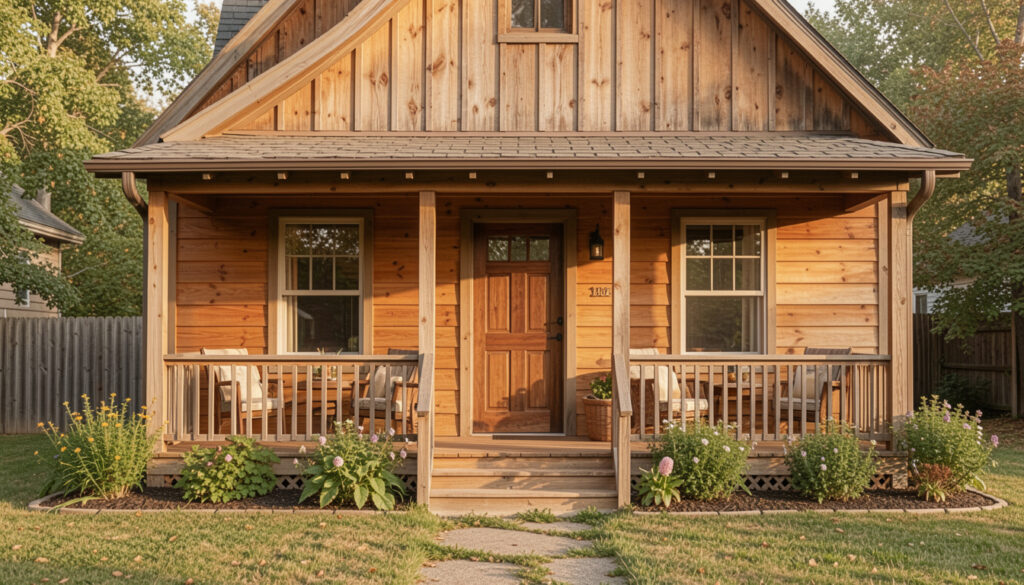
A compact cabin vibe is perfect for small budgets because charm comes from scale and material, not cost. Refinish wooden chairs, add a handwoven rug, and focus on natural tones to layer a craftsman feel. You can often find secondhand wooden chairs or repaint thrifted finds to match the porch palette. This aesthetic proves the right accessories make a modest structure feel intentionally curated.
Rustic Woodland Rendering
An artist’s rendering like this helps you visualize how materials will read together, and you should sketch or pin before spending a cent. Emphasize natural siding textures, simple eaves, and layered plantings to achieve depth on a budget. When you plan visually, small investments like a new mailbox or house numbers feel coordinated and effective. Keep roofing choices neutral so the other details can shine.
Lush Landscape Entrance
Plants make a house look settled and loved, and smart selection means low cost with high impact. Pick native shrubs and a mix of perennials that fill in year after year, and use mulch to keep beds neat without constant care. I swapped two expensive shrubs for a trio of fast-growing natives and the front already looks more intentional. Framing the entry with greenery softens edges and emphasizes the craftsman porch.
Stone Step Welcome
Stone or faux-stone steps instantly add permanence to a simple facade, and you can mimic the look without full masons by using modular stone veneer or re-purposed pavers. Leveling a base and stacking elements carefully gives a grounded, built-in look that feels custom. You don’t need to replace the whole entry – rebuilding the first two steps changes the visual weight of the porch. Accent with simple iron handrails or planters to complete the vignette.
Flowered Lawn Accents
A tidy lawn with thoughtful flower beds reads cared-for and craftsman-friendly, even if the house is modest. Edge beds sharply, plant repeated colors for cohesion, and use inexpensive perennials to reduce yearly costs. I once used rosemary and lavender along my walkway and not only did it smell amazing, but the curb appeal leapt forward overnight. Low-maintenance blooms keep the house looking intentional without weekend burn-out.
Classic Porch Portrait
Even a simple portrait of someone on the porch captures how human scale interacts with architecture, and you should think about how people use your front space. A small bench or pair of chairs invites moments and makes the home feel lived-in, which reads like a higher-end property. Choose durable, inexpensive fabrics and cushions that can tolerate sun and rain. Layer a few textural accessories to finish the look thoughtfully.
Mossy Roof Cottage
Greenery creeping into rooflines and window boxes adds a storybook vibe but you can mimic that softness with planted eaves and roofline-friendly vines on trellises. Keep it controlled so it enhances the architecture rather than hiding it, and choose slow-growing vines that won’t damage shingles. I trained a small jasmine on a trellis once and the scent during summer evenings made the whole porch feel magical. Regular pruning keeps this look clean and intentional.
Bloom-Filled Cottage Border
Flowers around the foundation draw the eye and distract from simpler construction details, which is perfect when you want a craftsman presence without structural work. Use layered heights and repeated colors to create rhythm along the front walk. Buying bareroot plants or divisions in spring saves money and gives quick payoff. These beds make even a painted plywood stoop feel part of a cohesive design.
Sunny Green Frontage
Bright sunlight on a green facade feels inviting and highlights simple trim details, so consider repositioning shrubs or adding reflective gravel to boost natural light. Paint selection matters more than expensive cladding; find a durable exterior paint in that craftsman palette and invest in a good primer. When I first moved in, repainting the front door and trim cost less than $150 and completely changed how the house read from the street. Small paint projects are the highest return for time and money.
Potted Plant Welcome
Pots are portable, seasonal, and one of the most cost-effective ways to add structure and color to your entrance. Group containers in odd numbers, mix textures like glazed pottery and woven baskets, and choose long-blooming annuals or hardy perennials. You can swap plants by season to keep the porch feeling fresh without ongoing big expenses. Lighting a grouping with a small solar uplight makes the arrangement pop after dark.
Dense Greenfront Retreat
When foliage frames the house it creates a private, curated vibe that elevates even simple architecture, and you don’t have to landscape the whole yard to get this effect. Strategic placement of taller shrubs near corners and lower plants along walkways guides the eye to the porch. I repurposed cuttings from a friend and filled a corner in weeks, which felt like a mini miracle. Maintain tidy edges so the greenery reads as design, not neglect.
How to Actually Make This Work For You
Start by photographing your front facade from the street and close up, then pick one small project you can finish in a weekend so you see real progress; a completed small project builds momentum and helps you avoid costly scope creep. Prioritize paint, hardware, and greenery because those three things change perception most dramatically; invest a bit in quality paint and spare on ornaments, and use plants to soften and frame. Finally, source secondhand elements, do the prep work yourself, and ask friends for help on the heavier tasks so you save on labor while still achieving a polished look.
How much should I expect to spend?
Costs vary widely, but many of these updates can be done for under $1,000 if you prioritize paint, planters, and one structural improvement like steps or a mailbox – do the work in phases to spread expense. Consider DIY where safe and hire pros for anything involving structural safety or electrical work.
Which paint colors feel most craftsman?
Earthy greens, warm grays, deep blues, and natural wood tones read craftsman when paired with crisp white or cream trim – choose a primary, a trim, and an accent to keep it simple. Test samples in both sun and shade before committing to a full exterior coat.
Can I DIY stone steps or should I hire out?
You can DIY with modular veneer or pavers if the foundation is stable and you follow leveling and drainage basics, but hire a mason for major structural steps or if you feel unsure. Small test sections are a great way to practice the look before doing the whole entry.
How do I keep plantings low maintenance?
Choose native and drought-tolerant species, mulch deeply, and plant in drifts so maintenance is mostly seasonal trimming and weeding rather than daily care. Group plants with similar water needs together and use drip irrigation or soaker hoses to save time and water.