Small yards can feel limiting until you see the right ideas – family home exterior for small spaces should feel welcoming, intentional, and totally possible no matter the lot size. I fell in love with tiny curb transformations when I moved into my first compact place and realized a little landscaping and paint completely changed how the whole street saw our house.
This post exists because I want you to feel excited about your home’s front face, not stuck by square feet – I tried a few projects that looked scary at first and ended up being my favorite summer memories. You’ll get real ideas you can copy, tweak, and make your own without a contractor-sized budget.
Scroll through these 12 handpicked looks and pin the ones you love – I’ll tell you what works, what to try first, and where I actually made mistakes so you don’t have to.
These 12 Family Home Exterior For Small Spaces That Feel Big
Stone Steps Front Entrance
The layered stone steps create a feeling of arrival that makes a small front yard feel purposeful instead of cramped, and that kind of structure is everything when you have limited room. I remember staring at our tiny concrete stoop and thinking a simple series of warm stones could add depth and personality in a weekend – the texture truly changes how the eye travels across the facade. Consider pairing stone with a low border of evergreen shrubs so you get year-round definition without blocking sightlines.
White Cottage Charm
A crisp white exterior with a darker roof and a couple of large potted plants reads calm and collected, and the contrast helps the house look cleaner and a touch larger than it is. You can replicate this by choosing one strong focal plant on either side of the door and keeping the rest of the planting palette minimal, which makes maintenance easier for busy families. If you want an instant refresh, a new door color against white siding delivers maximum impact for very little money.
Lush Stone House
Stone cladding paired with surrounding greenery creates a durable, lived-in look that works for small homes because the materials themselves add richness without needing a large footprint. Look for native shrubs and layered plantings that stay proportional to the house, and avoid anything that will quickly tower over your entry. Personally I love adding a low bench near a stone path so shoes and school bags have a spot to land without cluttering the doorway.
Black Trim Contrast
Using black for doors and window frames on a light exterior gives crisp lines that help a compact building read as intentional and modern, and that visual framing tricks the eye into seeing clearer proportions. You might try painting only the trim and door first to test the look – a small can of paint goes a long way. When you pick black accents, add soft textures like a woven doormat or simple porch planter to keep the space from feeling too stark.
Small Holiday Curb
Even a tiny house can feel festive and cozy with thoughtful seasonal touches around the entrance, such as symmetrical wreaths and scaled lighting that won’t overwhelm the facade. I learned this the first winter in my small house when I used two small lanterns and a single string of warm bulbs – it looked charming instead of cluttered. Try limiting decorations to three coordinated items so the space stays balanced and welcoming for family and neighbors alike.
Shuttered Porch Flowers
Black shutters, pretty potted flowers, and a tidy porch make a compact home feel curated and cheerful, and flowers give you a seasonal color boost without a lot of long-term commitment. You can use matching pots to create visual rhythm across a small porch so the eye flows naturally from one spot to another. I once swapped out bright geraniums for soft lavender and suddenly the whole block seemed calmer – tiny swaps like that have big emotional returns.
Green Entrance Oasis
Dense, layered planting near the entry can make a small house feel like a private retreat, especially when you choose low-maintenance evergreens and a mix of textures for year-round interest. Start with two or three heights – groundcover, mid-height perennials, and a single small tree or tall shrub – then adjust spacing as things fill in. If you worry about upkeep, pick drought-tolerant varieties or set up a simple drip irrigation so you get the lush look without daily fuss.
Flower-Filled Sidewalk
A narrow sidewalk lined with profuse flowers makes a passageway feel like part of the home rather than wasted space, and the layered colors draw visitors toward the door in a friendly, informal way. You can create this effect in stages by planting bulbs for early spring, perennials for the summer, and a few annuals for ongoing color. When I planted a tight strip along our walkway, delivery people commented on it for months – small thoughtful details get noticed more than you’d expect.
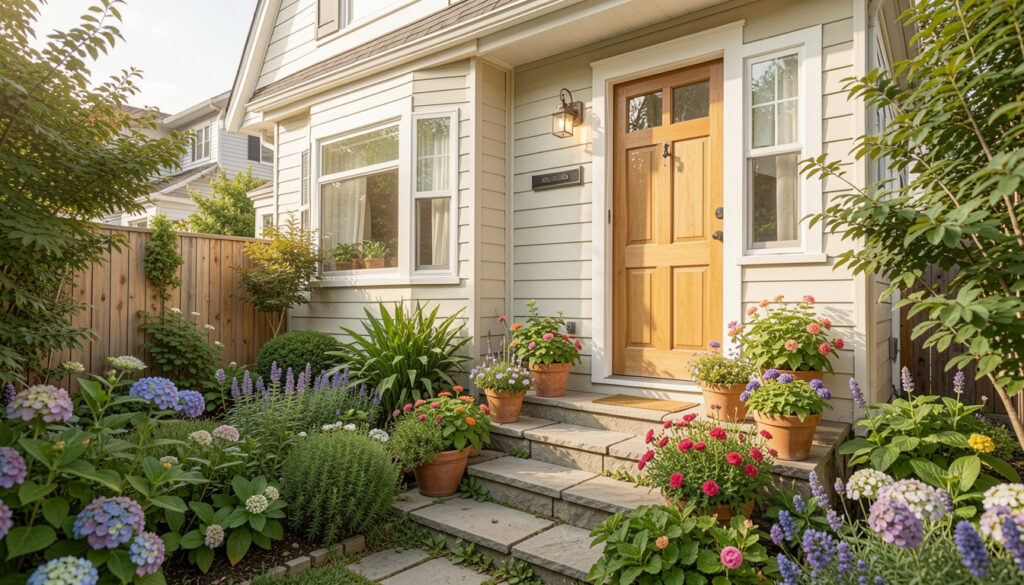
Stone Steps Side Entry
A side entrance with stone steps gives kids and guests a secondary entry that feels intentional and helps spread foot traffic so the front door area doesn’t get congested, which is a great practical move for busy families. Keep the steps shallow and wide when space is tight so they feel safe and easy to navigate, and add a handrail that complements the style rather than dominates it. Small lighting on the risers or adjacent plants will make this route usable at night without bright floodlights that disturb neighbors.
Blossom Framed Facade
Framing the front of the house with seasonal blooms and a couple of small trees softens a compact facade and creates a layered effect that tricks the eye into perceiving depth. Select plants that stagger in bloom time so you always have some interest from early spring through fall, and prune annually to keep everything proportional. You can achieve a high-impact look by planting slightly off-center so the layout feels organic rather than overly symmetrical.
Bicycle and Brick Appeal
A simple prop like a vintage bicycle leaned against a brick facade adds story and personality to a small home exterior without taking up useful space, and it communicates playfulness and real life. I once used a painted bike with a basket of flowers for a neighborhood tour and people actually stopped to take photos – it becomes a charming signature. If you use decorative items, anchor them with a small tray or platform so wind or kids don’t send them into the lawn.
Covered Patio Walkway
A covered walkway or small covered patio visually extends living space and gives a compact home practical shelter for shoes, bikes, and quick visits, which is ideal for family life. Choose materials that echo the main house so the extension reads as intentional, not like a later afterthought, and keep scale modest to avoid overwhelming the yard. Layered textiles, a hanging plant, and a slim bench will make the area feel like an outdoor room without eating up the lawn.
How to Actually Make This Work For You
Start by measuring your frontage and picking one or two focal changes you can do well rather than trying to remake everything at once – a fresh door color and a pair of matching planters, or a short stone path with a couple of layered plants, will make the whole facade sing. Think about how your family uses the space every day and prioritize durable surfaces, low-maintenance plants, and lighting for safety so that the design is pretty and practical. Finally, test a small paint patch and one planter before committing to larger purchases so you can adjust the mood without wasting time or money.
How do I choose plants for a small front yard?
Choose compact, slow-growing varieties and layer them by height so the space feels full without overcrowding – evergreens provide structure and perennials add seasonal color. Aim for three height zones and repeat a couple of plant types to create cohesion.
Will painting my trim really change perception?
Yes – contrasting trim or a bold door color creates clean lines that visually enlarge your home and elevate curb appeal, and it is a relatively low-cost update. Test small areas first and evaluate during different times of day to make sure you like the way light affects the hue.
What lighting works best for small exteriors?
Soft, layered lighting such as wall sconces flanking the door, small path lights, and subtle uplighting on a specimen plant will add depth without glare – avoid oversized fixtures that dominate the facade. Low-voltage LED options are energy efficient and give you warm, consistent illumination.
How can I keep maintenance low with these ideas?
Pick native or drought-tolerant plants, use mulch to suppress weeds, and group plants with similar water needs so you can simplify watering – drip irrigation makes it even easier. Choose materials and finishes that stand up to weather and busy family life so small upkeep stays doable.