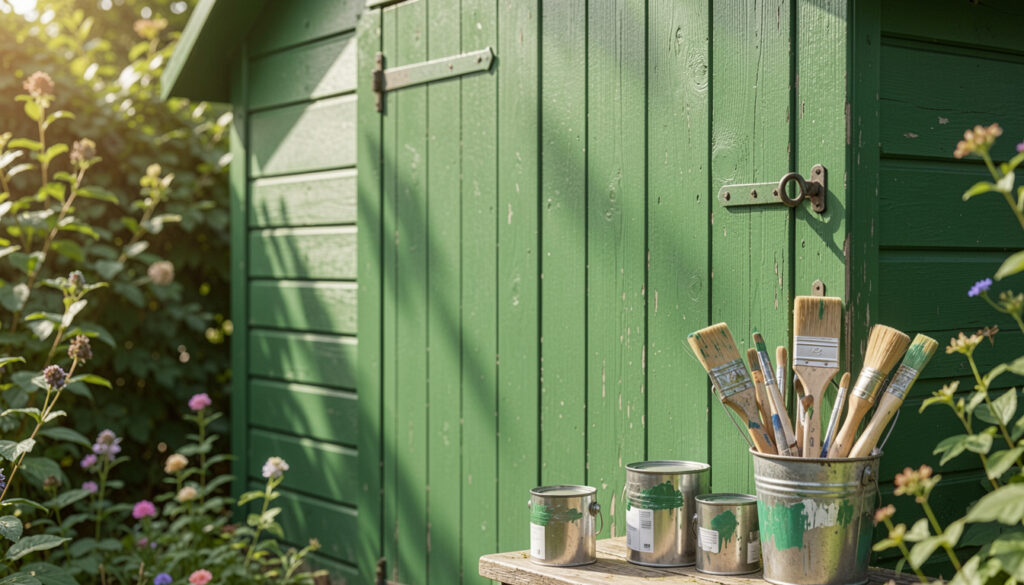
Okay, real talk – learning how to paint a garden shed green was one of those DIY moments that felt equal parts therapeutic and terrifying. I remember staring at my weathered plywood and wondering if a green paint could actually make the whole backyard sing, and yes – it did.
I made a million little mistakes the first time I tackled a shed – drips, missed spots, and one very mortifying day when a raccoon decided my paint tray was a snack. That’s why I put this together – to walk you through ideas, mistakes to avoid, and paint combos that actually look intentional.
Stick with me and you’ll get visual inspo, step-by-step tips, and realistic expectations so you can confidently paint your shed green without turning it into a Pinterest fail.
12 Green Shed Looks That Make Painting Worth It
Chicken Coop Charm
This setup with chickens and plants feels so cozy – painting your shed a soft sage would blend beautifully with herbs and rustic planters. I once painted around a tiny window like this and ended up using the sill as a mini herb garden; it was messy but so satisfying. If you have animals nearby, go for a durable exterior paint and seal the trim good – you’ll thank yourself. Also, don’t stress if the first coat looks streaky, you’ll see the charm once it’s dry.
Classic Green Cottage
This tiny green shed with a brown roof gives major cottagecore vibes and shows how color pairing matters – the brown roof grounds the green so it never feels too bright. I painted my own shed in a similar combo and adding wood shingles on the side hid some imperfect boards I didn’t bother replacing. Consider a semi-gloss on trims for easy cleaning, especially if you have pots or tools leaning nearby. It’s a timeless look that ages gracefully.
Forest Hideaway Shed
If your shed sits among trees, go for a deep, muted green so it feels like part of the landscape rather than a bold statement. I painted ours in a darker hue when we moved to a tree-lined lot and friends kept mistaking it for a tiny cabin – win. Prep is extra important here because damp areas collect moss; scrape and treat before you paint. Layering shades on panels can add texture that looks natural in wooded light.
Patio Shed Retreat
On a stone patio, a green shed becomes an outdoor living extension – think potted plants, a bistro table, and cozy lighting. I once staged a paint reveal for a friend and we ended up having wine on the patio because it looked so inviting – unplanned but delightful. Choose a green with warm undertones to complement stone and brick, and consider painting the door a slightly brighter shade to create a focal point. Small details like brass handles or a wreath make a big difference.
Garden Path & Shed
A white shed beside a winding stone path feels classic, but swapping to a soft avocado green gives the path that extra bit of storybook charm. You could paint just the door or the entire facade – when I opted for a painted door first, neighbors actually stopped to ask about the paint, which was flattering and unexpected. If you want the path to pop, pick a green with contrast – not neon, just enough depth to sit against pale stones.
Vintage Bloom Shed
This old building surrounded by flowers proves that green pairs beautifully with blooms and creeping vines. When I helped my aunt restore her potting shed, we chose a muted olive that made the garden colors look richer, and she kept joking it was her “grandma chic” corner. Light sanding and a primer that matches your final shade are clutch for older wood. Embrace imperfections – they add character rather than detract.
Lush Garden Shed
Surrounded by bushes and greenery, a green shed can either blend in or stand out depending on your shade choice – I prefer a mid-tone green so it’s cozy but still noticeable. You might want to test swatches at different times of day; I learned that my chosen hue looked almost teal in morning light, which surprised me. Keep edging crisp by taping around windows and trim, and thin your paint for smooth vertical strokes. It makes the whole space feel intentional.
Ivy-Covered Shed
If ivy climbs your shed, consider a richer green that complements the plant so nothing fights for attention. I’ve seen sheds where the ivy overran fresh paint – lesson learned: trim and secure vines before painting, and think about where you want them to grow afterward. Sometimes letting nature take over slightly gives that romantic, secret-garden vibe. Use exterior-grade paint near plants to resist mildew.
Brickside Green Shed
Placed next to a brick wall, a green shed can read modern or rustic depending on finish – I love a matte finish for a contemporary contrast with old brick. Once, while repainting, I accidentally splattered a tiny dot on the bricks and laughed because it looked like a little signature. To avoid regret, use a drop cloth and painter’s tape to keep lines neat, and consider a slightly warmer green to sit nicely against red or brown brick.
Windowed Green Studio
Sheds with lots of windows almost beg to be painted a lively green because the light bounces off and brightens the whole yard. I turned a former storage shed into a tiny art studio and a cheerful green made the inside feel so much more inspiring on gray days. Remember to caulk around window frames and use trim paint that resists cracking, especially if you open windows often. A thin brush for window edges is worth the patience.
Two-Tone Cottage Shed
Green and white combos are classic for a reason – they look crisp, clean, and very cottage-y next to potted plants and a little fence. I painted stripes once on a whim and it felt whimsical but also a pain because I underestimated the taping time; live and learn, right? If you want a neat two-tone, prime both colors and use high-quality tape so the edge is sharp. Small accents like painted window boxes elevate the whole thing.
Gray to Green Makeover
Turning a gray shed into green is one of the best transformations – the plants and a lone bicycle suddenly look curated instead of forgotten. When I transitioned my neighbor’s shed from tired gray to moss green, we did two coats of primer first and it made the final color pop like crazy. Be patient with priming and let each layer dry fully; rushing is the main reason colors look uneven. In the end, it felt like a fresh start for the backyard.
How to Actually Make This Work For You
First, pick the right green by testing big swatches in sunlight and shade – what looks perfect in a sample can change on your siding. Then prep like you mean it: sand, fill gaps, and use a primer suited to your old finish, because shortcuts today mean touch-ups next season. Finally, choose finishes thoughtfully – satin or semi-gloss on trim for easy cleaning and a flatter finish on larger panels if you want a more natural look; painting slowly and in manageable sections will keep brush marks and fatigue at bay.
Do I need primer before painting a shed green?
Yes, if your shed has bare wood, stains, or old paint flaking, primer helps the green go on evenly and last longer. Use a stain-blocking primer for knots or water stains and a bonding primer for slick surfaces like composite or previously painted metal.
What shade of green looks best with plants?
Mid-tone to muted greens usually play nicest with garden foliage because they don’t compete with plants for attention. Try a soft sage, olive, or moss green – samples placed near your existing plants at different times of day will help you decide.
How many coats of paint will I need?
Most sheds need two top coats over a primer, but sometimes you may need a third if you’re covering a dark color or want a truly saturated finish. Quality paint often covers better, so investing a little more can save you time and extra layers.
Can I paint a shed myself or should I hire help?
If you’re comfortable with ladders, brushes, and patience, DIY is totally doable and rewarding – I learned so much by doing my own. Hire a pro if the shed has structural rot, tall heights you’re not safe on, or if you simply don’t have time; either choice can give great results.