I’ve fallen hard for DIY plant projects lately, and learning how to tile a concrete planter turned into one of my favorite weekend pastimes. I still remember the first planter I covered in tiny mosaic tiles – messy grout, lots of laughs, and a surprisingly proud moment.
I wrote this because you might want a pretty planter but don’t want to pay designer prices, or you just love getting your hands dirty like I do. After a few attempts (and one totally botched grout color), I figured out a few tricks that actually make tiling a concrete planter feel doable and kind of addictive.
Read on and you’ll get step-by-step tips, tools to keep nearby, and 25 real-life ideas to inspire your own tiled planter – plus the mistakes I made so you don’t repeat them.
These 25 Tiled Concrete Planter Ideas to Try
Mini Succulent Trio
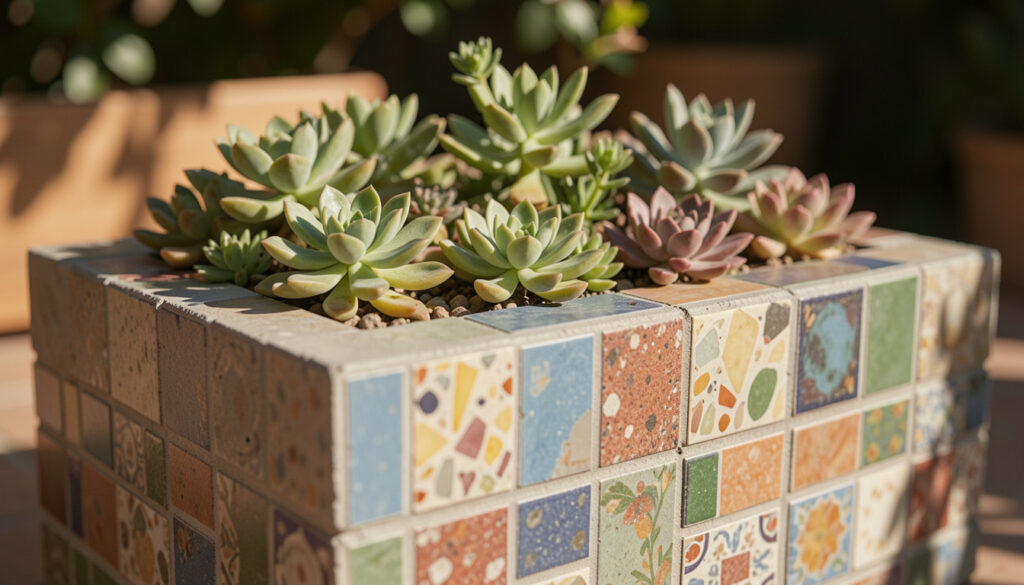
These three small planters are perfect if you want to practice on something tiny before committing to a big pot. I started with succulents too, because they forgive a lot of rookie mistakes – overwater them and they still look cute. Also, arranging three together instantly makes a little vignette feel intentional, even when it’s not quite perfect.
Hex Tile Accent
Hex tiles add a modern, graphic vibe that I can’t stop reaching for when I’m redoing things around the apartment. When I tiled a small planter with hex tiles once, I had to think like a tiny architect – plan, trim, and obsess over the grout lines. You’ll love how crisp it looks next to plants with simple shapes.
Simple Single Pot
Sometimes a single, well-tiled pot is all you need to anchor a shelf or windowsill. I did this for my reading nook and it suddenly looked like I’d spent way more on styling than I actually did. Pro tip – matte tiles hide fingerprints and soil smudges better than glossy ones.
Concrete Among Blocks
I love the raw look of a cement planter sitting among concrete blocks – it feels very industrial-chic. My neighbor once used a set-up like this as a tiny herb garden and it became the talking point of our summer BBQ. If you like contrast, tile just the rim for a subtle pop.
Blue Tiled Vase Display
Bright colors like this blue make sunflower arrangements sing, and tiled surfaces reflect light beautifully. I tried a similar cobalt tile around a planter and kept catching myself smiling at the way sunlight bounced off it. If you’re into bold color, don’t be shy – it pairs really well with rustic wood.
Red Floral Planter
Red blooms against warm tile tones feel so homey, especially if your outdoor space needs a lift. My aunt once gifted me a red-flower planter and it brightened an otherwise blah balcony instantly. You can tile just a band around the pot and still get a ton of visual impact.
Brick Wall Planters
Planters lined along a brick wall look so curated, like a little urban garden gallery. I walked by a setup like this on my evening run and filed the idea away for a rainy Sunday project. Mounting tiled planters at different heights adds movement and keeps things interesting.
Succulent Cluster Bowl
A shallow, tiled bowl filled with succulents is one of my favorite centerpieces for a coffee table. I made one as a housewarming gift once and people actually fought over who got to take it home – not kidding. If you go this route, seal the grout well so water doesn’t pool and create a mess.
Hanging Window Planters
Hanging tiled planters take advantage of light and add vertical interest to a windowsill or balcony. I once hung two near my kitchen sink and it felt like a little green curtain that made morning coffee feel fancy. When you’re tiling for hanging use, consider lighter tiles and sturdy hanging hardware.
White and Pink Contrast
A white planter with soft pink blooms is such a soft, romantic look that never gets old. My best friend asked me to make one for her birthday and I spent entirely too long choosing the perfect blush tile. If you like delicate vibes, stick to pale hues and subtle grout contrast.
Wood and Tile Trio
Pairing tiled planters with a wooden table brings a cozy, collected feel that looks expensive but isn’t. I have a table like this on my balcony and it makes every tiny pot look like part of a curated collection. You can mix tile finishes for added texture – matte with a glossy band looks especially nice.
Colorful Mosaic Stand
Mosaics let you get playful with pattern and color, and this tiled stand is such a clever way to elevate a simple planter. Years ago I attempted my first mosaic and discovered how soothing and meditative placing tiny tiles can be. Be patient – mosaics are rewarding but require time and love.
Assorted Vases Collection
Mixing different colored tiled vases together gives a collected-from-travel kind of look, even if you shopped at the same store. I used to arrange mismatched pots on my windowsill and it felt charmingly careless in the best way. If you want cohesion, pick one tile color and vary shapes instead.
Tiled Floor Pairing
Placing a tiled planter on a tiled floor can either be matchy-matchy or surprisingly chic, depending on your pattern choices. In my small entryway, matching tones made everything feel instantly more pulled together. If you try this, vary scale – large floor tiles with small pot tiles keeps it balanced.
Concrete Bowl Design
This concrete bowl with perforations is a great reminder that texture can be the star, not color. I made a similar bowl and kept it simple with neutral tiles – it became my go-to for herbs on the kitchen counter. Little cutouts and handles make planters feel handmade and unique.
Color-Blocked Vases
Color-blocking tiles on vases is a super-easy way to feel modern without complicated patterns. I tried a two-tone planter last spring and it instantly brightened a shady balcony corner. Use painter’s tape to mark clean lines before you grout for a crisp result.
Deck Container Garden
Line up several tiled containers on a wooden deck for a practical and pretty small garden. I once hosted a brunch where guests kept asking where I bought my planters – they were DIY tiled pots I made in one afternoon. Staggering heights keeps the eye moving and plants happier, too.
Two-Tone Green Mix
Green tiles can amplify the freshness of your plants, and two tones add depth without being fussy. When I paired two greens on a round pot, it made my philodendron look like it belonged in a magazine. Try softer grout for a seamless, organic look.
Four Vase Row
A neat row of four tiled vases along a walk feels like miniature public art – charming and intentional. I once lined four tiny tiled pots on a stoop and neighbors stopped to compliment them, which felt oddly validating. Keep the tiles small so the rhythm reads clearly from a distance.
Weekend Project Planter
This one shows the joy of digging in – a little kneeling and planting can be so cathartic. I remember kneeling in a friend’s garden while we installed a tiled planter and we ended up laughing more than working, but it turned out great. If you’re doing this outdoors, bring knee pads and a good playlist.
Tile Unboxing Joy
Opening a new box of tiles is my version of a craft-joy moment – like hitting the reset button for a weekend project. You should watch how colors change in different lights before committing; I once picked a tile color that looked totally different at dusk. Keep a small sample taped to the pot for a day to avoid surprises.
Cozy Couch Planters
Planters that sit near a couch soften a living space and invite touch – in a good way. I placed a tiled pot near my reading chair and it made the whole corner feel more intentional, like a little indoor garden. Try earthy tiles for that hygge effect that makes evenings cozier.
Painted Cement Trio
I adore the idea of painting motifs on cement planters and then accenting with tiles for texture. A rainy weekend once turned into a full crafting marathon where I painted three pots and stayed in pajamas the whole time. If you mix paint and tile, seal both so the elements don’t fight each other.
Patio Centerpiece Plant
A single tiled planter as a patio centerpiece feels elegant and low-maintenance. For summer dinners, I move mine to the middle of the table and it somehow makes everything feel fancier. Choose a glaze that’s weatherproof if it will stay outside through seasons.
Bright Blooms Display
Colorful blooms in a tiled planter are an instant mood booster, especially on gray days. I made a brightly tiled pot to cheer up a winter windowsill and it worked better than a candle. For high-impact, match the tile color to one of the flower hues for a cohesive look.
How to Actually Make This Work For You
Start by planning – I know planning isn’t glamorous, but picking tile size, grout color, and method before you mix adhesive will save you so much time and drama. Choose tile first, then think about grout – light grout with light tiles, dark with dark, unless you want contrast; that’s legitimately a style choice and there’s no wrong answer. When I started, I used premixed adhesive for one planter and thin-set mortar for another, and the thin-set felt more permanent and less floppy in humid weather, so consider where your planter will live before you commit. Prep your concrete surface by cleaning and, if needed, sanding it slightly so the adhesive has something to bite into; skipping this step was my most embarrassing mistake – tiles popped off after a summer of sun because I thought the surface looked clean enough. If you’re working with mosaic sheets, lay them out dry first to check patterns and cuts, then score the backing to make individual pieces easier to trim. Grouting is where things go from ‘handmade’ to ‘finished’ – work in small sections, wipe excess grout with a damp sponge before it dries hard, and let the grout cure fully before you plant to avoid discoloring soil. Seal the grout if the planter will see water or frost, and for hanging planters make sure your hardware is rated for outdoor use so you don’t end up with a disaster at awkward o’clock. Finally, practice patience – tiling feels tedious at times but it’s also meditative; put on a playlist, sip something nice, and enjoy the slow progress.
What tiles work best on concrete planters?
Porcelain and ceramic tiles are great because they’re durable and come in tons of finishes; smaller mosaic tiles are easier to bend around curves. If your planter will be outdoors, choose frost-resistant tiles and an adhesive rated for exterior use.
Do I need special glue or adhesive?
Use a polymer-modified thin-set mortar for a secure, long-lasting bond – premixed adhesives are okay for small indoor pots but they don’t always hold up outside. Make sure the adhesive is compatible with both tile type and concrete.
How do I grout without making a mess?
Work in small sections and keep a damp sponge handy to wipe away excess grout before it hardens; a grout float helps press grout into joints evenly. I learned this the hard way – waiting too long to clean makes the grout film nearly impossible to remove.
Can I tile over curved surfaces?
Yes, but use smaller tiles or mosaic sheets so they conform to the shape easier, and score the mesh backing if you need to cut. Take your time trimming and dry-fit pieces before gluing to avoid awkward gaps.