I stared at my cramped living room for months before I realized the problem: the furniture fought the room. Swapping placement, not everything, fixed it. I rearranged pieces, spent under $300, and the room felt bigger overnight. These are the layouts I actually used or tested in rentals and a 900 sq ft apartment.
[Quick context — This list focuses on modern, Scandinavian, and casual styles. Most ideas work on modest budgets ($50–$700). Great for living rooms, family rooms, and open-plan spaces where you want more visual breathing room.]
Layered Neutrals With One Bold Accent
Style/Vibe: Modern Transitional
Budget: $$ ($100–300)
Best For: Small to medium living rooms
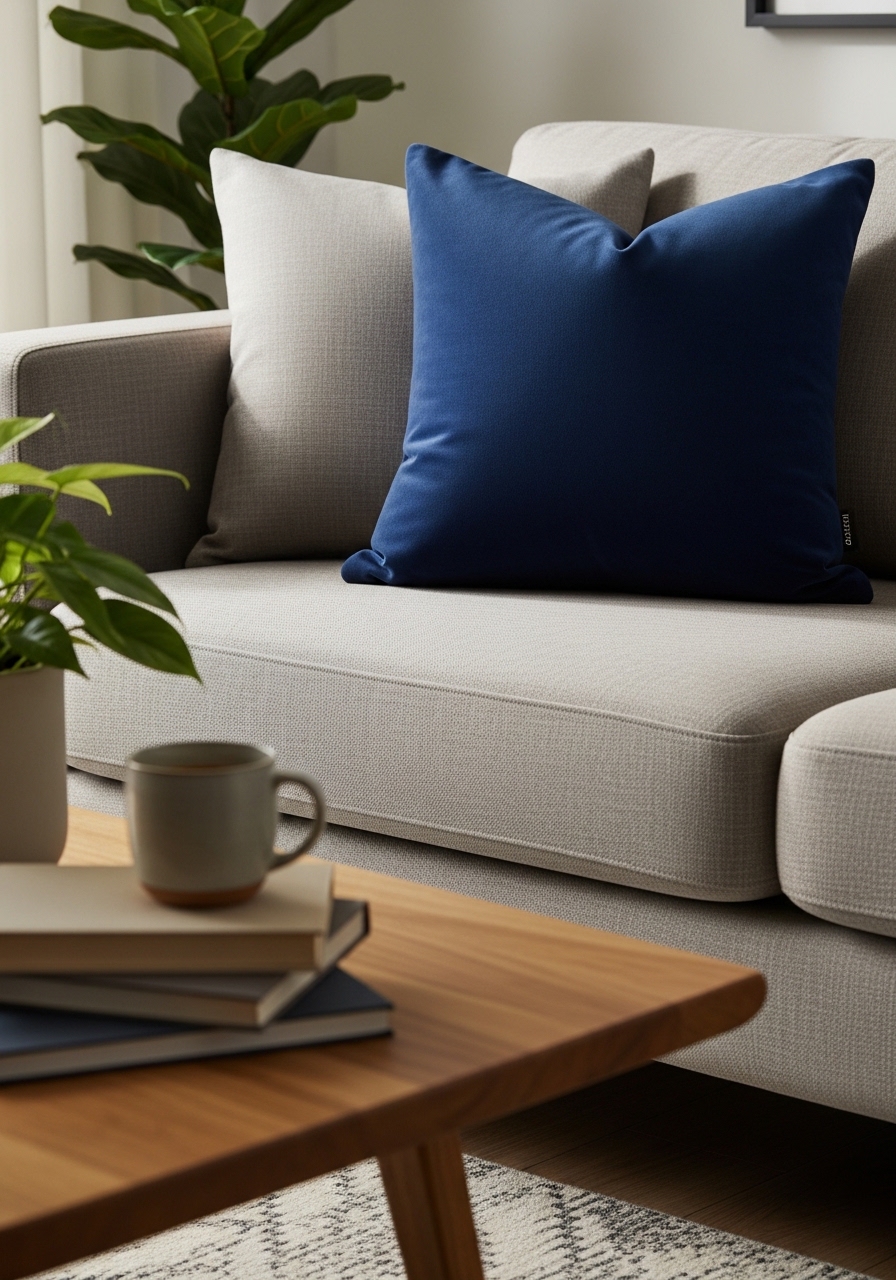
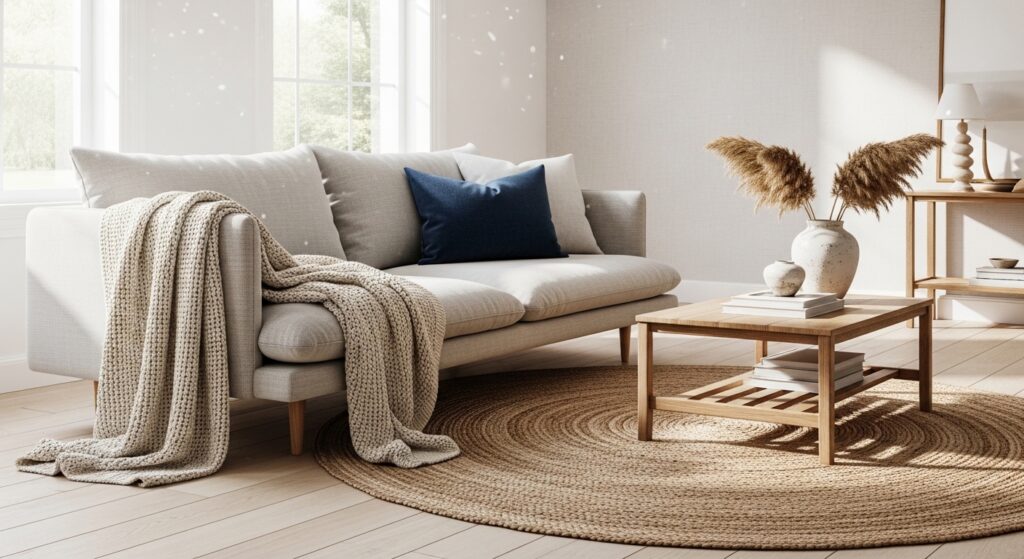
I used beige and warm gray layers to make my 12×14 living room read larger. A low-profile 72-inch neutral sofa keeps sightlines clear. I added one navy lumbar pillow for depth. I paired a low round rattan coffee table and an 8×10 jute rug to ground the space without heaviness. The feel is calm and open. Styling tip: keep three tonal layers—light, medium, dark. Mistake to avoid: too many bold colors; they chop the room visually.
Floating Sofa Arrangement for Open Plan Living
Style/Vibe: Scandinavian Minimalist
Budget: $$$ ($100–300)
Best For: Open-plan living and great rooms
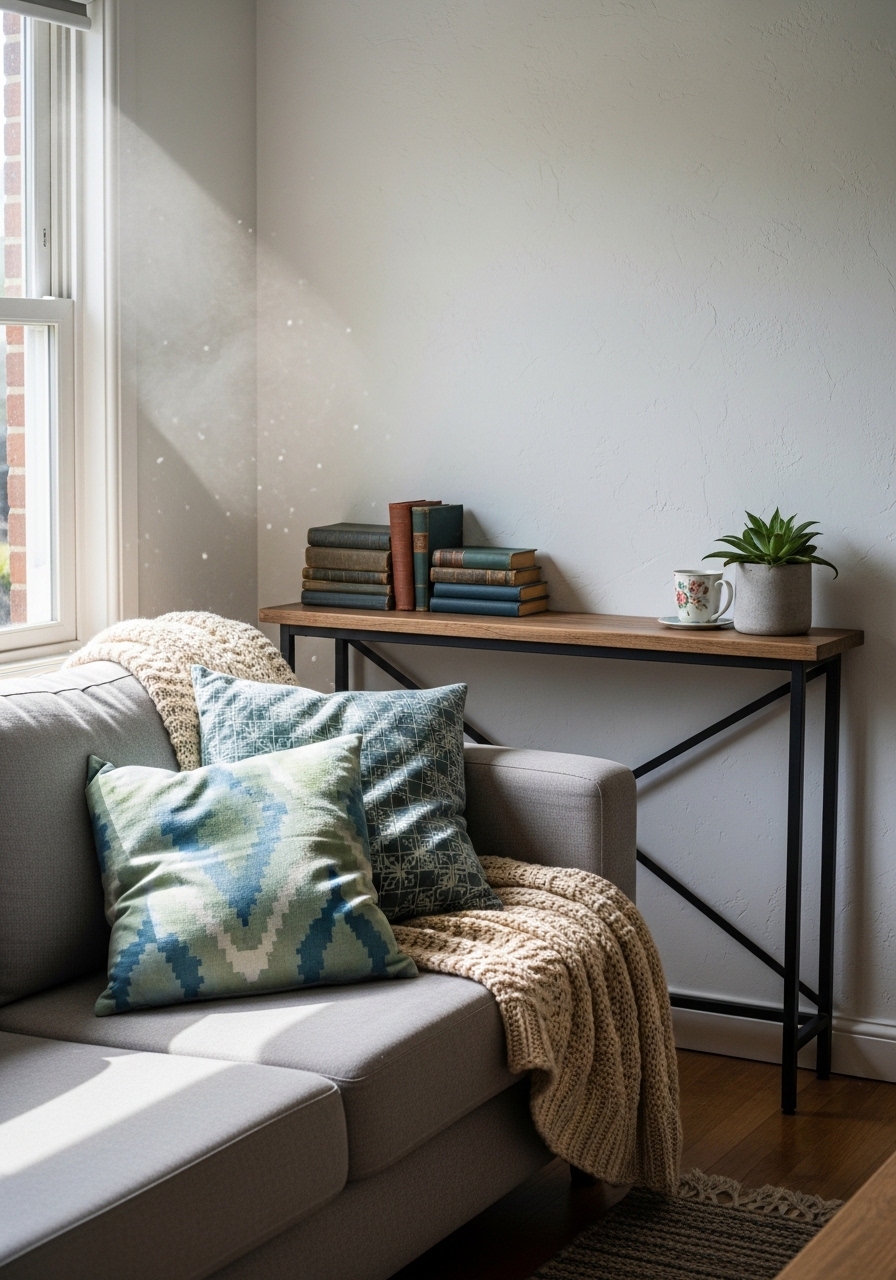
I floated my sofa in the middle of a large room to create a defined seating zone. Behind it I placed a narrow console table 48-inch with a lamp. A slim media cabinet opposite keeps the line low. Floating opens pathways and lets light travel. Styling tip: keep about 30–36 inches circulation behind the sofa. Mistake to avoid: too-large console tables that block flow.
Corner Conversation Setup With Rounded Sofa
Style/Vibe: Modern Cozy
Budget: $$$ ($200–500)
Best For: Small living rooms, apartments
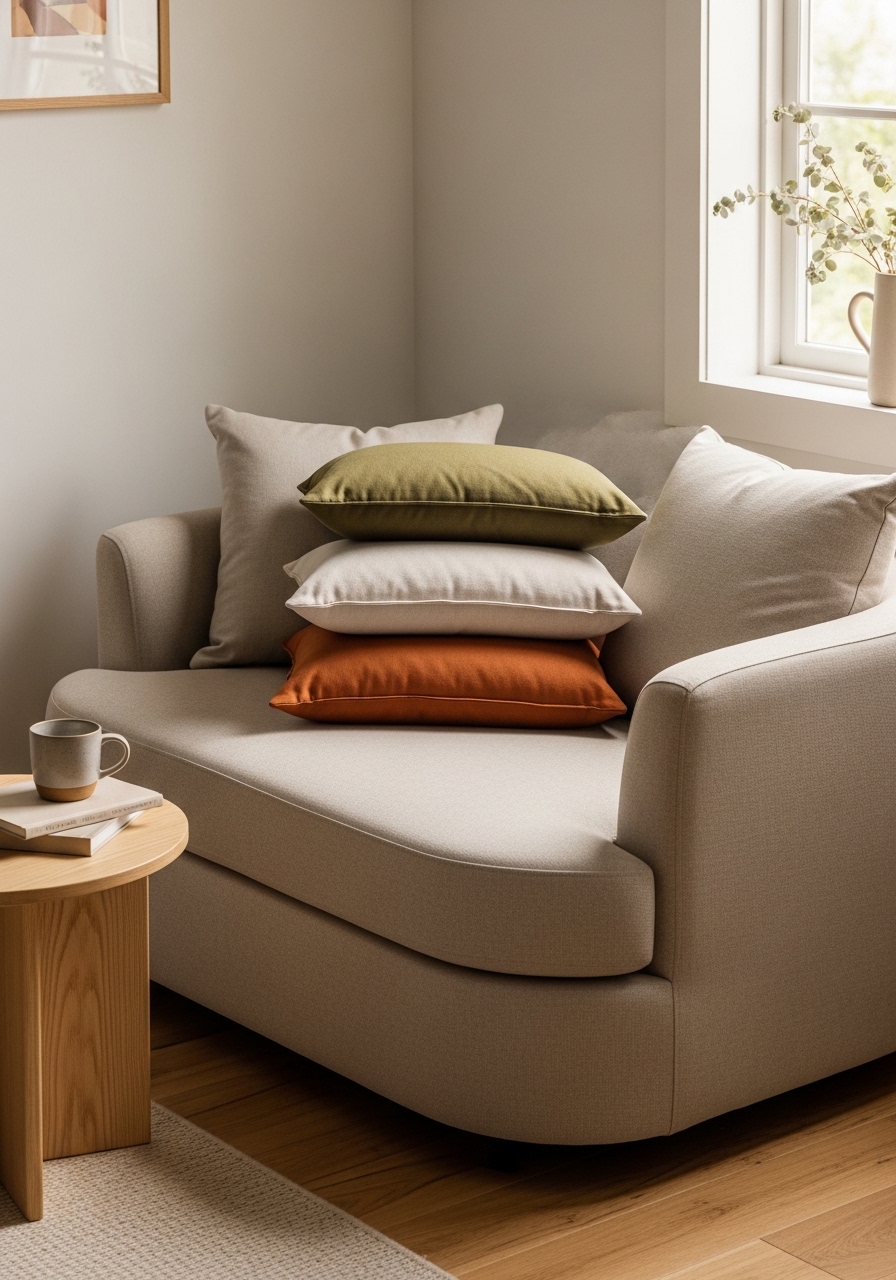
I shoved a 60-inch rounded sofa into a corner and added two small round side tables. The curve softens corners and creates the illusion of space. I used a 30-inch round side table and a slim arc floor lamp. The room felt inviting and more open because sightlines weren’t blocked by sharp furniture angles. Styling tip: use odd numbers—three pillows. Mistake to avoid: oversized armchairs that crush the corner.
Symmetrical Facing Sofas for Formal Living
Style/Vibe: Classic Modern
Budget: $$$ ($300–700)
Best For: Medium to large living rooms

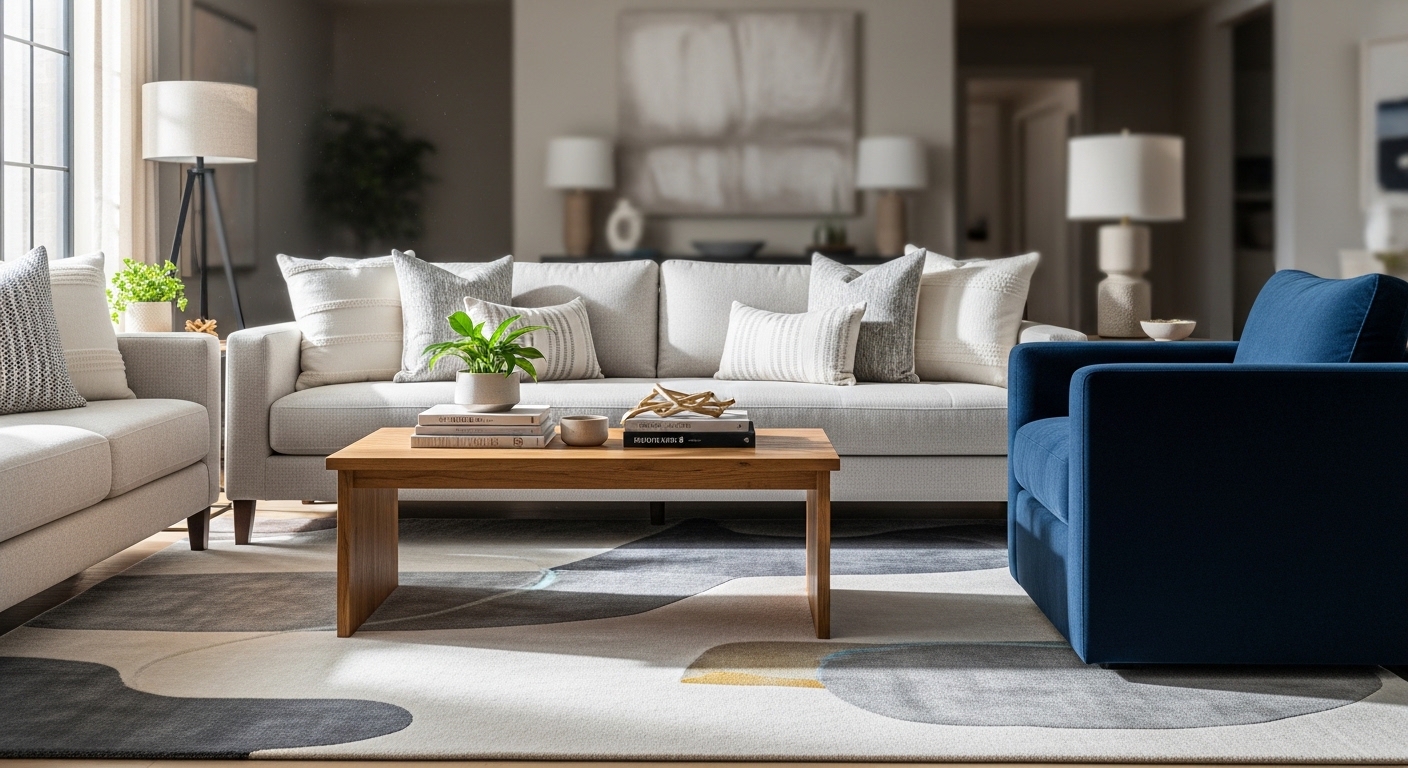
I placed two matching 70-inch sofas facing one another in a 16×20 living room. A central 48-inch coffee table anchors the conversation. Symmetry gives order and creates a clear central pathway. I added matching table lamps for balance. The room reads larger because furniture lines create defined spaces. Styling tip: keep negative space around the coffee table at least 18 inches. Mistake to avoid: cramming too many side tables into the middle.
Asymmetrical L-Shape for Small Corners
Style/Vibe: Boho Modern
Budget: $$ ($100–300)
Best For: Small living rooms and studio apartments
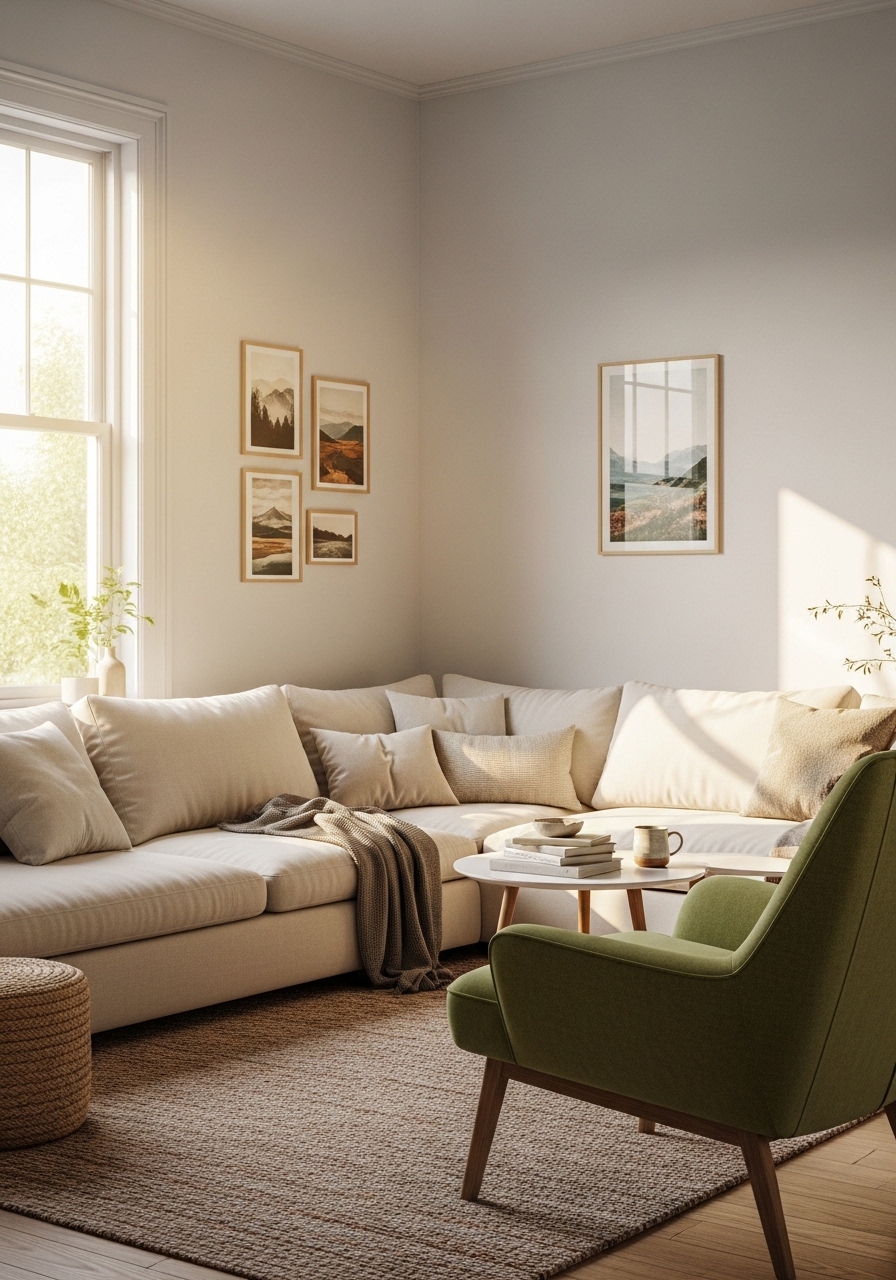
I used an asymmetrical L-shaped sofa where one side is longer. This makes the room feel deeper without a full sectional. I paired it with a small rattan ottoman and a compact accent chair 26-inch. The staggered lines draw the eye down the room. Styling tip: anchor the L with a larger rug—at least 6×9. Mistake to avoid: placing the long side against a dominant window that blocks light.
Diagonal Sofa Placement to Open Sightlines
Style/Vibe: Contemporary
Budget: $ ($50–100)
Best For: Irregular rooms, lofts

I nudged my loveseat onto a gentle diagonal in a narrow room. The diagonal creates a path and makes the footprint feel larger. I added a slim triangular side table and a narrow wall mirror 24×36 inch to reflect light. The room seemed wider. Styling tip: keep the diagonal subtle—10–20 degrees. Mistake to avoid: extreme angles that block walking routes.
Window-Focused Seating With Slim Sofa
Style/Vibe: Coastal Casual
Budget: $$ ($100–300)
Best For: Rooms with big windows
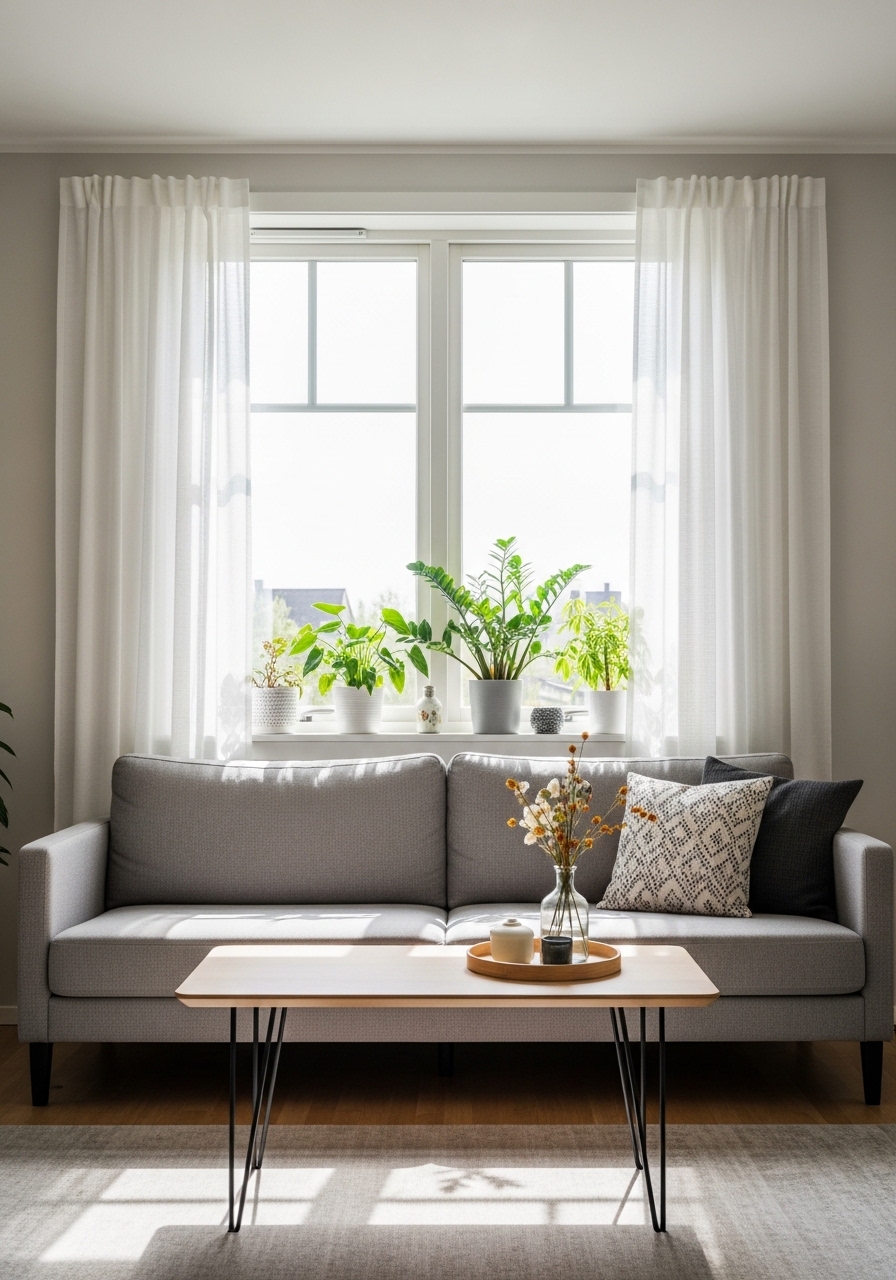
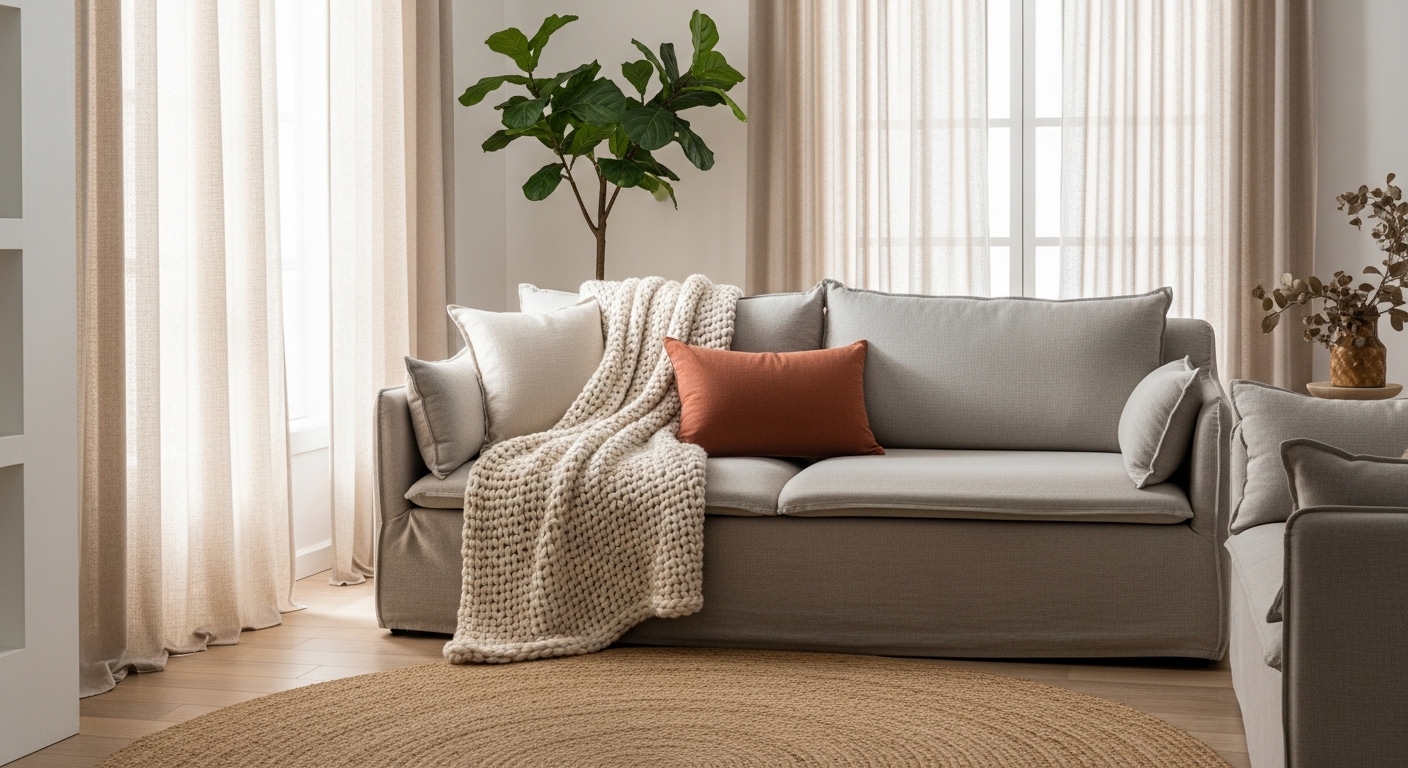
I placed a 72-inch low-back sofa under the window. Thin floor-to-ceiling curtains emphasize height. I used a slim coffee table 36×18 inch and sheer curtain panels 84-inch. The result: light floods the seating area and the room looks bigger. Styling tip: mount curtain rods high and wide—at least 4–6 inches above the frame. Mistake to avoid: heavy curtains that cut the window visually.
Multi-Zone Layout With Rug Anchors
Style/Vibe: Modern Farmhouse
Budget: $$$ ($200–500)
Best For: Open-plan living/dining spaces
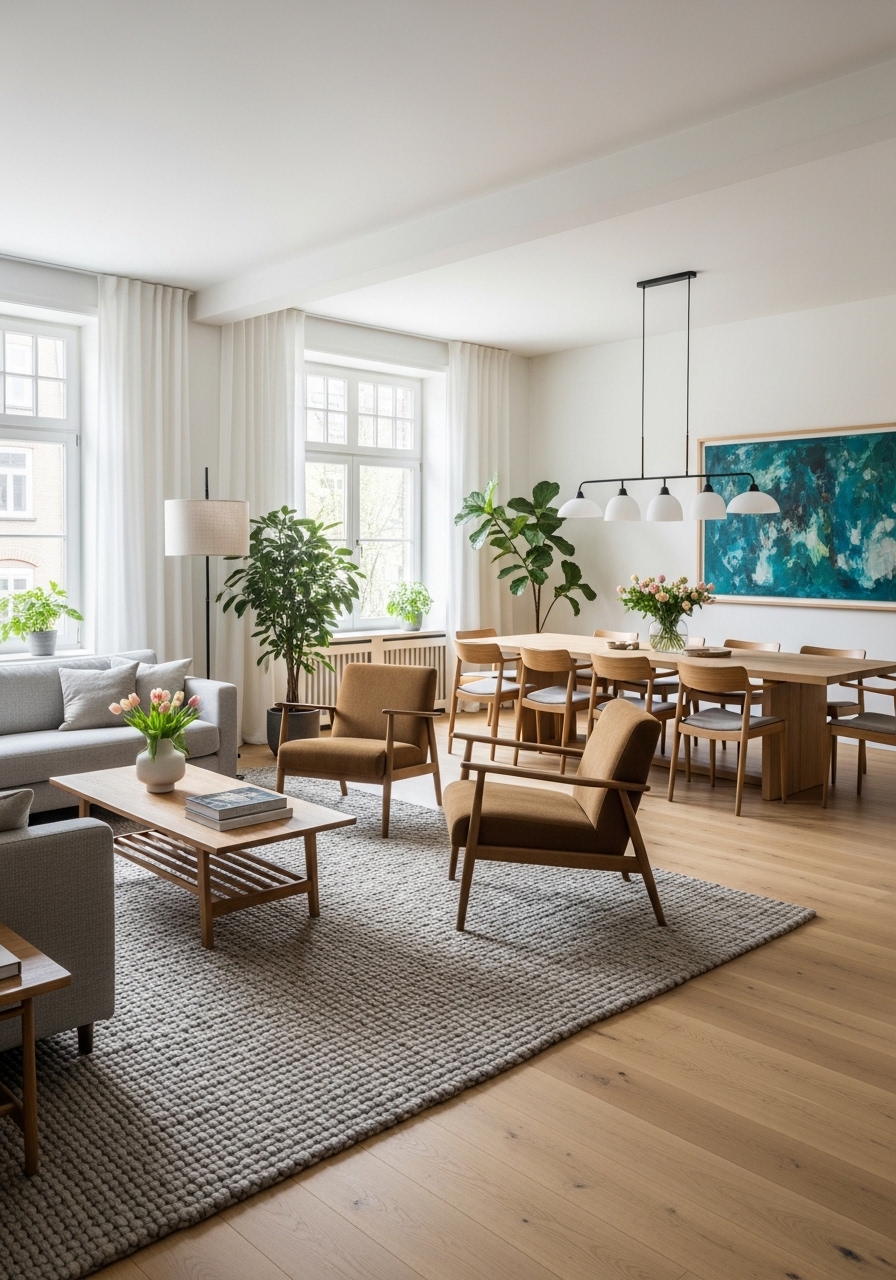
I divided an open plan with two rugs: one 8×10 for seating, one for dining. A sectional and a loveseat sit on the living rug. I chose an 8×10 patterned rug and a 5×7 woven rug for the dining area. Rugs create zones and give the room structure while retaining openness. Styling tip: keep consistent color undertones between rugs. Mistake to avoid: mismatched scale—small rugs under large furniture.
Low-Profile Furniture to Emphasize Height
Style/Vibe: Minimalist
Budget: $$ ($100–300)
Best For: Rooms with high ceilings
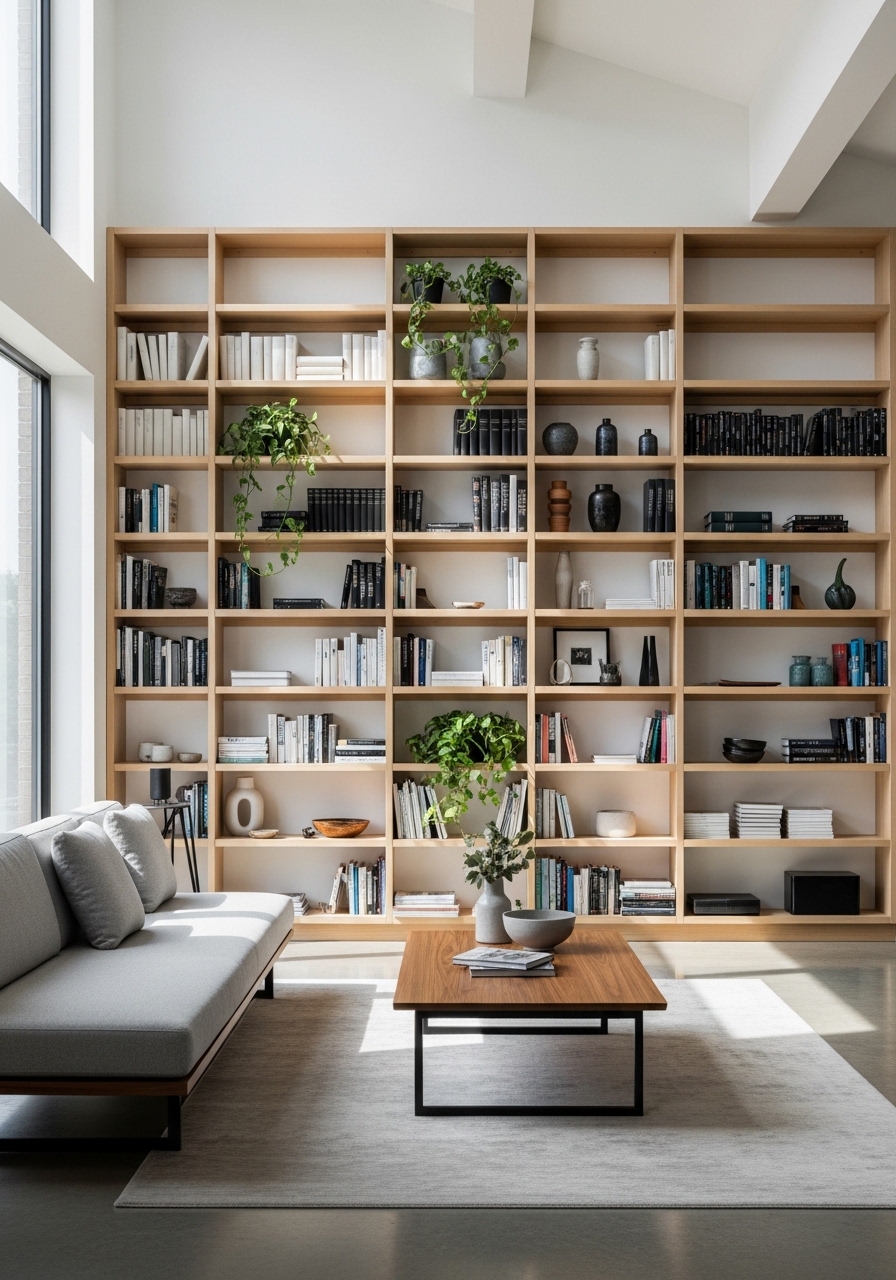
I swapped tall, bulky sofas for a low 66-inch sofa and low coffee table. That leaves headroom and makes the ceiling feel taller. I paired it with a low-profile sofa 66-inch and a low coffee table 40-inch. The vertical space becomes visible and the room feels airy. Styling tip: use a tall plant or floor lamp to balance vertical emphasis. Mistake to avoid: adding short, chunky bookcases that shrink the perceived height.
Slimline Midcentury Layout With Credenza
Style/Vibe: Midcentury Modern
Budget: $$$ ($200–600)
Best For: Long, narrow living rooms
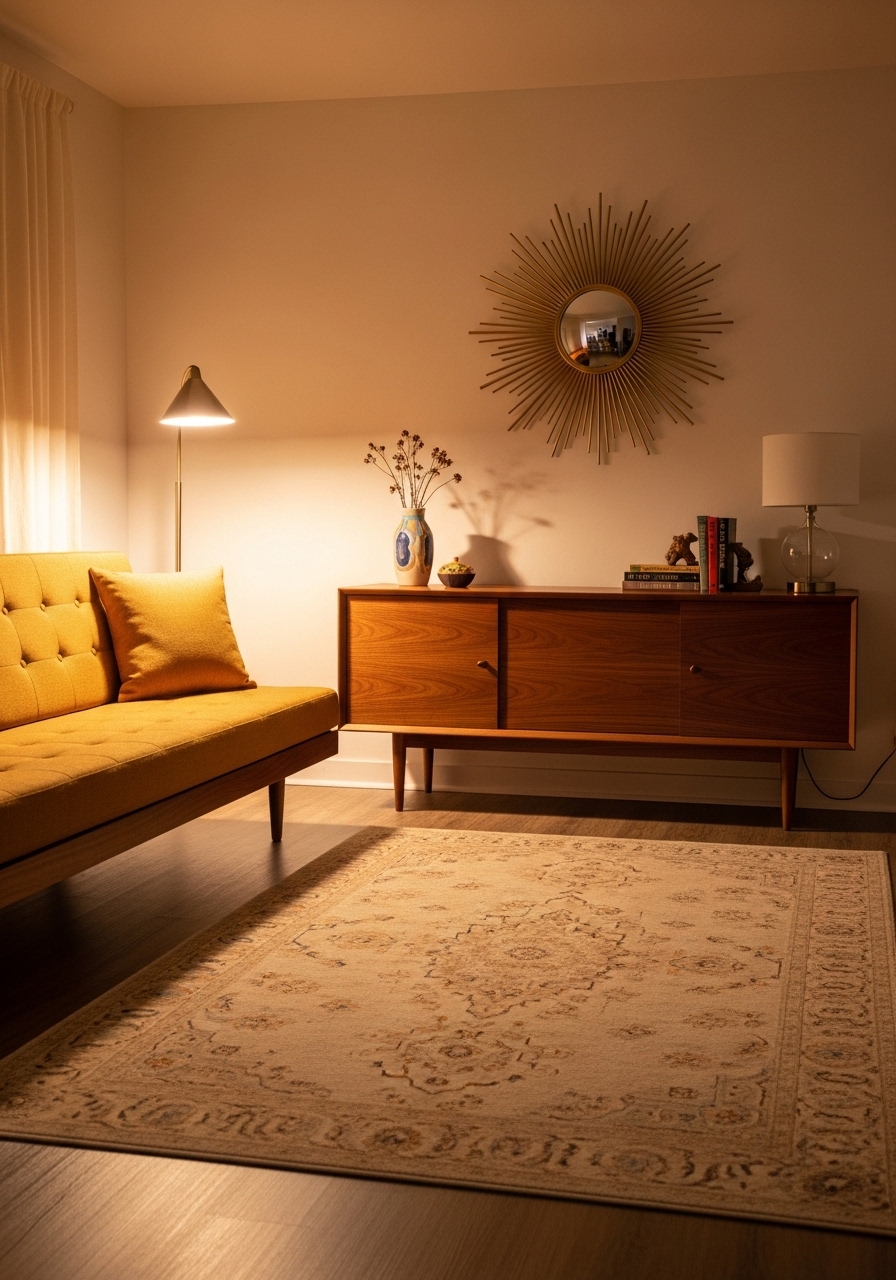
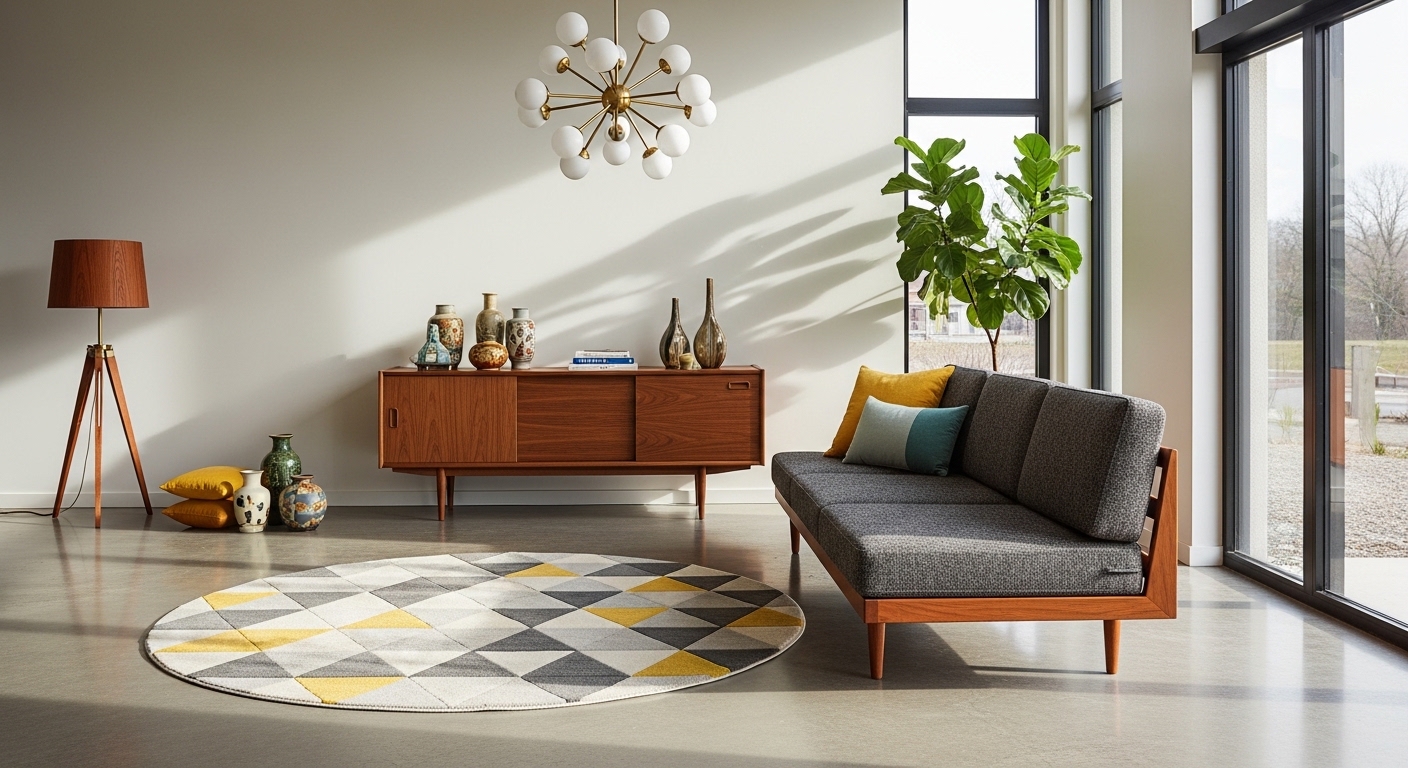
In a narrow room I used a narrow midcentury sofa and a low credenza along one wall. The midcentury sofa 72-inch with tapered legs lifts the visual weight. A 60-inch credenza provides storage without bulk. Legs reveal floor and create airiness. Styling tip: keep at least 18 inches between sofa and credenza. Mistake to avoid: bulky storage pieces that close off the room.
Minimalist Single Sofa and Accent Chairs
Style/Vibe: Scandinavian Minimalist
Budget: $$ ($100–300)
Best For: Small living rooms, studios
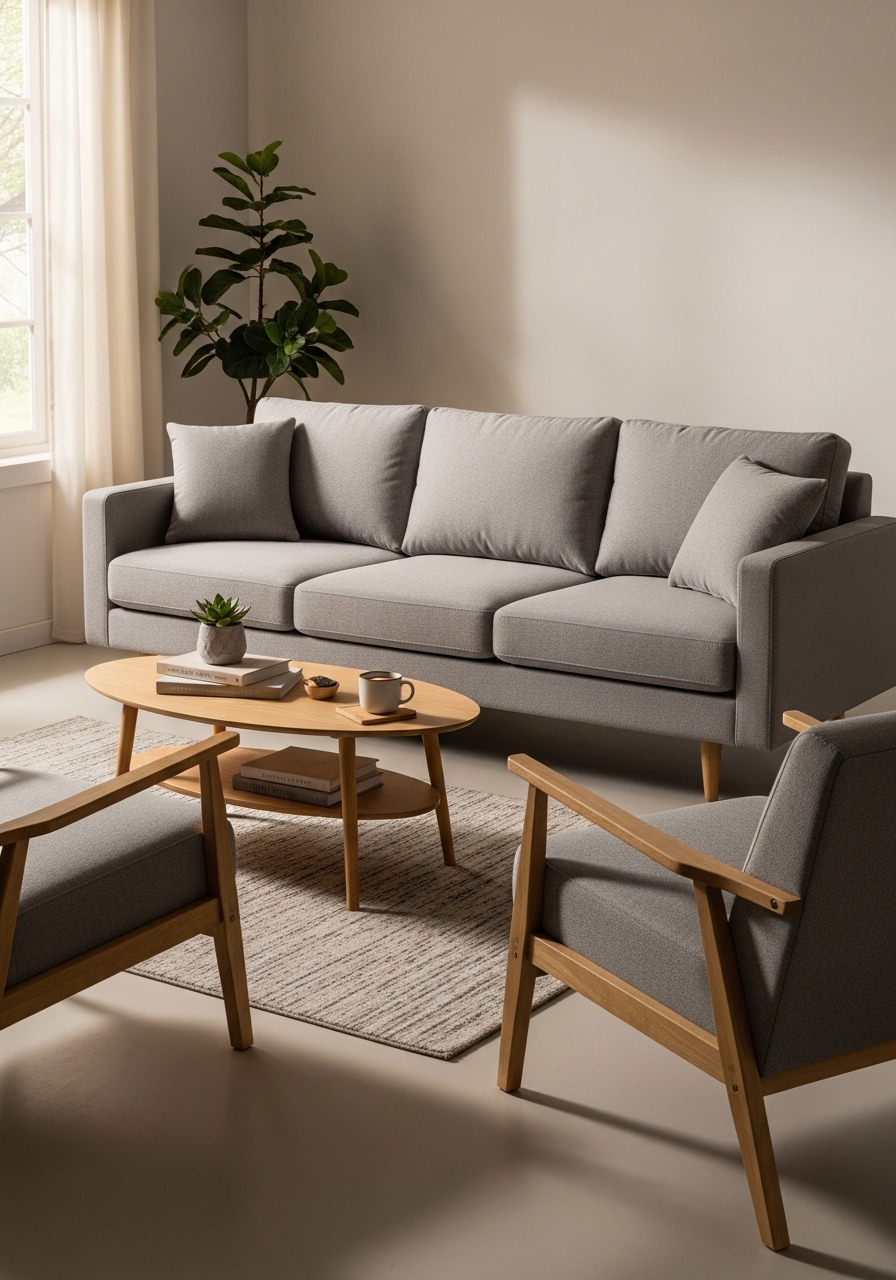
I used one streamlined 72-inch sofa and two small accent chairs instead of a full sectional. The layout opens sightlines to make the room feel larger. I used accent chairs 26-inch and a small round coffee table 30-inch. Styling tip: keep chair legs exposed to show floor. Mistake to avoid: oversized armchairs that block the view.
Multifunctional Sleeper Sofa Layout for Guests
Style/Vibe: Casual Contemporary
Budget: $$$ ($200–700)
Best For: Studio apartments, guest-ready living rooms
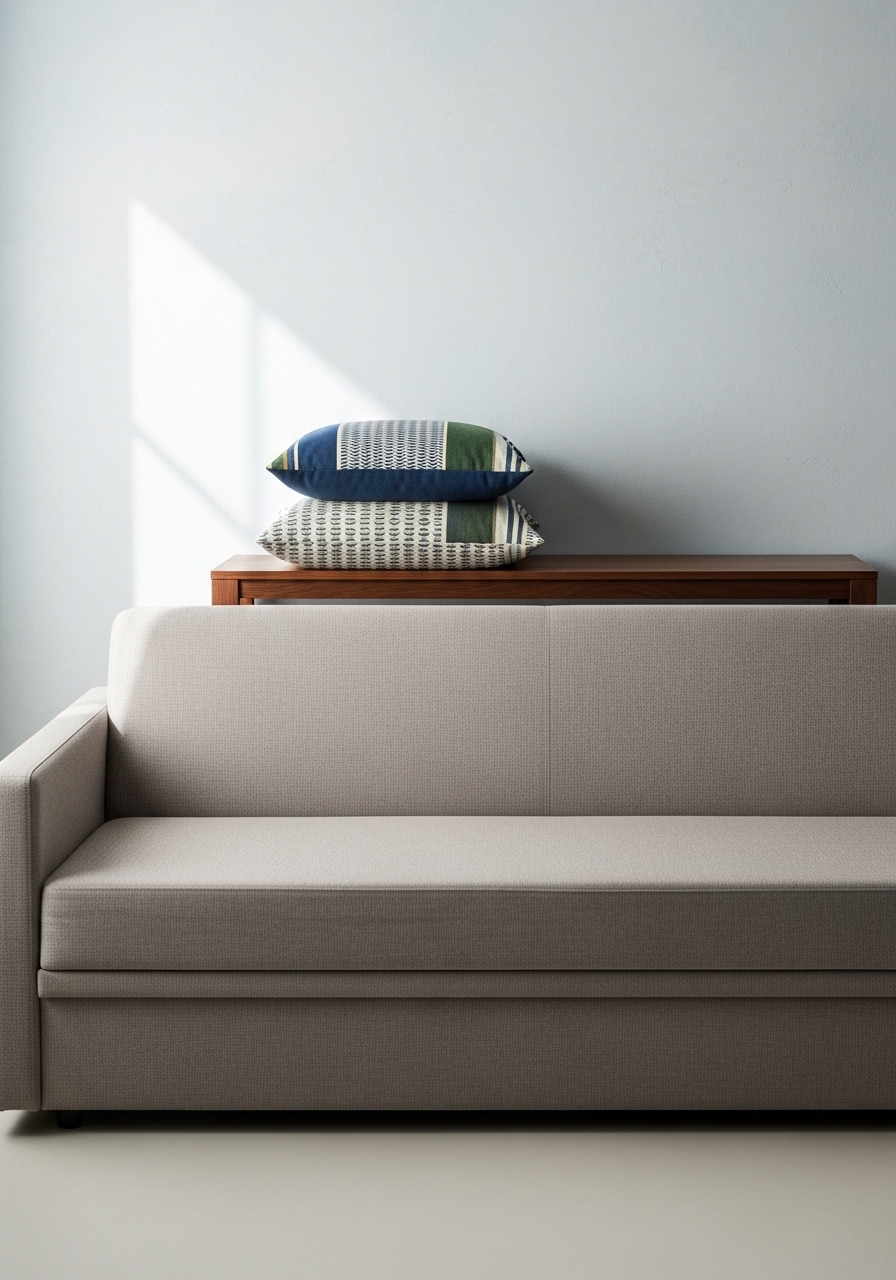
I picked a 75-inch sleeper sofa that doubles as seating and a guest bed. I float it to allow bed pull-out clearance. I paired it with a narrow console table 42-inch and a sleeper sofa queen size. Function meets space-savings. Styling tip: keep bedding neutral and hide extras in a storage ottoman. Mistake to avoid: placing the sofa with no clearance for mattress extension.
Sectional + Ottoman To Create Flow
Style/Vibe: Contemporary Transitional
Budget: $$$ ($300–700)
Best For: Family rooms
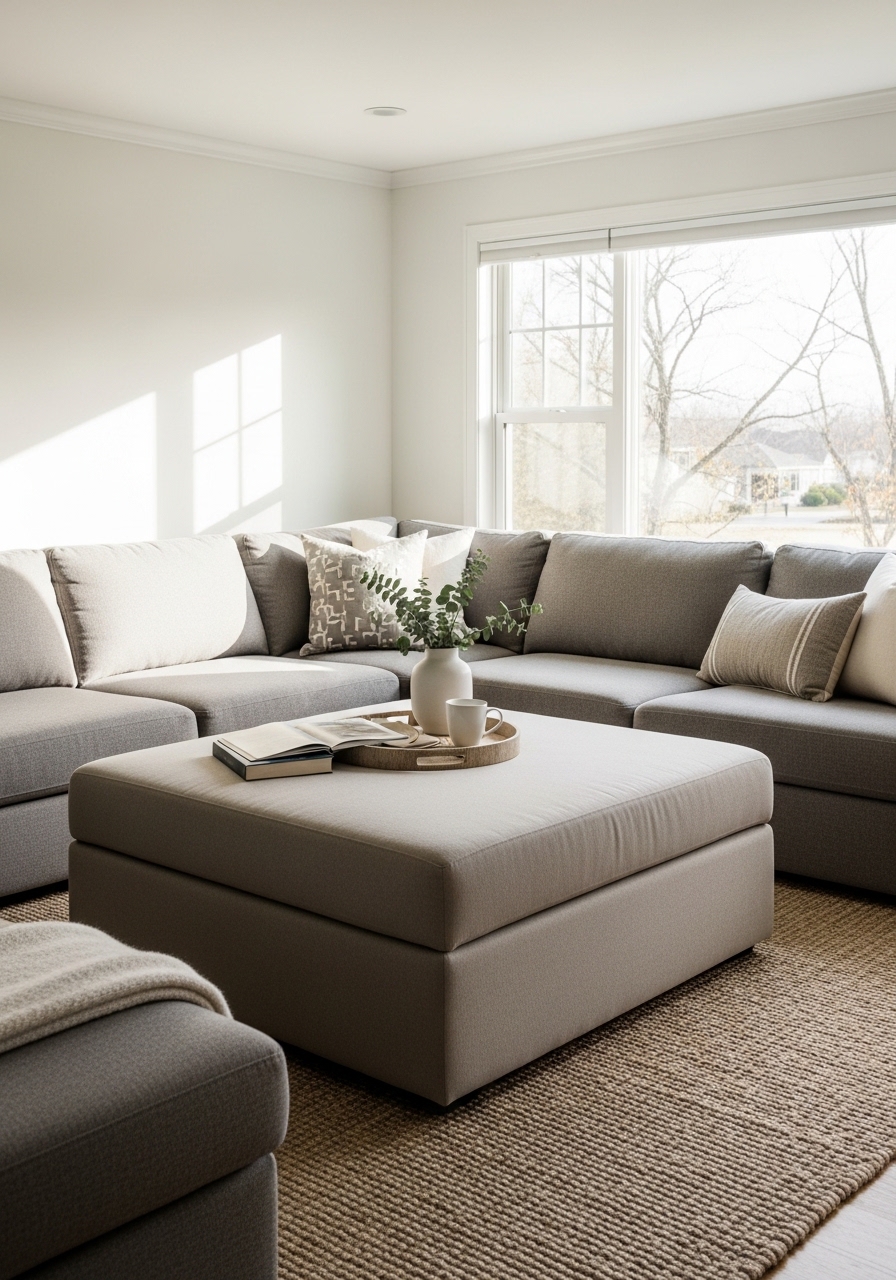
I swapped a solid coffee table for a large ottoman in front of the sectional. The soft surface increases perceived space and allows flexible seating. I used a large ottoman 36×36 inch and a modular sectional. The layout feels open and comfortable. Styling tip: add a tray for drinks on the ottoman. Mistake to avoid: an ottoman too small for the sectional’s scale.
Curved Sofa as a Centerpiece for Conversation
Style/Vibe: Glam Modern
Budget: $$$ ($400–800)
Best For: Open living rooms and entertaining spaces
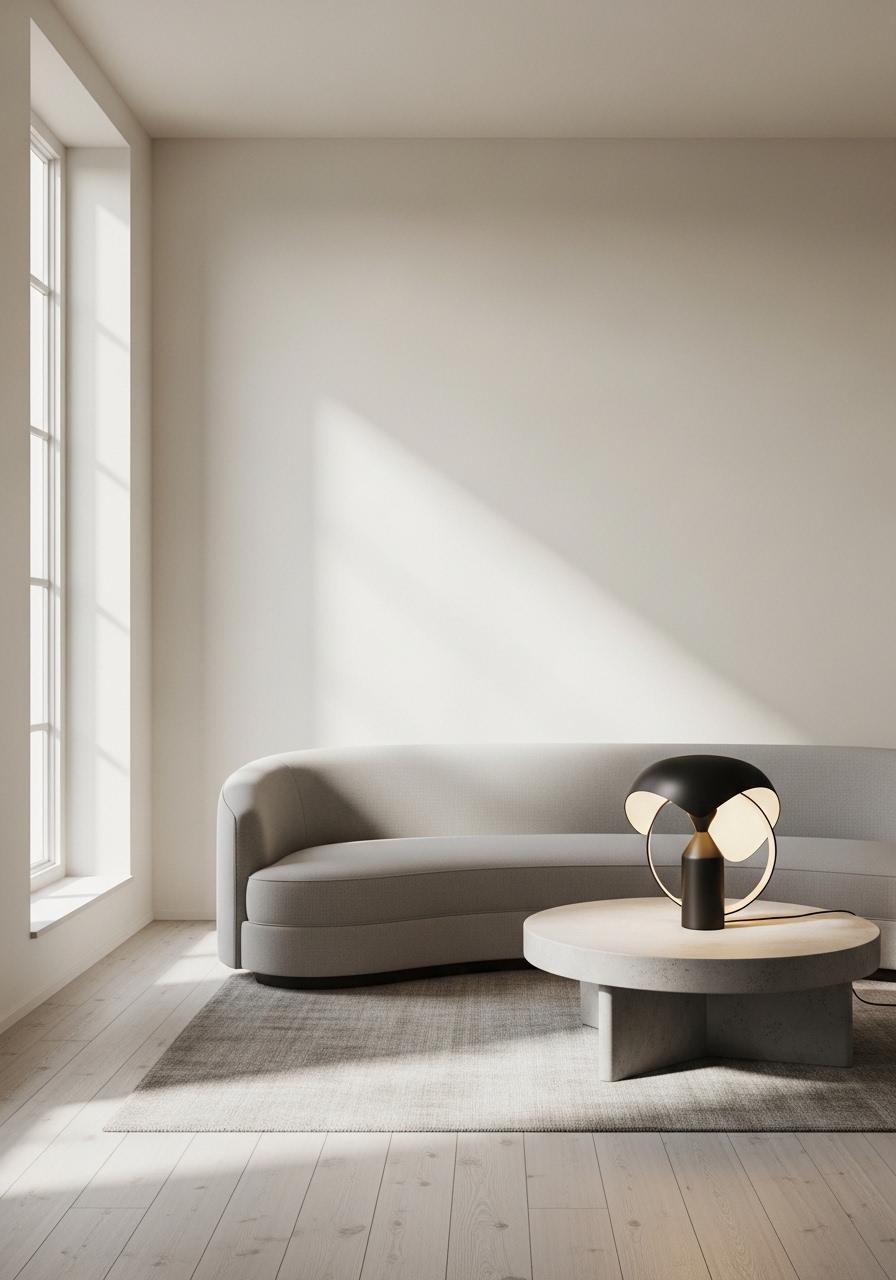
A curved sofa creates a central seating area that reads roomy because it avoids hard corners. I used a 76-inch curved sofa and a round marble coffee table 36-inch. The flow around the curve makes the room feel larger. Styling tip: keep pathways at least 30 inches wide. Mistake to avoid: putting the curve against a wall—its impact is lost.
Narrow Furniture for Hallway-Style Rooms
Style/Vibe: Urban Minimalist
Budget: $ ($50–150)
Best For: Long, narrow living rooms

In a 9-foot-wide space I used a narrow 62-inch sofa and slim console tables. Lightweight frames and open legs keep sightlines open. I paired them with a narrow sofa 62-inch and slim console table 36-inch. The room felt less cramped. Styling tip: hang vertical art to emphasize height. Mistake to avoid: bulky armrests that reduce usable width.
Twin Sofas With Central Rug for Balance
Style/Vibe: Transitional
Budget: $$ ($150–400)
Best For: Medium living rooms
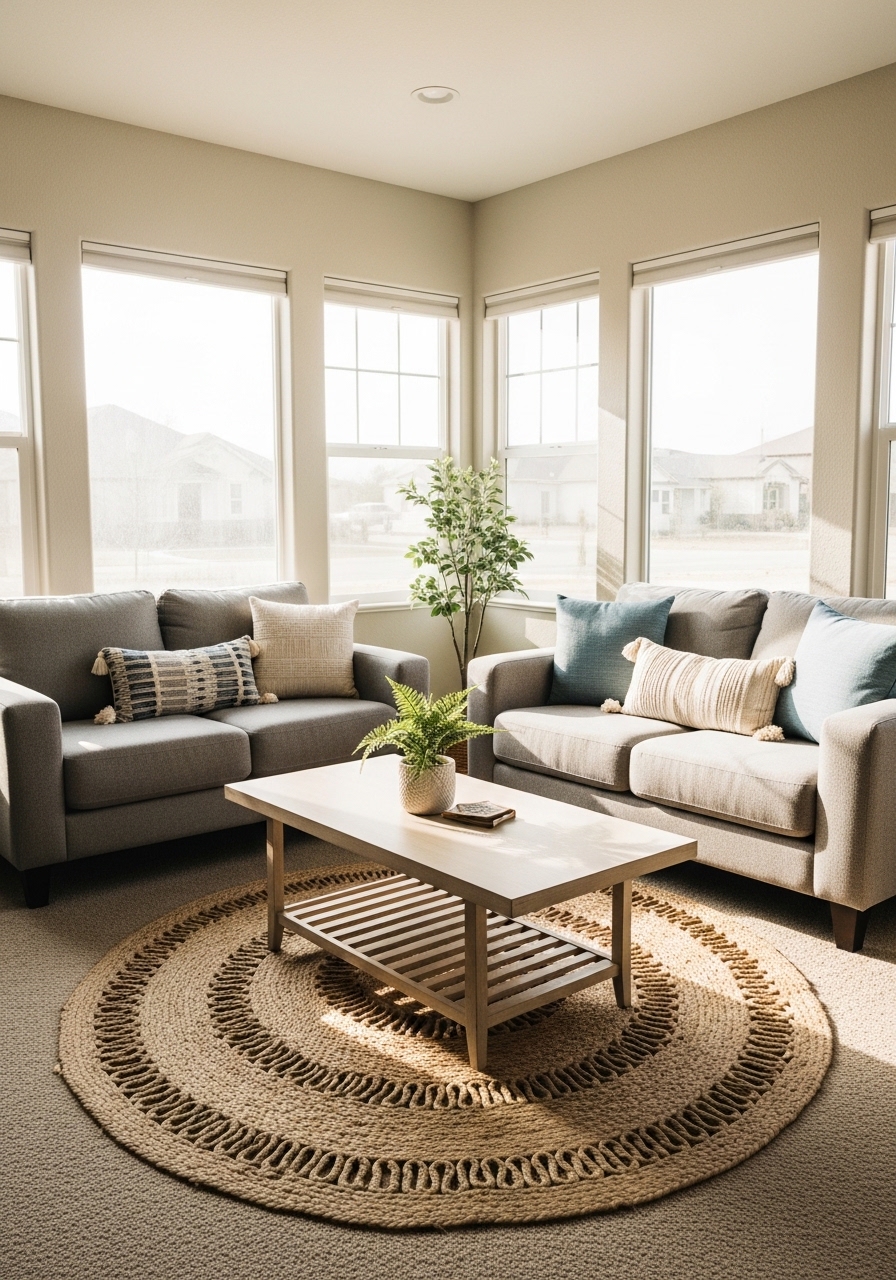
I used two identical 60-inch loveseats facing each other with a medium rug and slim coffee table between. The negative space around the rug makes the room read larger. I used a 60-inch loveseat and a 5×8 rug. Styling tip: keep the rug at least 18 inches from walls. Mistake to avoid: a rug too small for the paired seating.
Built-In Bench Seating to Save Space
Style/Vibe: Modern Farmhouse
Budget: $$ ($100–300)
Best For: Nooks and window seats

I built a bench along one wall with storage and used cushions instead of chairs. The bench keeps the perimeter clear and the room seems larger. For a quick option, I used a storage bench 48-inch and slim console table 30-inch. Styling tip: use seat cushions in the same tone as the wall to blur edges. Mistake to avoid: too many patterned cushions—visual clutter shrinks a room.
Open Back Shelving to Maintain Flow
Style/Vibe: Industrial Chic
Budget: $$ ($100–300)
Best For: Studio apartments and open-plan spaces

I swapped a solid divider for open metal shelves behind my sofa to define but not block the space. I used a 48-inch open shelving unit and decorative woven baskets for storage. Light passes through and the room feels continuous. Styling tip: leave some empty shelves for breathing room. Mistake to avoid: overfilling shelves—it reads as clutter.
TV Wall With Low Media Console
Style/Vibe: Contemporary Casual
Budget: $$ ($100–300)
Best For: Living rooms focused on media

I mounted the TV and used a 60-inch low console to keep the eye low. This prevents the TV from dominating the room. I used a 60-inch media console and a wall mount slim TV bracket. The room reads larger because vertical clutter is minimized. Styling tip: hide cords with a cable channel. Mistake to avoid: placing the TV on a tall bulky cabinet.
Corner Fireplace Seating to Emphasize Depth
Style/Vibe: Rustic Cozy
Budget: $$$ ($200–500)
Best For: Rooms with corner fireplaces
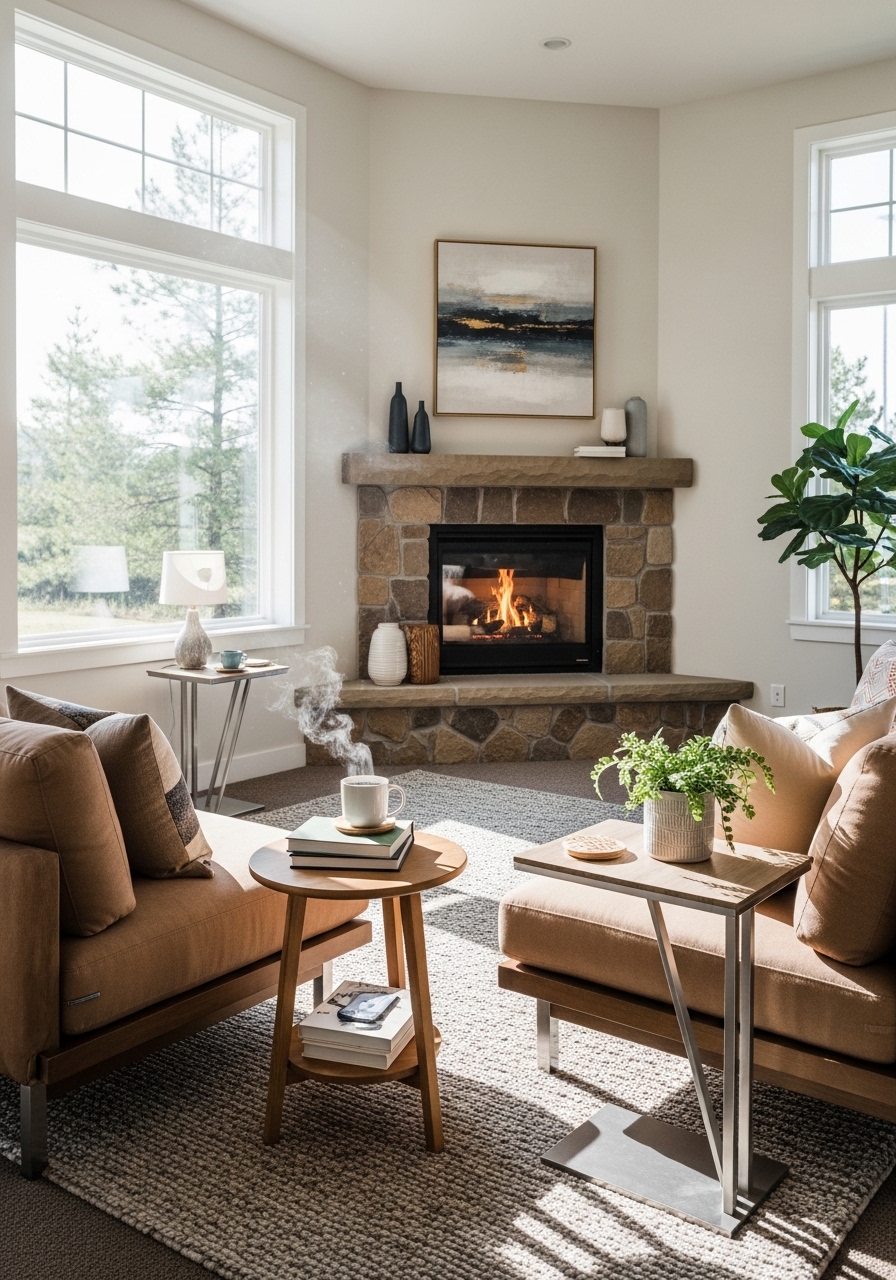
I angled seating toward the corner fireplace, placing a loveseat and an accent chair to create depth. A small side table 22-inch and loveseat 60-inch kept scale appropriate. The corner becomes a focal point and the rest of the room feels open. Styling tip: keep furniture legs visible to show floor. Mistake to avoid: blocking the fireplace entrance with too-large coffee tables.
Small Coffee Tables to Keep Sightlines Clear
Style/Vibe: Minimal Contemporary
Budget: $ ($50–150)
Best For: Compact seating areas

I replaced a bulky coffee table with a slim 36×18 table and two nesting stools that tuck away. This keeps sightlines open and the room feels airier. I used a slim coffee table 36×18 and nesting stools set. Styling tip: keep table height similar to sofa seat height. Mistake to avoid: coffee tables that are too tall and block views across the room.
Angled Rug Placement to Make Rooms Seem Bigger
Style/Vibe: Eclectic Modern
Budget: $ ($50–150)
Best For: Small square rooms
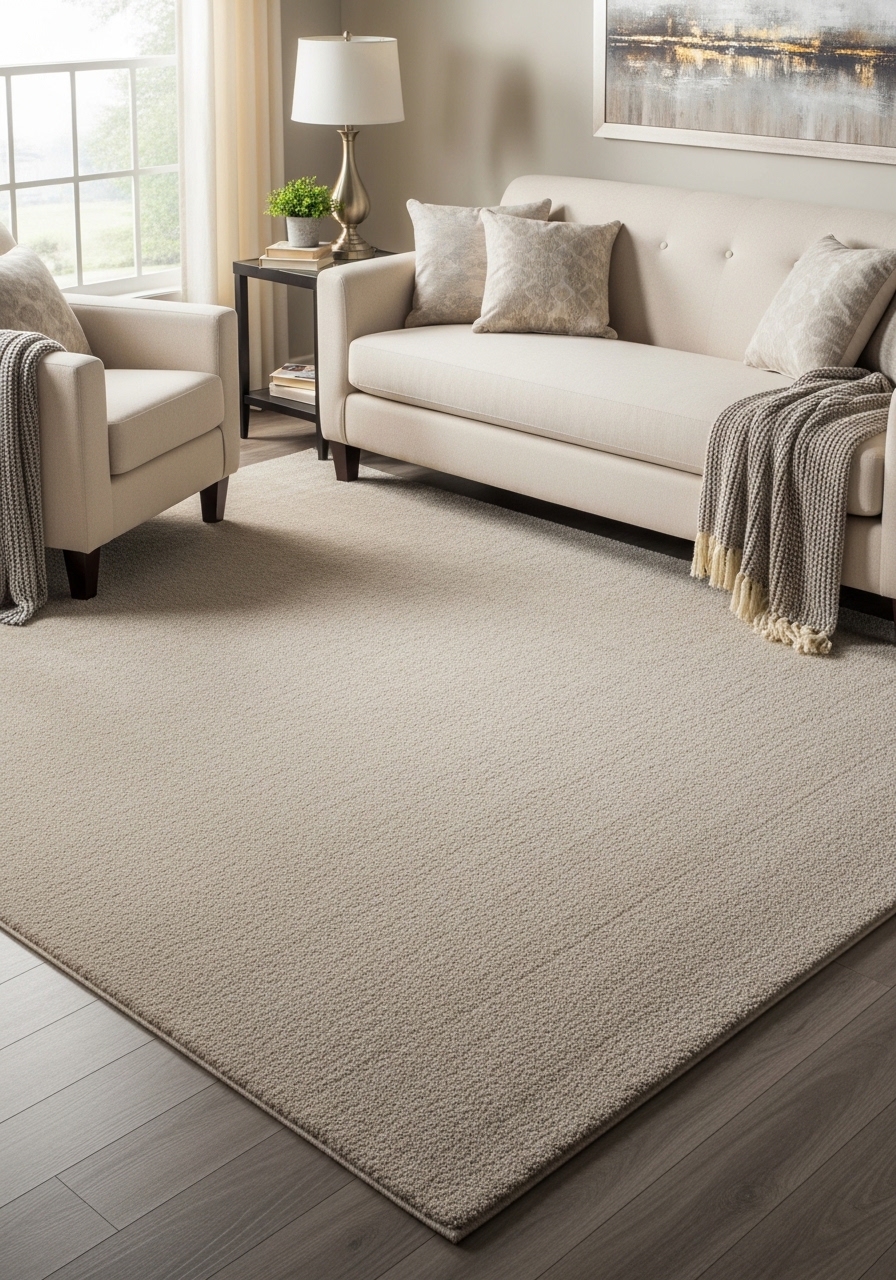
I placed a 6×9 rug at an angle under my sofa and chair. The diagonal line draws the eye and makes the room feel deeper. I used a 6×9 area rug and a small coffee table 32-inch. Styling tip: anchor the angled rug so the front legs of the sofa sit on it. Mistake to avoid: angling a rug too sharply so it reads messy.
Mix of Open and Closed Storage to Reduce Clutter
Style/Vibe: Transitional Practical
Budget: $$ ($100–300)
Best For: Family rooms and multipurpose spaces
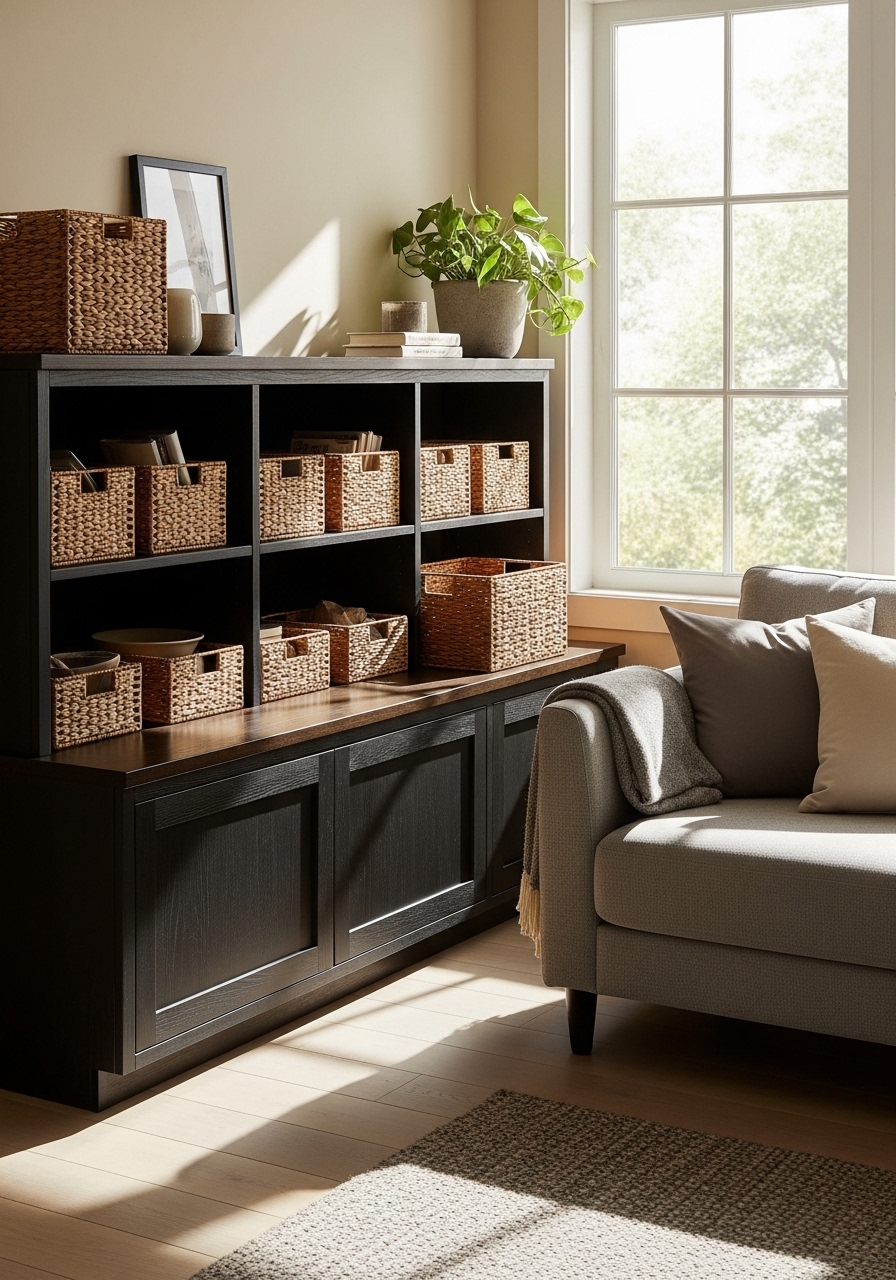
I combined closed cabinets and open shelves so visible items stay tidy. A low storage cabinet 48-inch plus open wall shelves keeps the room feeling organized and open. The result is a larger-feeling room because clutter is contained. Styling tip: use matching baskets for closed storage. Mistake to avoid: all closed storage that creates visual heaviness.
Floor-To-Ceiling Curtains to Add Height
Style/Vibe: Classic Modern
Budget: $$ ($50–150)
Best For: Living rooms with standard ceilings
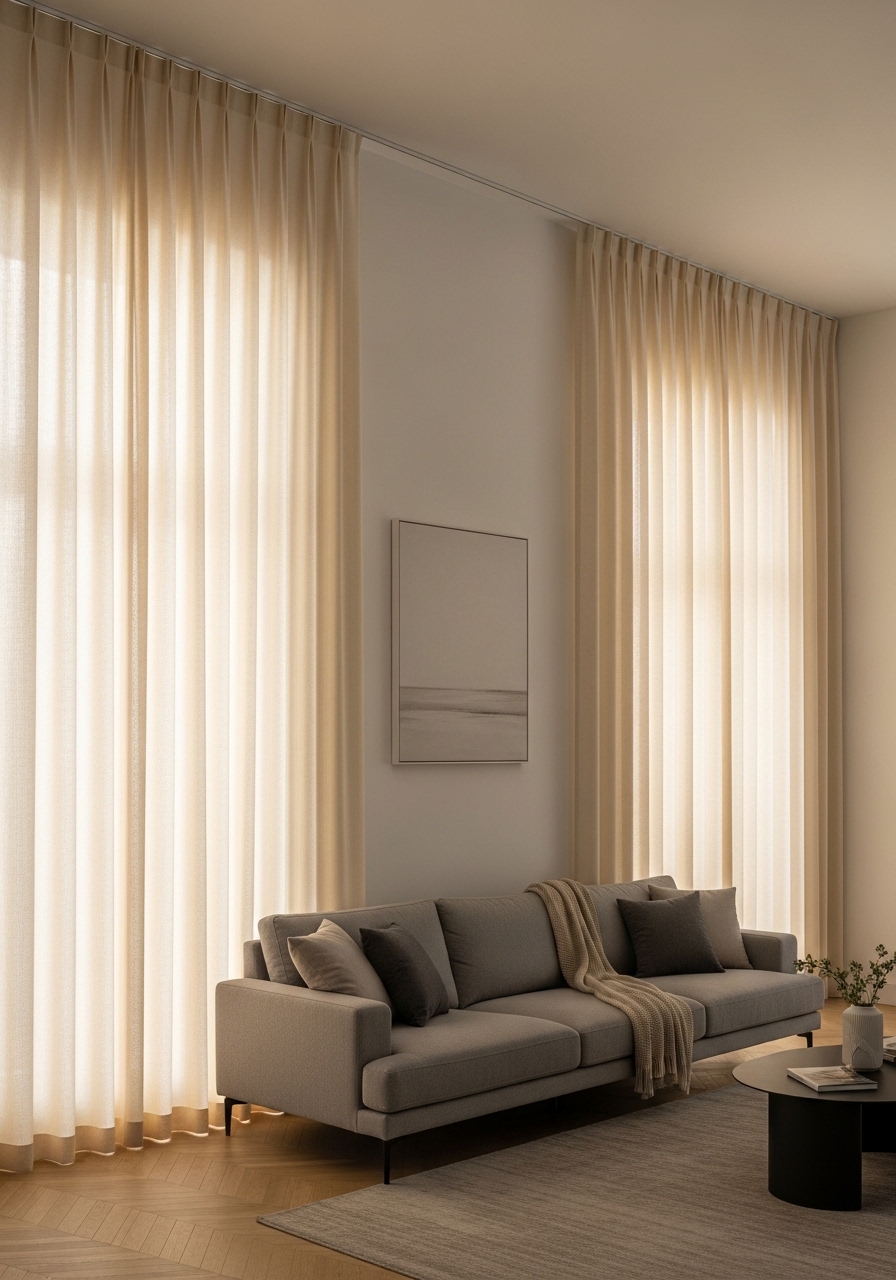
I mounted curtain rods 6 inches above the window and used 96-inch panels to visually raise the ceiling. I used 96-inch curtain panels and curtain rod set 48-inch. The vertical line makes the room feel taller and therefore bigger. Styling tip: open curtains fully during the day. Mistake to avoid: hanging curtains at the top of the window frame instead of above it.
Mirrored Accents to Bounce Light
Style/Vibe: Glam Minimalist
Budget: $ ($50–150)
Best For: Dark living rooms
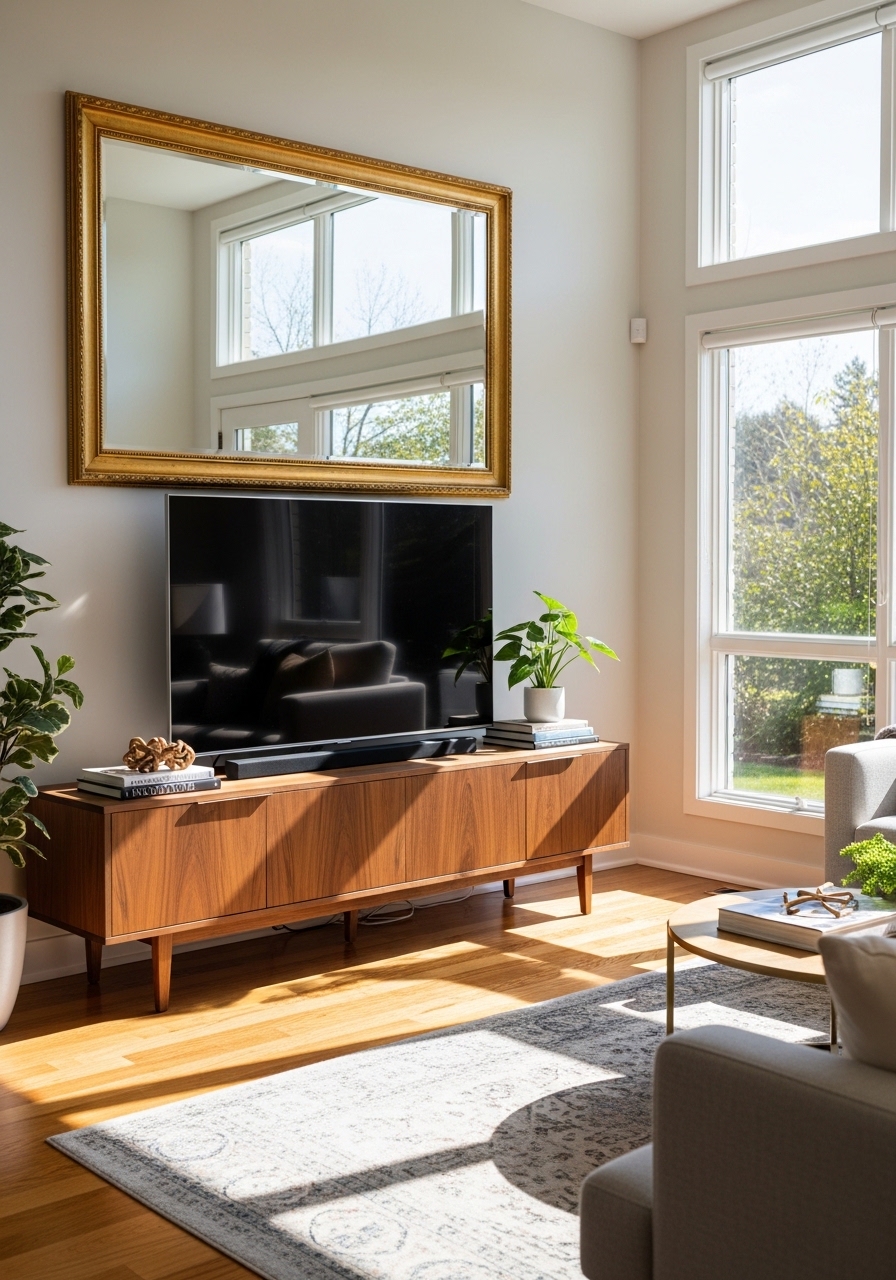
I added a 36×48 wall mirror above the console to reflect light and double perceived space. I used a 36×48 wall mirror and a small console table 40-inch. It brightened a dim living room and it felt larger instantly. Styling tip: angle mirrors slightly to reflect the best light source. Mistake to avoid: placing mirrors opposite cluttered areas.
Clear Acrylic Furniture for Visual Weightlessness
Style/Vibe: Modern Minimalist
Budget: $$$ ($100–300)
Best For: Very small spaces
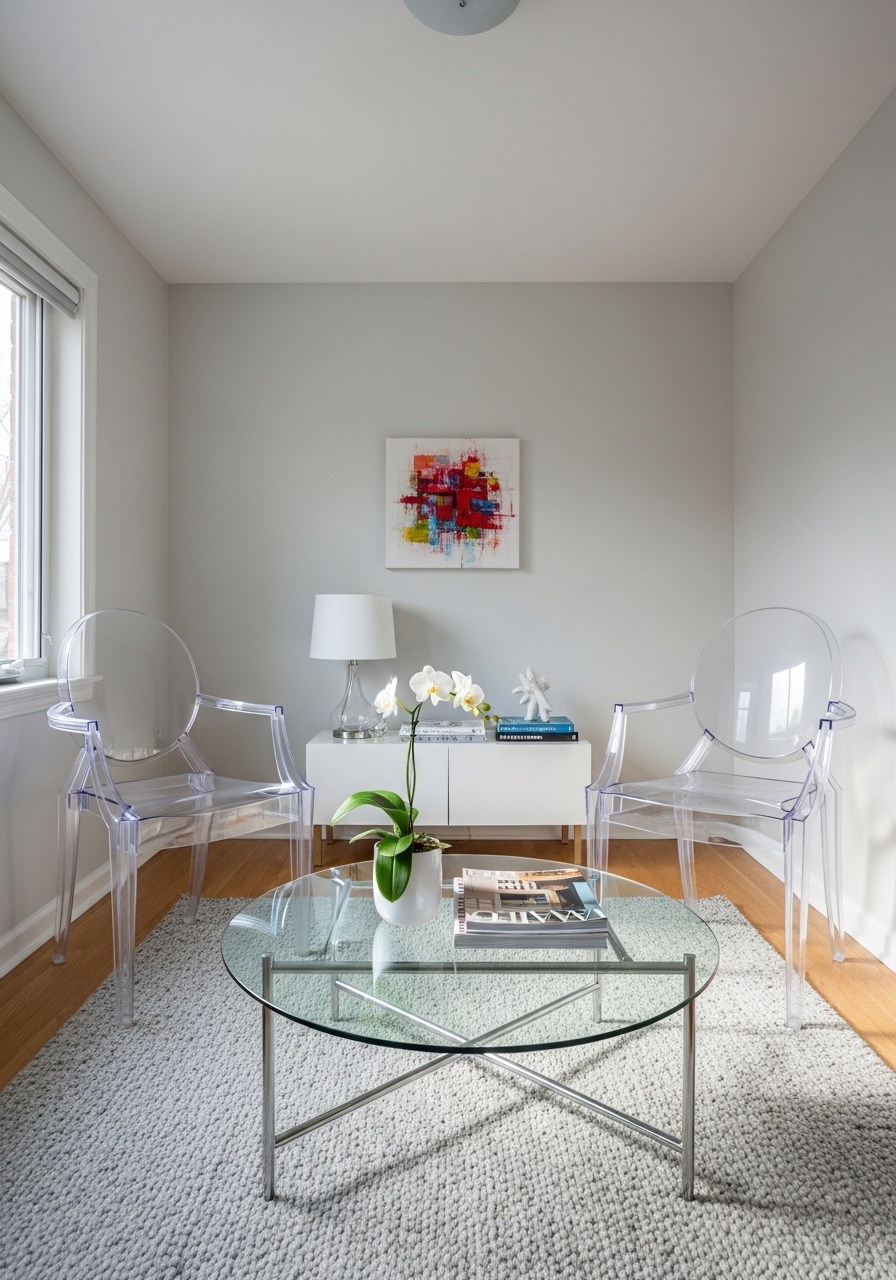
I swapped a bulky side chair for an acrylic one and a clear acrylic side table. The pieces almost disappear visually, opening the room. I used acrylic side chair and clear acrylic coffee table. Styling tip: pair with textured textiles so it doesn’t feel cold. Mistake to avoid: using all clear furniture—add at least one solid anchor piece.
Vertical Art Grouping to Lift the Eye
Style/Vibe: Contemporary Artful
Budget: $ ($50–150)
Best For: Low-ceiling rooms
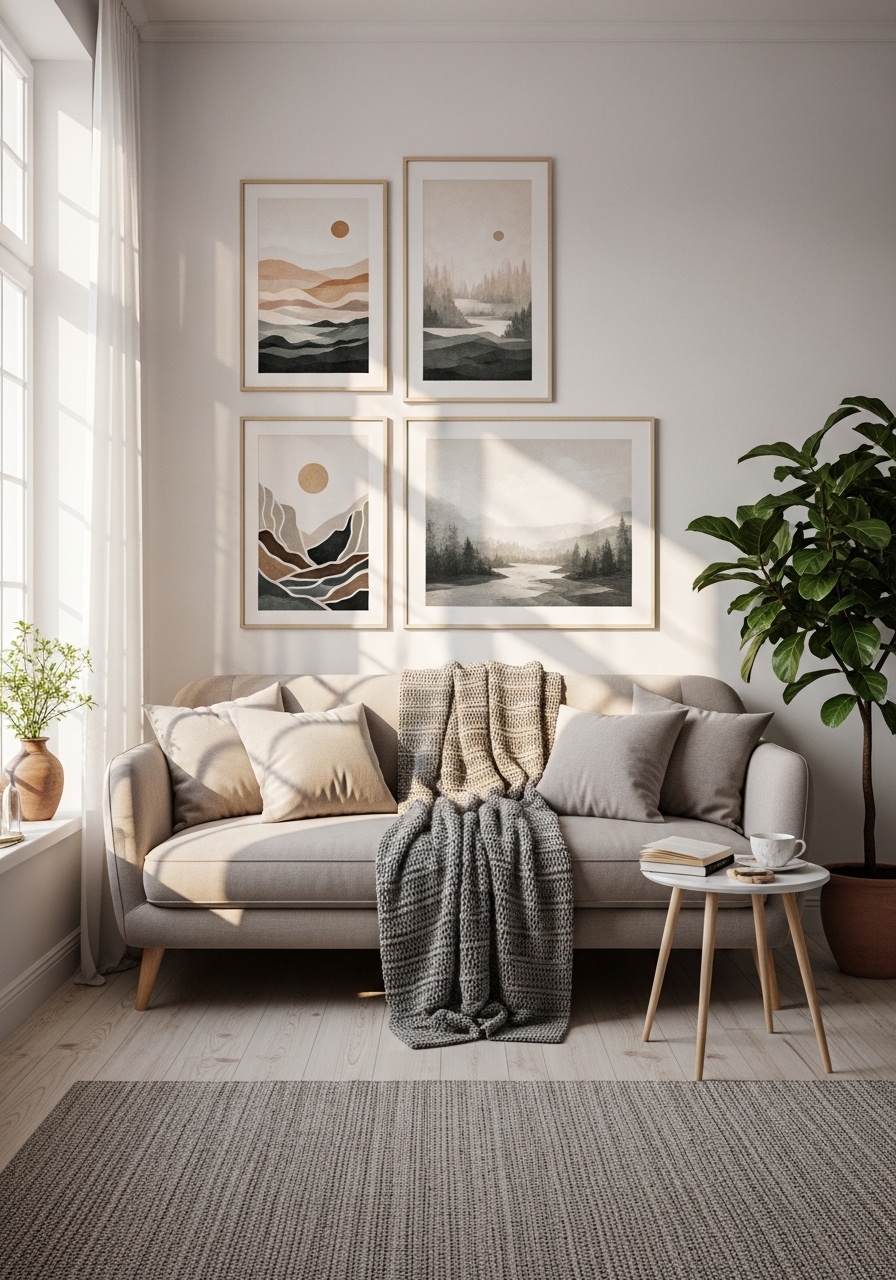
I grouped three tall frames above my sofa to draw the eye upward. I used 12×36 framed prints and a picture hanging kit. It made the wall read taller and the room felt less squat. Styling tip: keep equal spacing—about 2–3 inches. Mistake to avoid: too many small frames that clutter the wall.
Wall-Mounted Lighting to Free Surfaces
Style/Vibe: Industrial Modern
Budget: $ ($50–150)
Best For: Small rooms with limited surface space

I replaced table lamps with wall-mounted swing-arm fixtures to free up side tables. I used a swing arm wall lamp and compact floating shelf 24-inch. The freed surfaces reduce clutter and make the room feel larger. Styling tip: position lamps at reading height—about 54 inches from the floor. Mistake to avoid: mounting too low so they hit heads.
Neutral Walls With One Textured Accent Wall
Style/Vibe: Scandinavian Cozy
Budget: $ ($50–150)
Best For: All living rooms
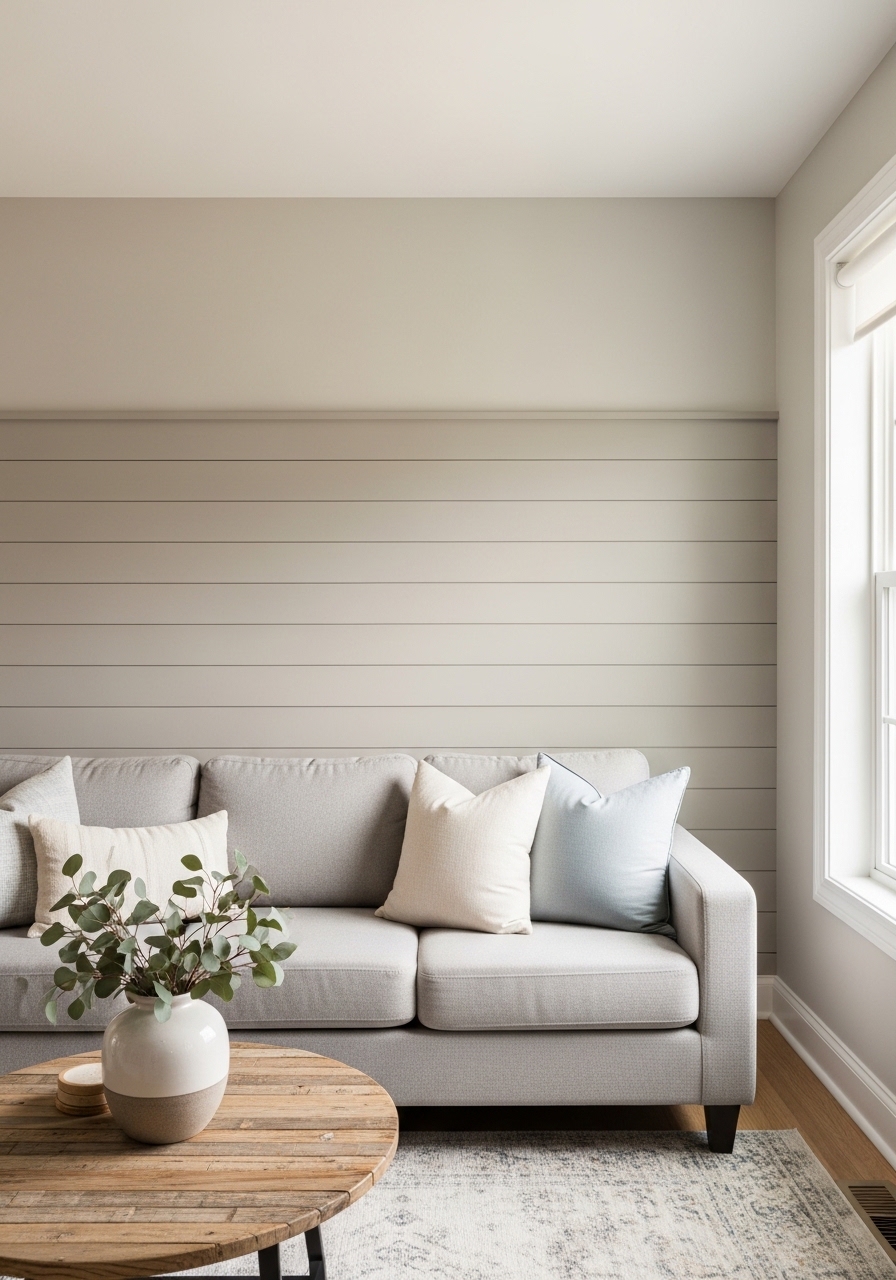
I kept three walls neutral and added a shiplap accent wall behind the sofa in off-white. This recedes visually and keeps the room airy. I used peel-and-stick shiplap panels and Benjamin Moore Simply White sample. The room felt cohesive and larger. Styling tip: keep accent texture subtle—not high contrast. Mistake to avoid: a dark accent that draws the eye and shrinks the room.
Minimal Entry Transition Zone to Keep Floor Visible
Style/Vibe: Urban Minimalist
Budget: $ ($50–150)
Best For: Small living rooms connected to entryways
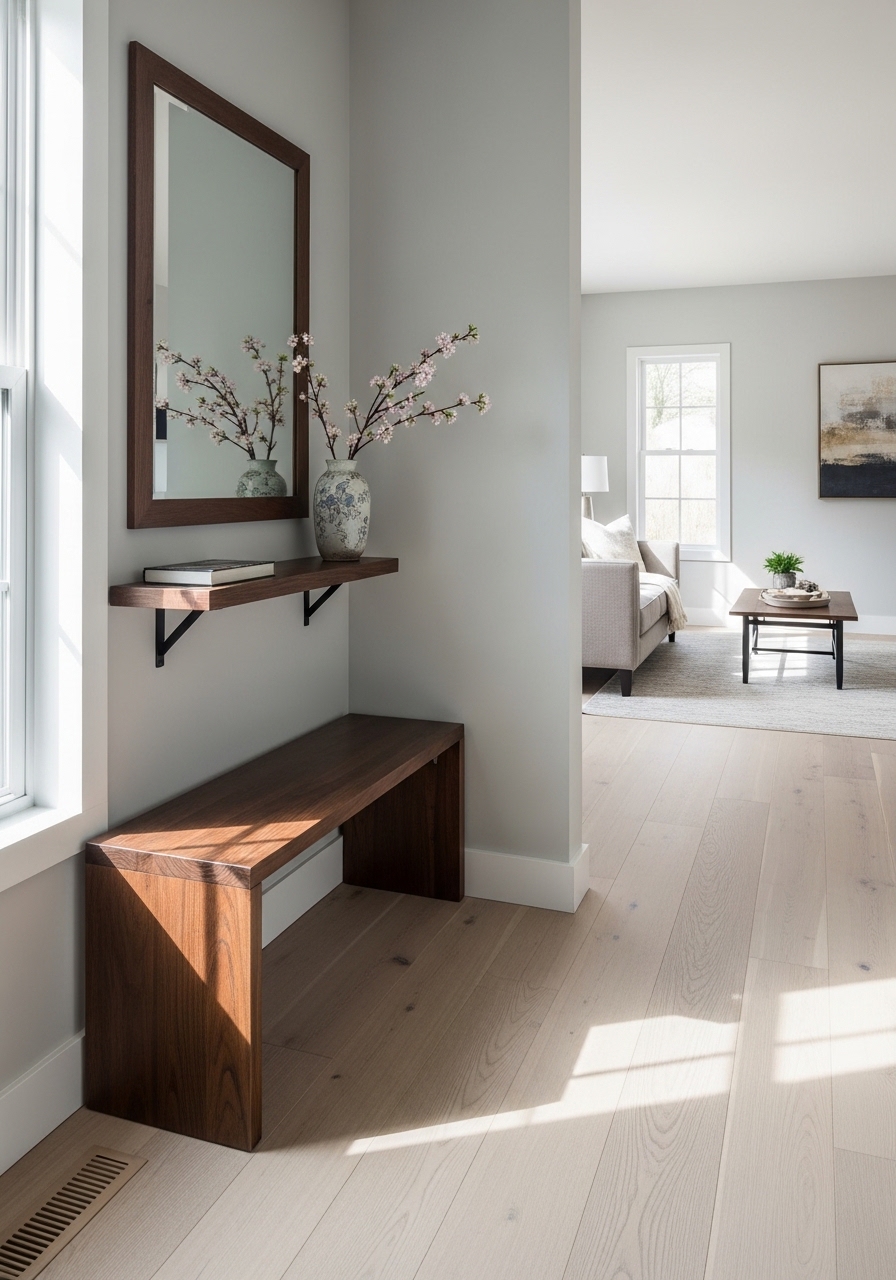
I created a minimal entry with a 36-inch bench and slim console so the floor remains visible into the living area. I used a narrow bench 36-inch and slim console 30-inch. Clear sightlines make the living room feel bigger. Styling tip: keep entry items minimal—keys only. Mistake to avoid: bulky storage that blocks the path.
Shopping Tips for These Looks
Buy versatile rugs: Choose neutral 8×10 rugs under $200. They anchor areas without heaviness.
Choose leggy furniture: Pick sofas with exposed legs like midcentury sofas to show floor.
Invest in lighting: Replace table lamps with arc floor lamps for better spread.
Use mirrors strategically: A large 36×48 mirror doubles light.
Pick clear or slim tables: Acrylic side tables are great for tiny spaces.
Buy curtains wide and tall: Get 96-inch panels to lift ceilings.
Mix open/closed storage: Use storage cabinets with baskets.
Frequently Asked Questions
Q: What rug size should I pick for a small living room?
A: Aim for at least 6×9 or 8×10 so front legs of furniture sit on it. I used an 8×10 jute rug in my 12×14 room.
Q: How much clearance should I leave for walkways?
A: Keep 30–36 inches for main pathways. For tighter spots, leave at least 24 inches. A slim console 36-inch can help maintain that.
Q: Can a sectional make a small room feel larger?
A: Yes if it’s low-profile and the right scale. I used a modular sectional with a small ottoman to keep openness.
Q: Is floating furniture worth it?
A: Floating creates zones and improves flow. Use a slim console table 48-inch behind a floated sofa.
Q: What paint color makes rooms feel bigger?
A: Light neutrals with warm undertones. I like Benjamin Moore’s “Simply White” and used Simply White sample as a starting point.
Conclusion
Start with one layout change—move the sofa or swap a bulky coffee table for a slim or clear option. Small shifts yielded the biggest feeling of space in my home. Try a single idea and live with it for a week. Which layout are you trying first?