I’m obsessed with tiny exteriors that feel calm and intentional – minimalist home exterior for small spaces is all about trimming the noise and keeping what matters. When you live small you learn to love simple lines, clean materials, and clever little details that pack a punch.
I pulled together 25 of my favorite exterior looks so you can steal ideas without starting from scratch – I’ve tried a few of these on my own bungalow and learned what actually works. These are the ones I keep pinning back to when I need a reset or a quick project.
Scroll through for inspiration, practical notes, and little tips I wish someone told me sooner.
These 25 Minimalist Home Exterior For Small Spaces
Clean Potted Plant Corner
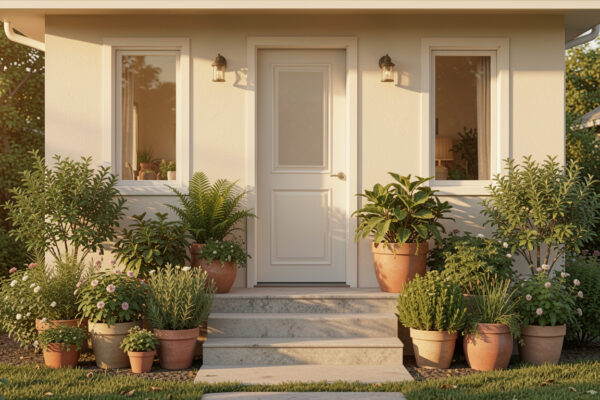
A single large pot and a bench make a tiny porch feel curated instead of cluttered. Keep the palette neutral and pick one sculptural plant to anchor the spot, and you’ll get that calm gallery vibe by the door. I once salvaged an old clay pot and repainted it matte black – it instantly lifted the whole entry.
White Box On Concrete
Blocky white volumes sitting on clean concrete strips feel modern and low maintenance. Use smooth finishes and hidden gutters to keep the silhouette uncluttered, and consider subtle planting to soften the base. If you want contrast, a single dark door or trim will add personality without fuss.
Tiny Cottage Among Trees
A small white shell tucked into foliage reads timeless and cozy, and it’s surprisingly easy to achieve even on a narrow lot. Let the greenery do most of the ornamentation, and keep the exterior materials simple so nature is the focal point. You’ll love how dappled light changes the whole mood throughout the day.
Simple Stairs, Big Impact
Minimal stairs can define an entry without overwhelming a petite façade – use consistent materials and crisp lines. Mix a narrow planter or bench at the landing for function and softness, and stay away from busy railings. This approach is perfect if your lot requires elevation but you want to stay streamlined.
Green Accent With Steps
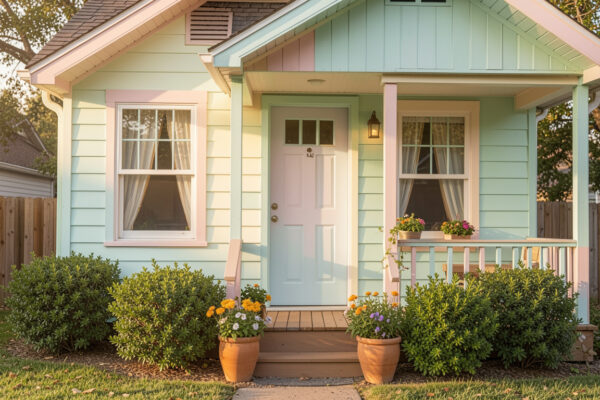
A block of color on a small façade feels bold and modern when balanced by simple steps and minimal hardware. Choose a muted green or sage so the color reads calm rather than loud, and pair it with wood or concrete for warmth. I tried a deep olive accent once and it grounded the whole street-facing side beautifully.
Mixed Wood And Stone Facade
Combining wood and stone in small doses gives texture without visual clutter – think narrow vertical wood slats and a single stone panel. Keep the lines horizontal or vertical consistently so it reads intentional. You can achieve a high-end look by limiting the palette to two natural materials.
Symmetrical Tiny Front Porch
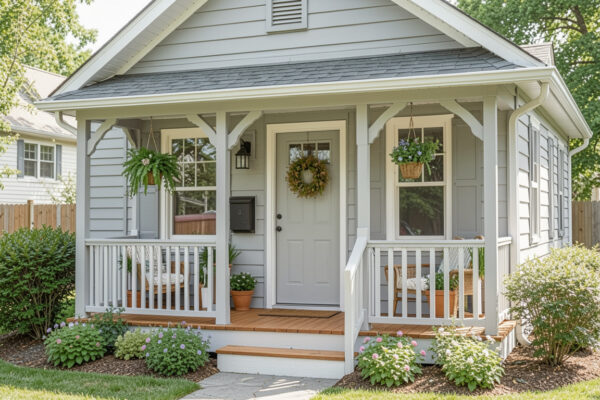
A centered entry with balanced windows reads comforting and ordered on a compact house. Use a slim bench or pair of planters to create symmetry and keep things scaled to the porch width. When I staged my last place to sell, that symmetry made photos feel so calm and inviting.
Tree-Lined Minimal Frontage
Small trees planted close to the façade give privacy and break up a flat wall while keeping a minimalist aesthetic. Choose species with clean trunks so the structure stays visible, and space them evenly for rhythm. You’ll get seasonal interest without adding heavy ornamentation.
High-Contrast Trim Details
Sharp black trim against white walls is a chic shorthand for minimalism – it reads modern and timeless. Keep the trim lines skinny and consistent around windows and doors to avoid looking busy. This is an easy DIY win if you want a fresh, graphic exterior on a budget.
Scaled-Down Driveway Design
A compact driveway with simple paving and a single planting strip keeps the front tidy and easy to maintain. Use consistent materials to make the driveway feel like an extension of the home rather than an afterthought. If space is tight, think perpendicular parking or a single car bay with clever screening.
Warm Trim On White Walls
Brown doors and window frames give a soft, approachable look to a white exterior without clutter. Stick with matte finishes to keep the vibe understated and modern. You can reconcile a minimalist exterior with a cozy welcome just by swapping hardware and stain tones.
Isolated White Cottage Look
A little white cottage set into stones and grass reads like a postcard when you keep edges informal and plantings spare. Let the landscape blend into the house so the entire scene feels cohesive, and avoid too many garden ornaments. This is ideal if you want a simple retreat vibe on a small plot.
Classic Steps And Entry
Keeping entry steps classic but minimal makes a small home feel purposeful and approachable. Use one material for the riser and treads to streamline the look and avoid heavy railings. A single slim sconce by the door is enough to balance safety with style.
Brick, Windows, Quiet Elegance
White brick with generous windows reads fresh and airy on a narrow façade, and it feels sophisticated without fuss. Keep trim minimal and choose clear glass so the lines stay uninterrupted. You’ll love how natural light becomes an extra material in the exterior composition.
Glowing Windows At Dusk
Strategic interior and exterior lighting makes a tiny exterior feel warm and deliberate after sunset. Use warm LED bulbs and shielded fixtures to create pools of light rather than glare. Lighting is the secret ingredient that makes a minimalist design feel welcoming instead of sterile.
Evening Curb Appeal Lighting
Simple uplights or recessed step lights highlight texture and create depth without visual clutter. Place fixtures intentionally to accent a pathway or a focal material like wood or stone. You can create drama with very little energy by focusing on layers instead of lots of fixtures.
Soft Lawn And Simple Lines
A pared-back lawn and restrained planting beds make small houses feel larger and more composed. Resist the urge to overplant; negative space is part of the design language. I remember shrinking my flower beds and being shocked at how breathable the front yard suddenly felt.
Vertical Slat Door Detail
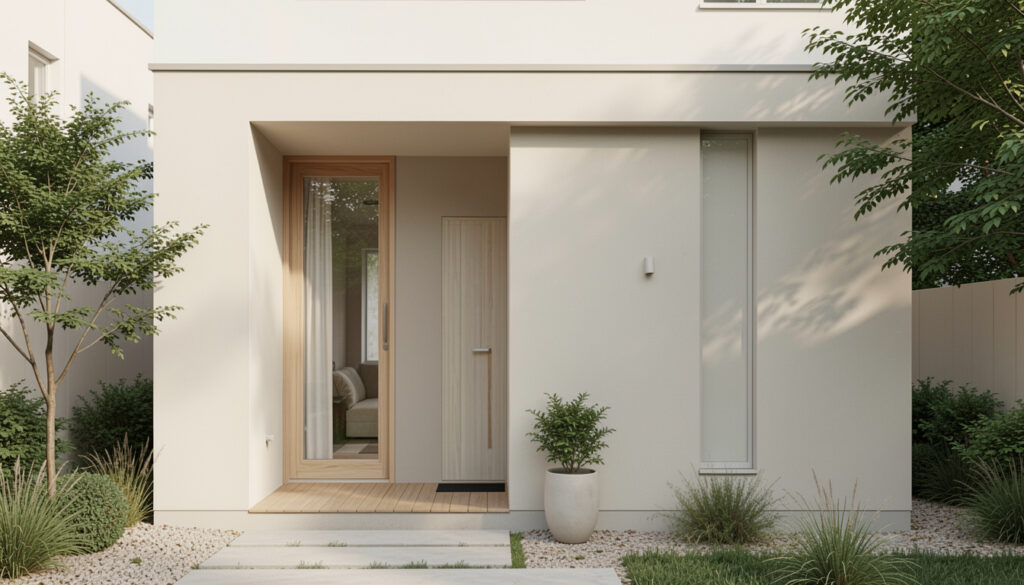
Vertical slats on a door or screen add texture without creating visual noise, perfect for compact entries. Keep the slats evenly spaced and pair them with a flat, minimal wall color for contrast. This small detail can become the signature of a simple façade.
Living Roof Green Charm
A green roof on a small structure is surprisingly achievable and helps the building blend into its surroundings. Choose low-maintenance sedums or grasses and ensure proper waterproofing before planting. My neighbor added a tiny living patch and suddenly our alley looked deliberate and sweet.
Integrated Indoor-Outdoor Flow
When the entry steps, threshold, and interior flooring feel connected, small spaces expand visually. Use consistent materials or complementary tones to draw the eye through the doorway. This makes even tiny homes feel like they have a continuous, intentional story.
Cozy Wood Exterior Moment
Warm wood cladding can soften a minimalist exterior and bring a human scale to clean geometry. Keep the joinery tight and the finish matte so it looks modern, not rustic. You’ll find that just one wood accent wall or porch column is often enough to change the whole mood.
Good Window Framing Outside
Big windows framed simply give a small home a sense of openness without fuss. Opt for thin frames in dark tones to create graphic moments that read like architecture. If privacy is a concern, layer with translucent glass or a minimal screen rather than heavy curtains.
Minimal Poolside Facade
A compact pool or water feature in front can feel luxurious while staying minimal if you limit materials and plantings. Choose geometric shapes and keep edges clean so reflections become part of the design. This works great for small backyard-front combos where every square foot counts.
Step Stone Approach
Stepping stones through grass or gravel create an understated path that reads modern and light. Space them comfortably to encourage a slow approach and pair with low groundcover for softness. It’s a tiny detail but it sets the tone before you even cross the threshold.
Open Threshold Seating Spot
An open doorway with a small table and chairs makes a compact exterior feel lived-in and inviting. Keep furniture proportional and weatherproof, and limit accessories to one plant and a small lamp. I used a collapsible bistro set on my tiny stoop and it instantly became my favorite place to sip coffee.
How to Actually Make This Work For You
Start by editing – walk around your exterior with a critical eye and remove anything that feels like accidental clutter, then choose one material and one accent color to repeat and tie the whole look together. Think about proportion and scale with your lot – small houses need fewer, stronger moves to feel complete. Finally, invest in a couple of quality fixtures or a single striking plant so the minimalist scheme retains warmth and personality.
How do I choose materials for a small exterior?
Pick two complementary materials and use them consistently to create cohesion – one primary for walls and one accent for doors or trim. Stick to neutral tones so the house reads larger and avoid busy patterns that can overwhelm a compact façade.
Can I add plants without cluttering the space?
Yes – choose a few sculptural plants in matching pots and give them breathing room to keep the look intentional. Grouping plants in odd numbers or a single focal planter often reads cleaner than many small pots scattered around.
What lighting works best for minimalist exteriors?
Layered, low-glare lighting is key – use recessed steps, a single sconce by the door, and subtle uplighting for feature materials. Warm color temperature will make minimalist designs feel welcoming instead of stark.
How do I balance privacy with minimalist design?
Use screens or narrow trees to create privacy without heavy fencing, and consider translucent glazing for windows where you need daytime privacy. Strategically placed planting and simple vertical elements can provide screening while keeping the exterior calm.