If you have a shady outdoor nook, searching for patio planter ideas for shade feels like trying to find cozy clothes in a too-bright closet – I’ve been there, squinting at pots and wondering which plant actually likes the gloom. I once tried filling half my balcony with sun-loving succulents and learned the hard way that shade needs totally different vibes.
This post exists because I love getting my hands dirty where the light is soft – and because I’ve rescued more than one sad fern from the clearance rack and nursed it back to life. Over the last few seasons I experimented with different pots, soil mixes, and playful pairings so you don’t have to start from scratch.
I’m going to share 15 fresh, practical, and slightly bold patio planter ideas for shade – with real-life notes, tiny mistakes, and easy swaps so you can pick what actually works for your space. Stick around for plant recs, styling tricks, and simple care tips you can use tonight.
15 Patio Planter Ideas for Shade You’ll Actually Try
Oversized Metal Pot
Big metal pots make a dramatic statement even when the sun is shy – they feel modern and a little wild. I love how the dark metal contrasts with bright, limey foliage like coleus or hostas; once I put one on my back patio, neighbors asked what I paid for it – shockingly, it was thrifted. Warning – metal gets chilly in shade, so line it or use a double-pot method to protect roots.
Monochrome Black Trio
Three matching black planters create a calm, gallery-like look that grounds any shaded corner. I actually copied this setup near my steps last spring and loved the tidy silhouette – the green pops more against the black than I expected. If you’re extra, stagger heights or mix textures inside the pots for visual interest.
Poolside Statement Pots
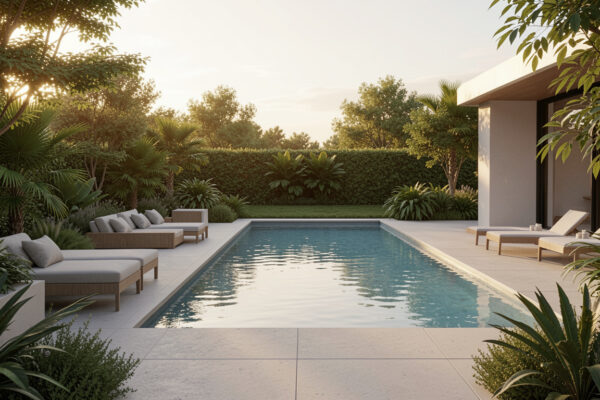
Chunky pots by water feel luxe and soothing, especially when planted with ferns or Japanese forest grass that love humidity. I once hosted brunch by pots like these and people kept reaching for the foliage – simple touches go a long way. Keep them slightly elevated so splashing doesn’t rot the base.
Overflowing Flower Mix
An abundant pot that looks like it’s bursting with blooms instantly softens a dark patio. I planted a similar mix for a summer party and it hid my ugly storage boxes like magic – also, the bees loved it. For shaded areas, lean on impatiens, begonias, and lungwort for color without sun demands.
Stacked Clay Pots
Stacked terracotta pots add height and rustic charm, perfect when you want vertical drama in tight shade. I tried this after watching a DIY reel and, not gonna lie, my first stack tumbled – so use adhesive or rod supports. Fill each tier with different textures – trailing ivy below, ferns in the middle, and a low mound of heuchera on top.
Wooden Bloom Box
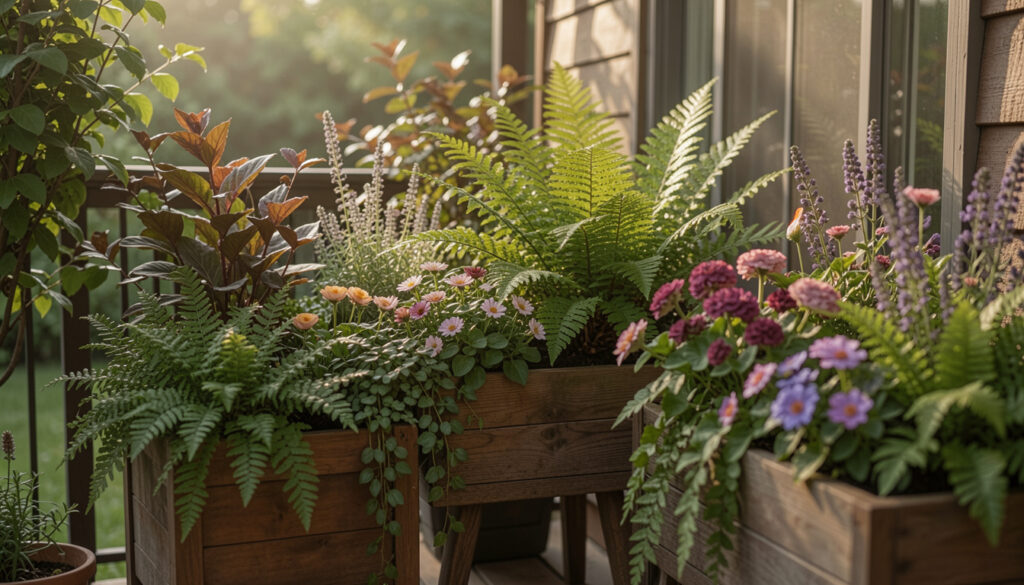
Wooden planters read warm and lived-in, and they’re my go-to when I want cottagey vibes on a shady patio. I painted one a sad teal last year and it instantly felt like a prop from my favorite café – true story. Just remember to line the wood to prolong life and keep drainage friendly for shade-loving roots.
Brick-Top Flower Tray
Planting a tray of purple-and-white flowers on a brick walkway feels classic and polished. I had this exact combo outside my bedroom window once and the scent at dusk was addictive – small pleasures. Choose calibrachoa or impatiens if your shade is deep, and don’t forget to deadhead for longer blooms.
Paired Porch Pots
Matching pots flanking an entry create symmetry that makes any shaded porch feel intentional. I set this up last fall and it made our tiny entry feel like a real front stoop – guests noticed, which made me proud. Keep plants similar but not identical to avoid feeling too matchy-matchy.
Wood & Brick Corner Planter
Placing a wooden planter against brick adds texture and a cozy, layered look in shade. I love leaning a small lantern next to it for evening ambiance – very low-effort, high-reward. For shady corners, add trailing ivy to soften the junction between wall and planter.
Concrete Container Project
A cement planter screams industrial-chic and is really forgiving for shade because it insulates roots well. I made a DIY version with a friend once and we both ended up covered in mortar – so fun, messy, and oddly bonding. If DIY isn’t your thing, buy pre-made and age it with moss or lichen for that lived-in look.
Parking Lot Planter
Using a wooden planter near a paved area turns bleak edges into tiny oases, even in shade. I once rescued a sad parking strip by planting hostas and astilbe and it made my morning walks feel civilized. Pick hardy perennials so you’re not replanting every season.
Stair-side Purple Trio
Three small planters with purple blooms along stairs create a welcoming rhythm without overwhelming the shade. I used pansies and small heucheras on my front steps and every passerby paused to compliment them – cheesy but true. Keep choices compact so the step stays functional and safe.
Benched Planter Combo
Planters integrated with a bench feel like they’ve always belonged to the space, perfect for shady patios where seating and greenery mingle. I once napped on a bench like this and woke up covered in leaves – not my finest hour but amusing. Use soft-leafed plants around seating so you can snuggle up without pokes.
Minimal Side Planters
Two slim planters against a wall keep a shady passageway feeling tidy and modern. I appreciate this look when I want plants without clutter; it’s clean and forgiving if you forget a watering or two. Choose tall, narrow growers like snake plant varieties that tolerate low light and neglect.
Step Pot Accent
A single substantial pot on a step is a simple focal point that elevates any shaded doorway. I did this with a big hydrangea that loved the partial sun from morning only and it made my entrance feel like a curated set. If your shade is deep, swap hydrangea for a bold fern or umbrella plant.
How to Actually Make This Work For You
First, map your shade – figure out if it’s dappled, morning-only, or all-day shady and pick plants that match that light, not what looks pretty in a magazine. Second, focus on soil and drainage – shade plants often need richer, moisture-retaining mixes, but roots hate standing water, so layer with grit and check pot drainage holes. Finally, style in layers – pair tall structural plants with mid-height flowering options and a trailing plant to soften edges, and don’t be afraid to swap things out seasonally as you learn what thrives where.
What are the best plants for shady patio planters?
Great shade plants include hostas, ferns, heuchera, coleus, impatiens, begonias, and astilbe – they tolerate low light and offer different textures and colors. Mix a few types for interest and consider seasonal bloomers to keep things lively throughout the year.
How often should shade planters be watered?
Shade planters usually need less frequent watering than full-sun ones, but that depends on the pot size and material – terracotta dries faster, plastic holds moisture. Check soil with your finger and water when the top inch feels dry; during humid spells, you might skip more often.
Can I use recycled pots in shade?
Yes – recycled pots like old buckets, crates, or thrifted urns can look amazing in the right spot, and they’re eco-friendly. Just make sure you add drainage holes, line porous materials, and consider a double-pot technique if the material might leach or get too cold.
How do I prevent pests in shaded planters?
Shade can attract slugs and snails, so keep soil surface clear of debris, water in the morning, and use beer traps or copper tape for protection. Regularly inspect leaves and remove damaged plant parts – early action prevents bigger issues later.