Okay, so you want a victorian home exterior for beginners and you don’t know where to start – I totally get it. It can feel overwhelming to look at those ornate houses online and wonder how to make one of your own actually feel achievable.
I’m writing this because I once stared at a faded porch for hours, trying to decide on paint and plants, and I don’t want you to waste that time. I’ve tried tiny updates that made huge differences, and I’ll share what worked and what flopped so you don’t have to learn everything the hard way.
Read on for 20 simple ideas, each with real tips you can use today – nothing fancy, just friendly guidance to help you love your home.
These 20 Simple Victorian Home Exterior For Beginners
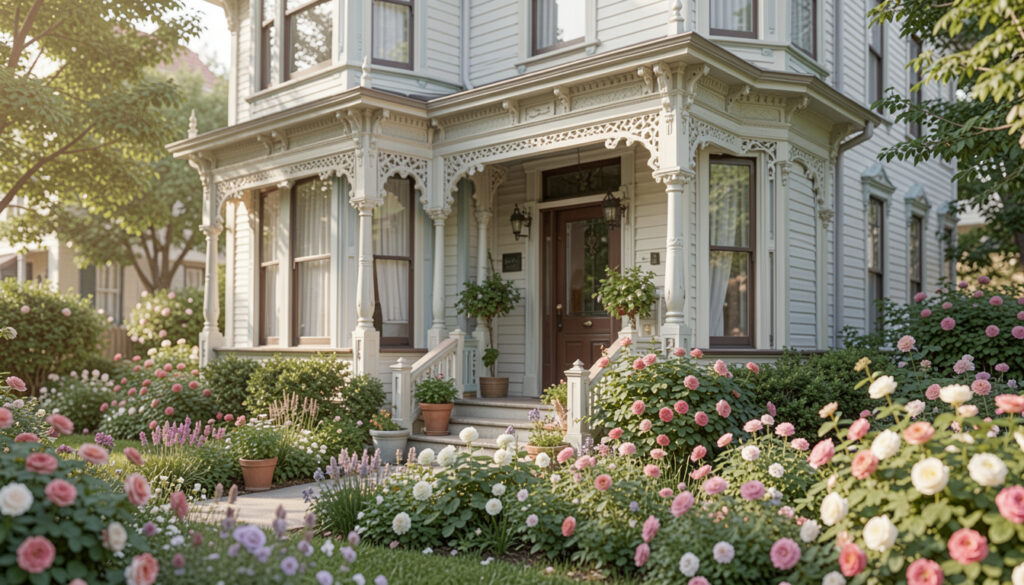
Flowered Front Yard Charm
A front yard full of flowers instantly softens a Victorian silhouette and makes the whole house feel cared for rather than intimidating. You don’t need a professional design – pick three repeat plants and plant them in clumps for a cohesive look. I once threw together a sunny bed of daisies and lavender and neighbors kept asking who did my landscaping – it really changes first impressions.
Large Window Focus
Victorians love big windows, and highlighting them can be an easy way to boost curb appeal without a full renovation. Add simple trim paint, clean glass, and consider soft linen curtains inside to make the windows feel intentional. If your windows are original, restoring hardware or a gentle scrub can make them sing again without breaking the bank.
Green House Statement
A deep, nature-inspired exterior color like green sits perfectly on a Victorian and blends with mature landscaping in a calming way. You can test paint chips on a shaded wall to see how the hue reads throughout the day before committing. I remember my hesitation before choosing green for my neighbor’s house – it ended up being the coziest choice and faded gracefully over seasons.
Pops of Purple Flowers
Adding purple-flowering vines or potted plants around your porch gives a romantic Victorian vibe without any structural changes. Climbing plants soften trim and provide texture, but keep them trimmed so they don’t hide architectural details you actually want to show off. If you’re nervous about live plants, try a few pots first and you’ll learn which varieties suit your porch light and maintenance style.
Greenery Wrapped Porch
A lush green porch feels welcoming and echoes the layered plants Victorians loved, and you can do this with simple planters and hanging baskets. Mix evergreens with seasonal blooms so the porch looks good year-round, and don’t be afraid to use mismatched pots for an eclectic, lived-in charm. Once, I swapped out plastic pots for terracotta and the space immediately felt older and more authentic.
Sunny White Facade
White paint is classic and makes Victorian detail pop, especially on a bright day when shadows give depth to gables and brackets. Choose a warm white to avoid a hospital-like look, and focus on clean lines around windows and trim. You’ll be surprised how a fresh coat transforms faded siding into something crisp and elegant.
Blue House Serenity
Soft or muted blues give a Victorian a coastal or storybook feel without being too thematic, and they pair beautifully with wooden trim. If you want a calming palette, pair blue siding with cream or warm gray trim to keep the look grounded. My sister painted her dowdy exterior a muted blue and our whole street felt instantly calmer on evening walks.
Green Trim Details
Contrasting trim is a tiny detail with a huge payoff – green trim on a neutral body color makes ornate moldings stand out like jewelry. You can tap into classic Victorian palettes with two or three coordinating tones, just sample them on trim first. If you’re painting yourself, use good small brushes for the trim so your edges look intentional and neat.
White and Blue Accent
White with blue accents feels airy and refined on Victorian exteriors, and it’s approachable for beginners who don’t want a bold, risky color. Use blue on shutters, doors, or porch spindles to tie elements together without overpowering original detail. A blue door in particular becomes a focal point that invites people in – it’s an easy, inexpensive update.
Brick With White Trim
If your Victorian is brick, keep it visible and celebrate the texture with crisp white trim and painted doors that complement the warm tones. Repair or tuckpoint any damaged mortar first so the whole façade reads as intentional and cared for. I helped my aunt fix a crumbling lintel and the small effort made the whole brickwork feel solid and loved again.
Blue Balcony Romance
Balconies and porches are character pieces you can style for a Victorian look with small furniture and soft lighting. Add a string of warm bulbs or lanterns and a set of narrow chairs to create a cozy nook that highlights the architecture. You don’t need a big budget to stage it for photos or for quiet mornings with coffee.
Green Steps Welcome
Painted steps and a few potted plants create an instant pathway and draw the eye up to the porch, which is especially useful on taller Victorian houses. Choose slip-resistant paint and layer rugs or runner mats for safety and texture. I once repainted steps a jewel green and neighbors started asking for paint tips – a small bold choice can spark a lot of joy.
Many Window Details
Victorians often have lots of windows, and emphasizing their details with subtle stains, trim, or shutters makes the whole design feel intentional. Keep mullions and muntins clean and consider restoring decorative panes if they exist. Even swapping to historically appropriate light fixtures near windows can give the exterior a more cohesive, authentic look.
Steeple For Interest
Steeples and towers are dramatic, but you can make them approachable by highlighting their base with contrasting paint or plantings that scale the height visually. If your house has one, aim to keep the lower rooflines in clean condition so the tower doesn’t feel neglected. I remember photographing a tiny town with a steeple and the houses that tended it looked the happiest.
Nighttime Warm Lighting
Soft exterior lighting at night transforms a Victorian into something magical and inviting, and it’s surprisingly affordable to install. Use warm bulbs and place them along pathways, under eaves, and near porch posts to highlight textures and prevent dark corners. You’ll love walking up to a lit porch in the evening – it feels safe and staged like a storybook scene.
Wrought Iron Elegance
An iron fence or gate adds formal charm and frames the property beautifully without heavy maintenance if you keep rust at bay. Paint iron elements a matte black or dark green for contrast, and check hinges and latches so everything functions smoothly. I find that iron details instantly reference a bygone era and tie a Victorian exterior together cohesively.
Window Boxes With Plants
Window boxes are such an easy, beginner-friendly way to add color and softness to a Victorian façade; you can switch annuals each season to keep things fresh. Use a drip tray so water doesn’t damage trim and choose trailing plants for a cottagey look. I once lined my windows with geraniums and suddenly the whole block looked like it belonged in a magazine.
Brick And Steeple Contrast
When your Victorian has both brickwork and a steeple, use contrast wisely – clean mortar and a painted steeple or trim can unify disparate materials. Protect any wooden steeple elements with a good primer and topcoat so moisture doesn’t creep in and cause damage. Even a small roof repair near the steeple can stop problems before they start and keep your paint job looking fresh longer.
Bright White Grandeur
A large white Victorian reads as grand and timeless, and you can layer texture through trim, shingles, and porch details rather than relying on color alone. Make sure gutters and downspouts are painted to blend or complement the white so they don’t stand out. You’ll find upkeep is mostly cleaning and touchups, which is manageable compared to a full repaint every few years.
Flower-Lined Walkway
A path lined with seasonal blooms gives your Victorian a storybook entrance without expensive hardscaping – just add layered bulbs and perennials to the edges. Use edging stones or low hedges to keep things tidy and teach yourself how to prune for shape. When guests arrive, you’ll notice how much a simple, framed walkway boosts that “wow” factor.
How to Actually Make This Work For You
Start small and prioritize a single focal update like a painted door, a refreshed porch, or window boxes so you don’t get overwhelmed; once one change feels done you’ll naturally want to tackle the next. Focus on materials and maintenance that fit your schedule – if you travel a lot, pick low-care plants and durable exterior paints so the house still looks loved when you’re away. Finally, make a simple mood board from images you genuinely respond to and shop with those tones in mind to keep the result cohesive and true to your taste.
Do I need professional help to update a Victorian exterior?
Not always – many beginner-friendly changes like paint, plants, and lighting are DIY-friendly and affordable. For structural repairs, roofing, or historical restoration, hire a pro so the work is safe and preserves the home’s value.
How do I choose colors without making a mistake?
Test paint swatches on different sides of the house and observe them at morning and evening light – that will tell you how the color behaves. Limit your palette to two or three complementary tones and use trim to add contrast and definition.
What plants work best for Victorian porches?
Choose a mix of evergreens for year-round structure and seasonal blooms for color, and opt for plants that suit your light conditions to avoid constant replacement. Trailing varieties, lavender, and geraniums are forgiving choices I recommend for beginners.
How can I keep ornate details looking authentic?
Preserve or repair original trim when possible and use historically appropriate colors and textures; if replacement is necessary, match profiles and materials to the original for the best aesthetic. Regular cleaning and touch-ups will keep fine details from fading into neglect.