Okay friend, you love that ornate, storybook Victorian look but your wallet does not – welcome to the club. I’ve been obsessed with turning my own modest house into something that feels like a cozy Victorian postcard without breaking the bank.
I wrote this because I spent months testing tiny, affordable changes that actually made a huge difference, and I want to save you the trial and error. I’ve learned which details read “period charm” and which are just expensive fluff.
Scroll through these 15 practical ideas and you’ll find simple projects, styling tips, and little hacks you can use this weekend to boost curb appeal.
These 15 Victorian Home Exterior On A Budget Ideas to Try
Painted Trim Pop
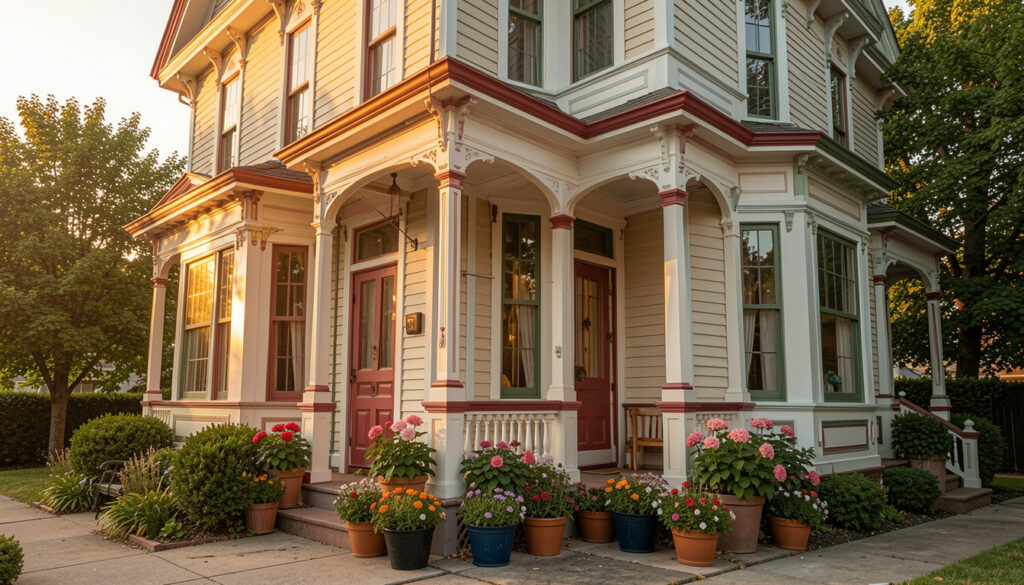
Swapping a single accent color for your trim can transform a plain facade into a Victorian-looking showpiece without replacing anything structural. Start with small areas like window frames or porch rails so you can test a color scheme before committing to the whole house. When I painted my own window sashes a brighter white, the whole street suddenly noticed – and it cost less than a fancy mailbox.
Curb-Friendly Flower Beds
Victorians loved lush, layered planting in front yards; you can mimic that with inexpensive perennial mixes and annual fillers. Use thrifted containers and stagger heights to create depth, and choose blooms that repeat a primary color to look intentional. I planted a cheap row of lavender along my walkway and it made the entrance feel like a deliberate, historic touch.
Stone Accent Details
If your home has any stone or brick elements, highlight them rather than cover them up – a simple clean and seal job can make stone read expensive. Use natural stone pavers or reclaimed flagstones for a small path to the porch, and consider dry-stacking a tiny border for visual interest. You’ll get the warmth of that sunlit, cottage vibe for far less than full masonry work.
Window Box Romance
Window boxes are the easiest Victorian upgrade – they add color, texture, and a handcrafted feel without permanent changes. Build simple cedar boxes yourself or buy ready-made ones and paint them to match your trim for continuity. My neighbor installed boxes and suddenly their whole facade read as intentional and curated, not fussy or expensive.
Clock Tower Inspiration
You don’t need a real clock tower to borrow that historic feeling – mounted exterior clocks or circular window accents can evoke the same vibe on a budget. Look for vintage or reproduction clocks at flea markets and place them near entryways or on porch walls. Paired with classic lighting, a single clock becomes a focal point that feels deliberate and timeless.
Greenery-Forward Frontage
Let plants do the heavy lifting by framing porches and walkways with layered shrubs, climbing vines, and small trees. Choose low-cost native shrubs for structure and add seasonal annuals for pops of Victorian-era color. I once cleared a tiny overgrown lot and planted a mix of ferns and roses – months later people thought I had hired a landscaper, but the bill was just time and a few plant packs.
Painted Porch Personality
A fresh, contrasting porch color instantly reads Victorian because it highlights architectural details and trim. You can use porch paint that’s budget-friendly and durable, and focus only on flooring and spindles if that’s all you can afford this season. A painted porch makes the whole house feel more deliberate and inviting.
Classic White with Trees
A crisp white exterior paired with lots of greenery gives that historic, photographed-in-summer look without fuss. It’s a forgiving palette – you can layer textures with shutters, hanging baskets, and potted specimens to add personality. When friends visit, they always say it looks brighter and more elegant, and most of that effect came from trimming trees and freshening white paint.
Ivy and Window Drama
A little ivy can go a long way, especially when trained around a bay window or along a brick wall to soften edges and add age. Be cautious and keep vines away from wooden trim to avoid moisture damage. The romantic, gently overgrown look is perfect for Victorian mood without expensive restoration.
Bold Two-Tone Scheme
Victorian homes often use bold color contrasts; you can replicate that by choosing two complementary hues for body and trim. Opt for one standout color for the door or porch details and keep the rest neutral so it’s not overwhelming. I used teal on a single accent wall and orange on small trim – it felt daring but cost only paint and a weekend.
Layered Balconies and Railings
If you have existing multiple-level porches or balconies, emphasize the railings with fresh paint and decorative spindles for instant Victorian character. Replacing only pickets or adding trim boards is far cheaper than rebuilding, and it reads as restored rather than patched. Small changes to railing details often provide the biggest visual return for little cash.
Cloudy Day Charm
Even on overcast days, soft color palettes and layered textures make a house feel historic and cozy, so choose finishes that stand up to gray skies. Matte or eggshell paints hide imperfections and look more authentic than high-gloss finishes. Adding cheerful porch plants brightens the look when sunlight is scarce.
Green Trim Accents
Green trim is a classic Victorian choice that pairs beautifully with brick and muted body colors, and it’s surprisingly affordable if you repaint trim only. Use a darker green for depth and a lighter highlight color to make the carved details pop. I repainted my trim a mossy green and it immediately felt like a curated, historic choice rather than a trendy experiment.
White Field and Tree Views
Setting a simple white house against a lush lawn and a few well-placed trees can read like an estate photo with very little cost. Focus on clean lines, mowed edges, and a few specimen plants to create that open, airy Victorian feel. The simplicity works because it highlights architecture rather than cluttering the foreground.
Surrounded by Greenery
When a home sits within greenery, the setting itself becomes a design element – embrace it by trimming for sightlines and adding paths and borders that feel intentional. Native shrubs and layered perennials cost less over time and provide the mature look Victorians loved. My aunt planted masses of hostas and foxgloves along her fence and it looks like a cottage that’s been there forever – and she spent very little up front.
How to Actually Make This Work For You
Start small and prioritize high-impact, low-cost moves – paint, plants, and lighting usually offer the biggest curb-appeal return for the least money. Think in layers so you can add details over time, and gather samples before committing to a full repaint so you avoid costly mistakes. If possible, schedule a weekend to tackle one focused area like the porch or windows so you get visible progress and momentum.
How much should I budget for a basic Victorian-style refresh?
It depends on scope, but you can expect to spend a few hundred dollars for paint, plants, and hardware updates, and a few thousand for more extensive changes – roofs, full masonry, or structural work will cost more. Prioritize cosmetic updates first to see big visual returns on a small budget.
Can I get the Victorian look without changing structure?
Yes – paint, trim, window boxes, period-appropriate lighting, and landscaping can all create a convincing Victorian vibe without altering the building footprint. Small details create the illusion of historic character when they’re thoughtfully combined.
Which paint areas matter most for impact?
Focus on porch floors and ceilings, window trim, doors, and railings for the most noticeable change. These elements frame the home and highlight architectural lines, so updating them makes the whole house feel refreshed.
Are there low-cost sources for period fixtures?
Check salvage yards, thrift stores, online marketplaces, and local classifieds for lamps, doorknobs, and decorative trim. You can often find authentic or reproduction pieces at a fraction of retail cost, and refinishing items yourself saves even more.