I’ve been obsessively growing dahlias for a few seasons now, and finding the best companion plants for dahlias has honestly changed how my borders look – and how much time I actually spend fussing. Dahlias are dramatic and bold, but they feel happiest when surrounded by friends that fill in, support pollinators, and hide those awkward bare stems.
I wrote this because I know the confusion of choosing partners that won’t steal nutrients or drown the dahlias in shade. Over two summers I tried tons of combos in my tiny backyard and learned what played nice and what didn’t – some surprising winners and a couple of facepalm moments included.
Keep reading and you’ll get 25 lovely companion picks with real-life notes, plus practical tips so you can copy what worked for me without the trial-and-error marathon.
These 25 Best Companion Plants for Dahlias You’ll Love
Colorful Mixed Bedding
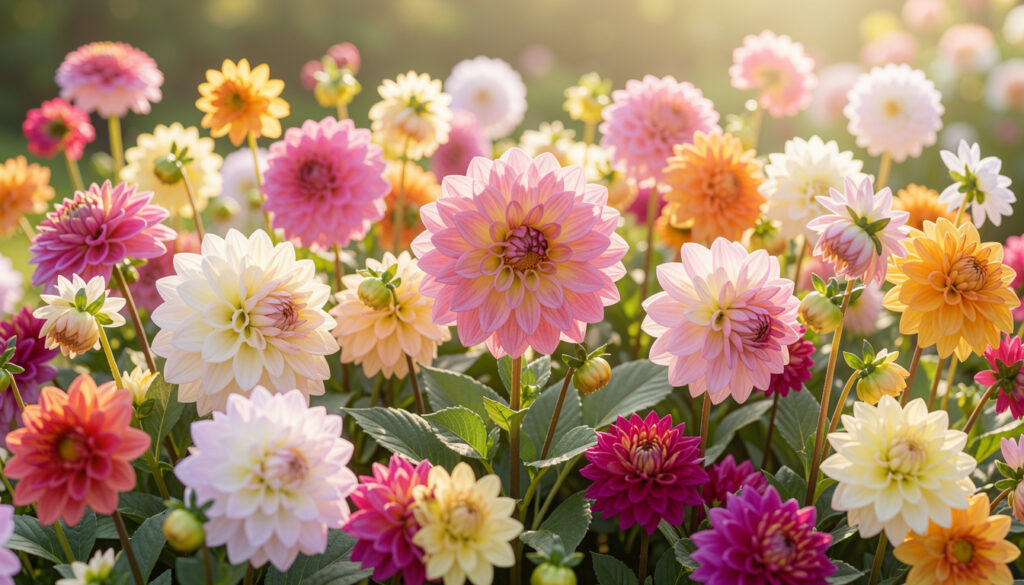
This image screams cheerful mass planting – perfect if you want dahlias to pop against varied colors. I love mixing low fillers like calendula or marigolds around the base to keep things lively; it hides spent foliage and gives bees options. If you’re short on time, this layered look feels intentionally effortless – though I’ll admit mine started messy before it felt intentional.
Pink and Dewy Petals
Those soft pinks with water droplets make me think of alyssum or phlox tucked around dahlias for a sweet, cottage-garden vibe. I once planted sweet alyssum at the edge of my dahlia bed and it scented the whole yard on humid evenings – total win. You’ll find the contrast calming, and pollinators adore the tiny blooms.
Purple and White Combo
Pairing purples and whites beside dahlias gives a sophisticated palette that lets bolder dahlia colors sing. I used salvia and white nemesia once and the vertical spikes balanced the round dahlia heads nicely. It’s a calmer backdrop that still feels lush and purposeful.
Barrel Planter Bouquet
Planting dahlias alongside trailing petunias or nasturtiums in a barrel or large pot gives a cascading effect that’s dreamy on a patio. I did this on a tiny balcony last year and the trailing flora hid the ugly pot rim, so bonus points. It’s a practical way to get height, drama, and spillover color together.
Soft Pink Meadow
Low pinks like creeping phlox or dianthus create a soft carpet around taller dahlias and soften the whole bed. Once, a patch of dianthus reseeded itself and suddenly my dahlia border had this lovely, accidental continuity. You’ll like this if you want a romantic, slightly wild look.
Handheld Garden Joy
That hand-held vibe reminds me of pairing dahlias with small annuals like cosmos – easy for cutting into bouquets. I used to clip a few cosmos with my dahlias every weekend; it made me actually use my flowers instead of letting them droop on the stems. Trust me, you’ll appreciate quick-cut options.
Classic Pink Border
Pink and white companions keep the border feeling cohesive and garden-party-ready. Lobelia or baby’s breath are delicate partners that won’t compete for attention. If you like neat edges, this combo can look polished while still being pollinator-friendly.
Simple Trio Accents
Three little accent plants near each dahlia clump – think cosmos, zinnias, and marigolds – can create intentional repetition across the bed. I used a repeating trio in my front bed and neighbors actually asked for cuttings. It’s a small trick that makes the whole planting feel designed.
Close-Up Color Pop
A tight cluster of low blooms like primrose in front of dahlias gives a pretty frontal pop. I planted primroses early and they filled the vulnerable early season gap before my dahlias were fully up. You’ll enjoy that continuous floral interest from spring into summer.
Purple Bouquet Field
Grouping purple companions like verbena with dahlias creates a deep, moody palette that’s surprisingly modern. I paired verbena with a coral dahlia and the contrast felt so designer-y it surprised me. Few plants create that dusk-to-dawn kind of drama.
Hands-On Arrangement
This feels like the cut-and-come-again approach – dahlias plus easily renewed annuals like zinnias. I often plant a patch of quick zinnias because they replace spent blooms faster than I can blink. It helps keep bouquets fresh and the garden lively.
Vase-Ready Clusters
If you want vase mixes, pair dahlias with filler flowers like gomphrena or statice for texture and longevity. Once I made a bouquet with statice and it still looked good a week later – huge morale boost. You don’t need a florist to make arrangements that feel special.
Pink Foliage Layers
Using similar-toned foliage plants near pink dahlias softens transitions and adds depth without competing blooms. I learned that adding lamb’s ear softened the edges and invited touch – yep, I touch my plants. It’s a subtle luxury that people notice when they kneel to sniff your flowers.
Single Orange Accent
An orange bloom like calendula next to a dahlia can create a cheerful focal point that lifts the whole bed. I tried calendula as a trial and loved the nectar draw for hoverflies. It’s a small color nudge that keeps the garden lively.
Colorful Cottage Mix
This busy mix vibes with dahlias if you want a relaxed, pollinator-focused border – think foxglove, coreopsis, and nasturtiums. I had an accidental self-seeding year where coreopsis took over and honestly it was one of my garden’s happiest mistakes. You’ll like the wild, friendly feel.
Purple Ground Harmony
Purple groundcovers or mid-height plants like campanula pair gorgeously with many dahlia hues. I used campanula at the edge and the bell shapes contrasted with my dahlias’ rounded heads beautifully. It’s quietly elegant without fuss.
Bench-Friendly Trio
If you have seating nearby, plant companions that smell nice, like lavender, so you enjoy them while you sit. I planted lavender near my bench and afternoons turned into small, restorative rituals of tea and flower-watching. It’s an easy way to make your garden feel lived-in.
Pink and Dark Contrast
Mixing light pinks with darker petals nearby, such as dark-leaved salvias or black mondo grass, gives chic contrast to dahlias. I tried a darker-leaved sedge one season and the pinks popped like they were backlit. Contrast is simpler than you think, and dramatic.
Field of Wild Colors
A field-mix approach with lots of volunteers like poppies, cosmos, and bachelor’s buttons is perfect if you’re low-maintenance. I let a corner of my yard go wild one summer and it became my favorite, most visited patch – bees loved it. You might find yourself doing less and enjoying more.
Garden Patch Variety
Planting several companion species in repeat patches helps rhythm and continuity across the border. I map out three repeats across the bed and it looks cohesive without being matchy-matchy. This rhythm helps you avoid the overstuffed look.
Low Grass Clusters
Small grassy clumps like carex or stipa add texture and movement near dahlias without stealing nutrients. I used a carex and loved the sway in wind – very calming. It’s a nice modern twist on a classic cottage border.
Personal Bouquet Touch
Including a few stems of quick annuals means you always have something to tuck into a dahlia bouquet. I bring flowers inside almost every day now; it’s a tiny joy that improved my mood more than I expected. If you start cutting, plant extra to keep the garden smiling.
Simple Handful Pairing
This one feels like a casual pairing – small helpers like feverfew or yarrow that attract beneficial insects. I had a yarrow patch that made pest problems less dramatic one year. Add these if you want a friendlier garden ecosystem.
Bright Red Accents
Red flowers with yellow centers, like rudbeckia or gaillardia, can accent warm-toned dahlias beautifully. I mixed rudbeckia into a sunset-themed bed and it made everything feel cohesive and energetic. Warm palettes are surprisingly relaxing to look at.
Front-of-Bed Pinks
Low pinks along the front of a bed help frame dahlias and draw the eye inward to the taller blooms. I planted a pink fringe and it created a welcoming border that made passersby stop and smile. It’s one of the simplest, most effective styling moves.
How to Actually Make This Work For You
Start by thinking of dahlias as the stars and companions as supporting cast – they should complement height, color, and bloom time without outcompeting root space. Pick two or three companion types for each bed – one low filler, one mid-height texture, and an annual for quick color – and repeat those combos to create rhythm across the garden. Watering needs should match; if you have thirsty dahlias, avoid pairing them with drought-only succulents unless they’re in separate pots. I space new plantings so I can see how they settle over a season, then tweak: sometimes a plant that looks perfect on paper crowds the dahlia in practice, so don’t be afraid to move things after a month or two.
What are the best low-growing companions for dahlias?
Low fillers like alyssum, primrose, and creeping phlox are great because they hide bare stems and keep beds looking full. They also offer early-season blooms before dahlias reach full height – win-win for continuous color.
Can I plant bulbs or perennials with dahlias?
Yes – bulbs like alliums and spring bulbs work well since they’re done before dahlias take over, and perennials like salvia or campanula can provide structure that complements dahlias. Just plan spacing so roots don’t compete heavily at peak growth time.
How do I avoid overcrowding when mixing companions?
Give dahlias room around their crowns and place companions slightly outward so air circulates and disease risk drops. I always leave a few inches bare initially and fill it in once the dahlia canopy develops – saves a lot of pinching and drama later.
Which companions help with pests and pollinators?
Plants like yarrow, calendula, and fennel attract beneficial insects while sweet alyssum and verbena bring pollinators for better bloom and seed set. I plant these intentionally near my dahlias and noticed fewer comment-worthy pest issues overall.