Picking the right home exterior colors combinations on a budget can totally change how your house greets the world, and it doesn’t have to drain your savings. I spent a weekend sampling paint chips and realized small tweaks give maximum curb appeal.
I’m writing this because I love helping friends refresh their homes without overspending – and I learned a few tricks the hard way while updating my own siding. You deserve options that look elevated and feel practical.
Below are 15 real-life color combos and low-cost tips you can try, with photos to spark ideas and simple swaps that actually make a difference.
These 15 Home Exterior Colors Combinations On A Budget to Try
Classic Red With Stone Steps
A bold red paired with natural stone steps gives a traditional yet lively look that feels welcoming, and it works well when you have a modest budget because you can focus paint on the most visible planes. I painted my neighbor’s mailbox the same red once and it instantly brightened the street vibe, so don’t underestimate small accents. Pair white or creamy trim to keep the look crisp and to hide any trim imperfections without costly repairs.
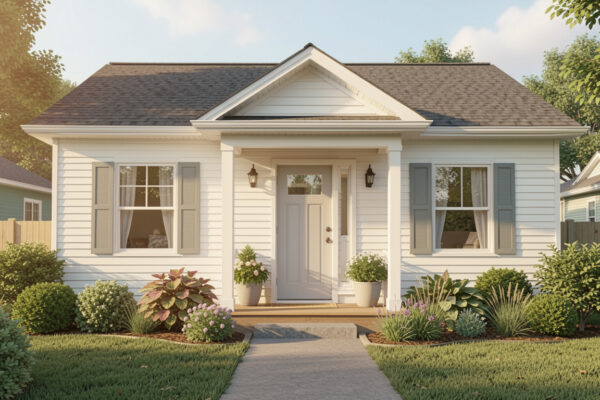
Soft Gray And White Trim
Soft gray siding with white trim is a safe, timeless combo that reads modern and clean while remaining budget-friendly because neutral paints often require fewer coats for full coverage. When I repainted my rental, gray made everything feel cohesive even though we left the original doors as-is. You can add inexpensive black hardware or a new light fixture to elevate the whole facade without a major investment.
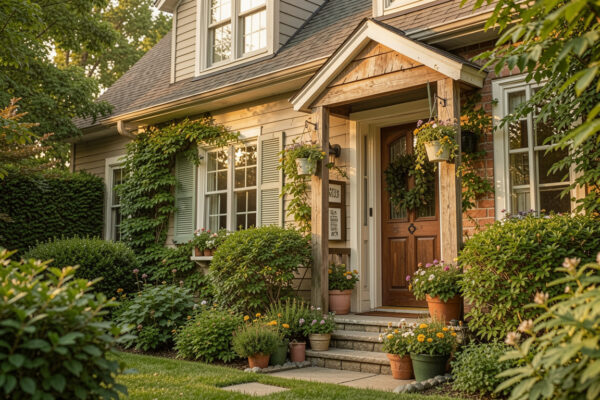
Warm Stone With Window Glow
Stone accents paired with warm siding and lots of windows create a cozy, lived-in look that still feels intentional, and using stone only on lower walls or steps keeps costs down while adding texture. I remember standing on that kind of porch at dusk and feeling how the light softened every color – it truly makes the exterior feel like home. Choose warm taupes or muted browns for the siding so the stone blends naturally and you won’t need elaborate landscaping to finish the scene.
Garden Gray With Greenery
A mid-tone gray with crisp white trim paired with surrounding greenery feels chic without feeling precious, and it plays nicely with plants you probably already have in pots. You can save money by focusing fresh paint on the facade and leaving secondary structures alone, which still gives the house a refreshed appearance. Accent with a colorful wreath or simple potted ferns to add seasonal interest at very low cost.
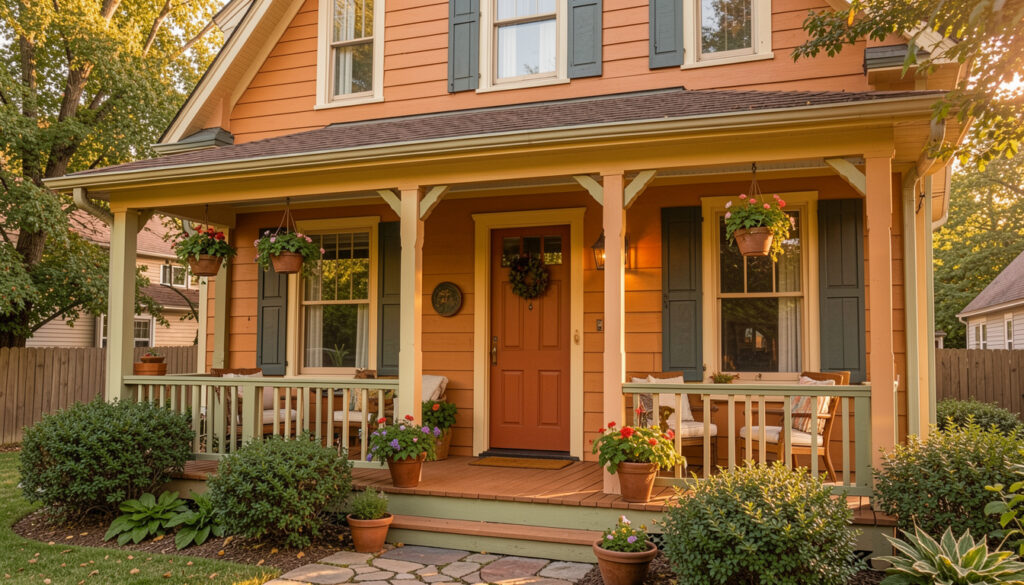
Red Columns And White Accents
Painting porch columns or shutters red while keeping the rest of the house neutral creates a focal point without the expense of full repainting, and this targeted approach is perfect when budgets are tight. I used this trick on my aunt’s bungalow and we only bought a quart of paint but the impact was immediately dramatic. Keep the surrounding trim white to maintain contrast and a classic southern-inspired silhouette.
Neutral Stone House Appeal
When your home already has stone, use neutral paint shades on the upper walls to create a cohesive, elevated look that feels expensive but costs very little when you work with what you already have. In my first house, we left the stone and updated only the siding color, and friends kept asking if we’d done a full remodel. Subtle shifts toward greige or taupe can modernize without clashing with the natural stone tones.
Green Siding With White Trim
Green siding with white trim gives cottage charm and blends with landscaping nicely, and it can look surprisingly refined when you pick a muted, natural green rather than a saturated shade. You save money by refreshing trim rather than changing windows or doors, and a new coat on shutters ties the look together. Consider matte or eggshell finishes to hide imperfections and keep maintenance low.
Climbing Plants And Painted Walls
Painting a warm, neutral wall and encouraging a climbing vine or window plants to grow creates texture and color without big spending – the greenery becomes part of the palette. I once potted climbing roses along a plain wall and suddenly neighbors were complimenting the whole block – plants are magic for curb appeal. Just make sure you choose plants that won’t damage exterior finishes if you intend to keep them long-term.
Landscaping Focused Facade
Sometimes the most budget-friendly exterior “paint” is actually strategic landscaping; matching your house color to the plants and mulches makes everything look considered without repainting. I helped a friend choose mulch and planters to complement her blue siding and it felt like a makeover overnight. Invest in a few well-placed shrubs and colorful perennials for seasonal pops that distract from weathered siding.
Gray With Red Awning Pop
A neutral gray exterior paired with red and white awnings or small bright accents creates visual interest while keeping most surfaces neutral, and awnings are a small investment compared to full repainting. You can paint just the trim or a porch ceiling to echo the awning color for unity without committing to bold siding. This is a great option when you want personality but need to stay economical.
Blue With White Trim
Blue siding with crisp white trim reads coastal and fresh, and you don’t need many supplies to pull it off if you paint only the most visible areas like the front and one side. I once told a client to start with the front door and a single accent wall to test the color, and that tiny step convinced her to keep the blue for the whole house. Add navy shutters or a darker blue door to deepen the look affordably.
Green With Flowered Borders
A soft green paired with abundant front-yard flowers makes a home feel charming and well-loved, and creating flower borders is cheaper than repainting large surfaces while delivering a comparable visual lift. You can choose seed packets and small shrubs that carry color through the seasons, which keeps costs minimal and enjoyment high. Consider painting just the door a complementary shade to coordinate with the blooms and create a focal point.
Blue-Grain And Hedge Frames
A soft blue blended with natural hedges frames your house and gives a serene vibe that looks curated even if you only update a few elements, because greenery does so much of the styling for you. I swapped out dated hardware for brushed nickel to match the cool blue tones and it instantly modernized the entrance without replacing any siding. Keep the hedges trimmed to maintain clean lines and an intentional aesthetic.
Muted Green With Rocking Chair
Paint a porch area a muted green and style it with a simple rocking chair and potted plants for a welcoming vignette that feels custom without huge cost – decor and a few accent coats make a big difference. When friends come over, everyone comments on porch details first, which proves that small investments in the entryway pay off socially and visually. Keep cushions and planters in neutral tones to avoid color clashes and to make seasonal swaps easy.
Blue Accent With Cozy Details
Using blue as an accent on doors and shutters against neutral siding is an economical tactic that provides curb appeal and a designer touch because fewer gallons of paint are needed. I once spent under $30 on a new door color and the impression on guests was that we’d undertaken a major renovation – proof that accents matter. Combine with warm lighting for evenings to showcase the new color choices.
Green Door, Floral Welcome
Painting just the front door a rich green and surrounding it with bright flowers creates a high-impact focal point while you leave the rest of the exterior untouched, and doors are small surfaces that give big returns. A personal story – I swapped my old door color on a tiny weekend and friends assumed we had replaced the whole facade, which is the joy of targeted updates. Top it off with a new doormat and hardware for a complete, inexpensive refresh.
How to Actually Make This Work For You
Start by choosing one focal element – a door, shutters, or a porch – and commit your budget there because targeting one area creates the biggest visual change for the least money, then supplement with easy landscaping or hardware swaps that reinforce your chosen palette. Test colors at different times of day and in small areas before buying many gallons to avoid costly returns, and lean on neutrals or muted versions of bold colors if you want longevity and resale appeal. Finally, prioritize maintenance fixes like caulking and cleaning so your new paint or plants read as intentional instead of a band-aid.
How much paint will I need?
Estimate by measuring the square footage of the walls you plan to paint and check the paint can’s coverage chart – most cans cover about 350-400 sq ft per gallon. Buy a little extra for touch-ups and test samples so you don’t run out mid-project.
Can I mix plants with color choices?
Yes – coordinating plants and flowers with your exterior palette is a cost-effective way to add seasonal color and soften transitions between materials. Choose plants that thrive in your climate and place bolder color closer to focal points like doors or steps.
What finishes work best outdoors?
Use exterior-specific paint in satin or eggshell for trim and semi-gloss for doors to balance durability with a pleasing sheen. Flat or matte finishes hide imperfections on large surfaces but may need more frequent cleaning.
Is it worth painting just accents?
Absolutely – painting a door, shutters, or a porch can transform the look at a fraction of the cost of full repainting and often gives the impression of a larger renovation. Start small and build on those changes if you want a bigger update later.